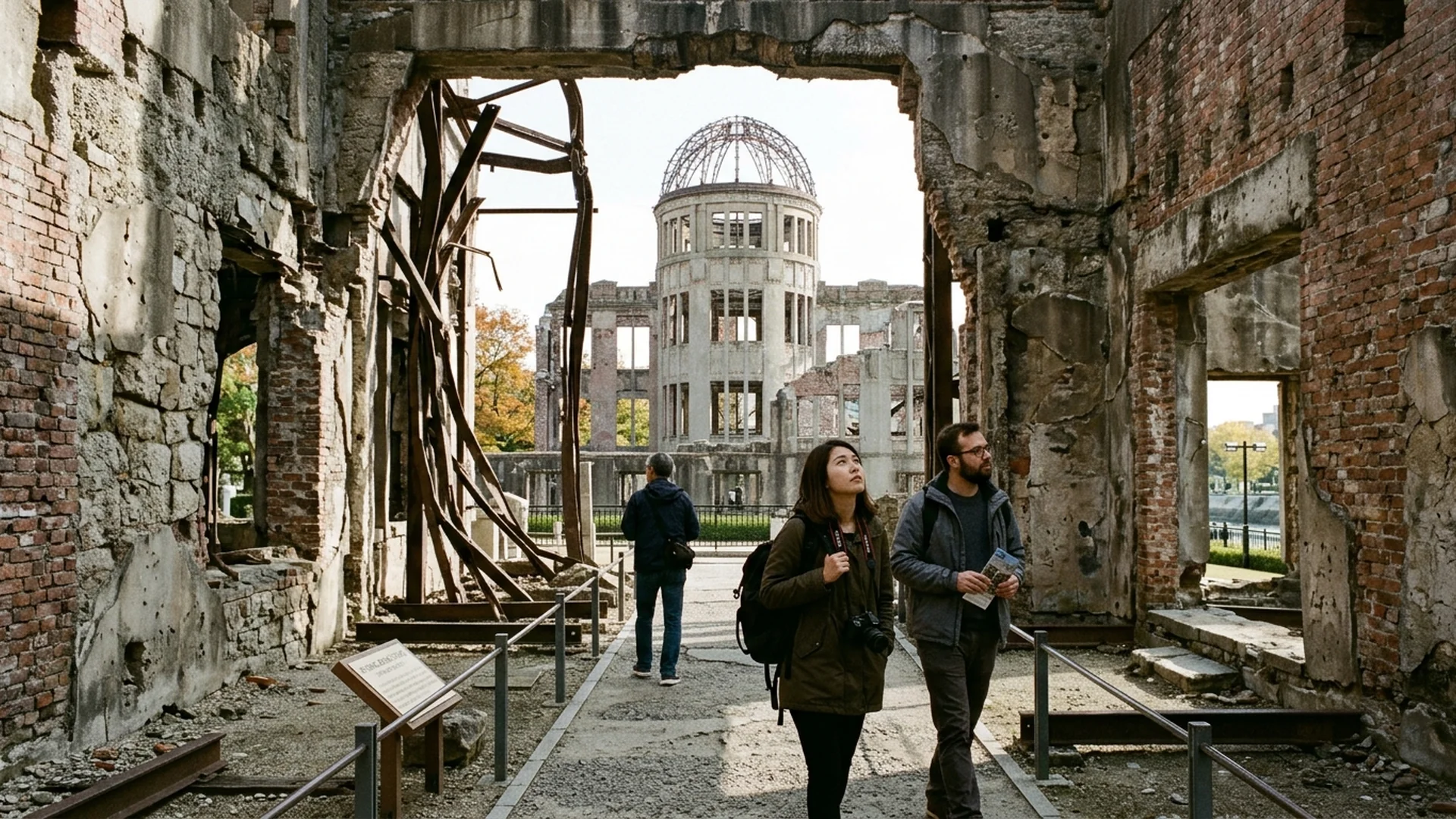
Amidst the tranquil flow of the Motoyasu River, the grim, charred skeletal framework of the domed ruin stands resolute against the passage of time. The Atomic Bomb Dome, universally known as the Genbaku Dome, transcends the status of a mere sightseeing waypoint; it remains an indelible monument to human memory, bearing silent witness to unimaginable suffering, profound resilience, and an unwavering global commitment to peace.
Stepping into this sacred memorial landscape is akin to crossing a threshold through architectural time, transitioning from the once-thriving grandeur of the Hiroshima Prefectural Industrial Promotion Hall to the stark, blasted remnants that withstood the atomic detonation on August 6, 1945. This transcreation invites the discerning traveler to explore the historical underpinnings, universal significance, and contemplative etiquette required to truly understand the living spirit of Hiroshima.
From Prosperity to Devastation: The Architectural Roots of the Genbaku Dome
Before its transfiguration into a universal emblem of peace, the structure served as the Hiroshima Prefectural Industrial Promotion Hall. Erected in 1915, it was designed by Czech architect Jan Letzel, who masterfully synthesized European artistic sensibilities with modern structural engineering. Distinguished by its striking elliptical copper-plated dome and advanced brick-and-mortar composition, the building stood as a premier hub for the city’s commercial and cultural exhibitions.
Yet, at precisely 8:15 on the morning of August 6, 1945, the course of global history shifted permanently. When the atomic bomb ‘Little Boy’ detonated mid-air a mere 160 meters away, the colossal thermal blast and downward-directed shockwaves instantly ended the lives of those within. Because the destructive force struck from a nearly vertical angle, the central steel columns and skeletal dome frame miraculously avoided total collapse, remaining as the solitary standing silhouette near the hypocenter.
A World Heritage of Memory: Inscribed by UNESCO
In 1996, UNESCO inscribed the Atomic Bomb Dome as a World Heritage cultural site under the designation ‘Hiroshima Peace Memorial (Genbaku Dome).’ Amidst international deliberation at the time, the enduring echoes of history ultimately prevailed, affirming that the site is not merely a monument to defeat, but an urgent, resonant reminder of the catastrophic perils of nuclear weaponry and the collective imperative to safeguard global peace.
The Japanese government and the citizens of Hiroshima committed to preserving the ruin in its raw, post-blast state. Through delicate structural engineering designed to prevent further collapse, the site retains its charred bricks, heat-twisted iron beams baked by temperatures soaring into thousands of degrees, and fractured concrete—offering every global visitor an unvarnished encounter with uncompromised truth.
The Aesthetics of Remembrance: Exploring the Peace Memorial Park
A contemplative stroll through the Hiroshima Peace Memorial Park, situated upon the delta formed by the Motoyasu River, evokes a deep sense of tranquil melancholy. The verdant grounds house numerous vital monuments and sculptures, including the Children’s Peace Monument adorned with millions of folded paper cranes sent by children worldwide in memory of Sadako Sasaki and young victims of radiation.
Nearby stands the Cenotaph for the A-bomb Victims, an arched concrete tomb housing the roster of all known lives lost. Peering through the monumental arch reveals the Flame of Peace, burning continuously until all nuclear arms are eradicated from the Earth. The surrounding landscape of manicured greenery and flowing waters highlights a poignant juxtaposition: the profound cruelty of human conflict set against nature’s resilient capacity for renewal and spiritual rebirth.