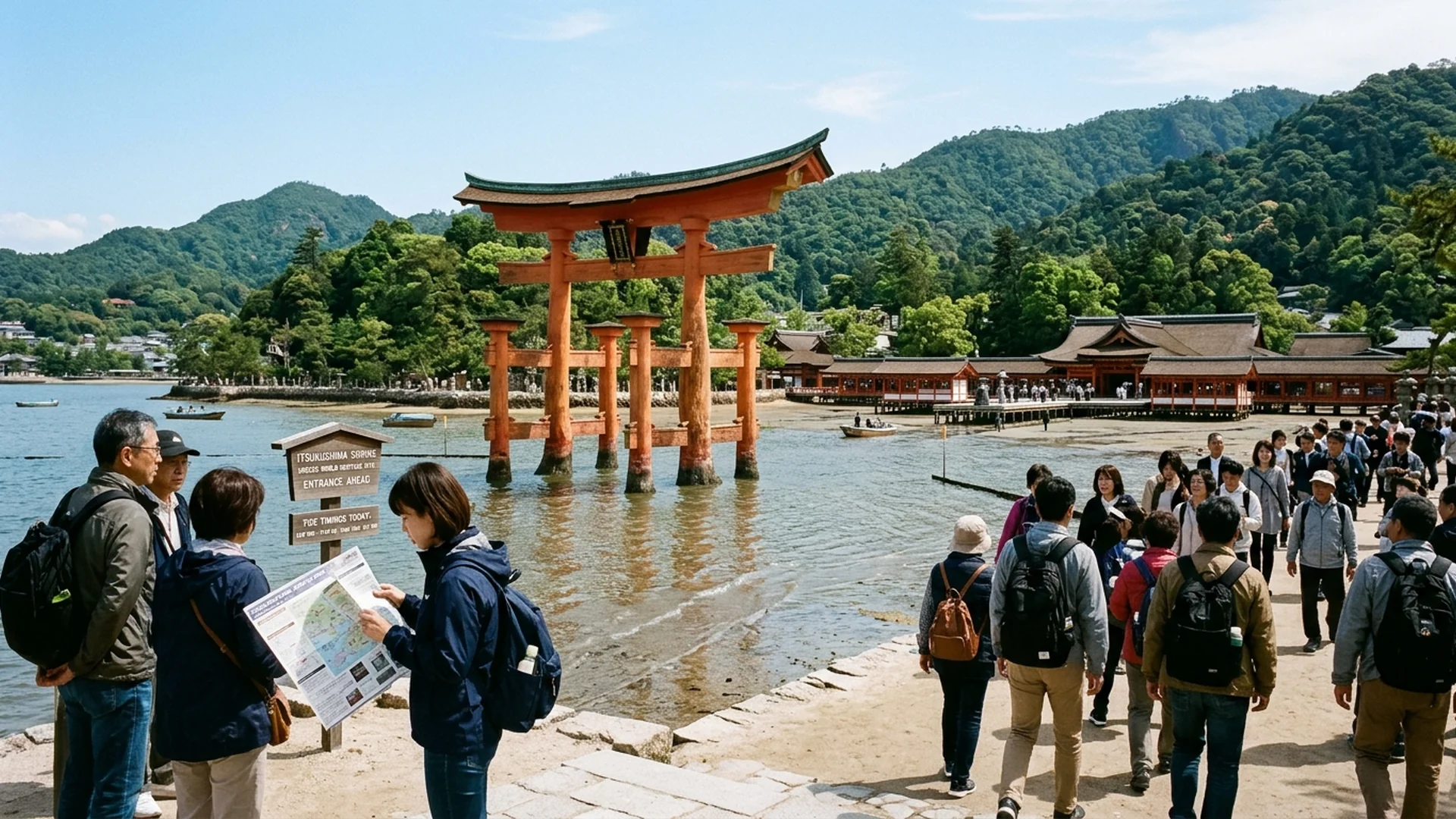
As the deep indigo waters of the Seto Inland Sea mirror the vermilion brilliance of sacred architecture, the boundary between the mortal realm and the divine begins to dissolve. Itsukushima Shrine on Miyajima Island in Hiroshima Prefecture is far more than a celebrated icon of Japanese tourism; it is an architectural and spiritual masterpiece rooted in over eight centuries of history. Because the very earth of the island was traditionally deemed too sacred to be trodden upon by human feet, the sanctuary was ingeniously engineered to float upon the sea, shifting in harmonious rhythm with the eternal tide.
To journey here is not merely to partake in superficial sightseeing, but to step into a suspended stillness that demands an acute attunement to natural cycles. This transcreated chronicle explores every dimension of Itsukushima Shrine, from its aristocratic Shinden-zukuri architectural heritage and precision planning using tidal charts for the ultimate view of the Great Torii gate, to the profound quietude of an overnight stay on a sacred isle as the last evening light fades into shadow.
Shinden-zukuri Architecture and the Spirit of a Sacred Isle
Beneath the breathtaking aesthetics of Itsukushima Shrine lies a profound Shinto tenet: the island of Miyajima itself—historically known as Itsukushima—is considered a living deity. Constructing buildings directly upon its sacred soil was historically regarded as sacrilege. To resolve this, Taira no Kiyomori, a formidable nobleman of the late Heian period, manifested this sanctuary in 1168, commissioning the elite Shinden-zukuri residential style favored by the aristocracy of the era. The main halls and long, vermilion-lacquered corridors, which stretch out gracefully like the wings of a crane, are elevated on sturdy timber pilings designed to accommodate the dramatic rise and fall of the sea. When the tide crests, the entire complex appears to float weightlessly upon the waves, enchanting beholders across the centuries. The vibrant vermilion not only contrasts exquisitely with the emerald canopy of Mount Misen and the azure sea, but ancient lore also attributes to it the mystical power to repel malevolent spirits and impurities.
The Science of Time: Decoding Tide Tables for the Ultimate Torii Gate Experience
The art of truly absorbing Itsukushima Shrine relies entirely upon mastering time. Because the sea levels within the bay fluctuate drastically with the tides, the surrounding landscape transforms utterly throughout the day. Discerning travelers consult precise tide tables in advance to curate their desired atmosphere. Those longing for the classic tableau of the colossal torii gate standing majestically amidst an expanse of open water, paired with a sanctuary that appears to drift upon the sea, must arrive during high tide—ideally when water levels exceed 250 centimeters. Conversely, those drawn to the tactile history of wading across damp sands to stand directly at the base of the towering gate—crafted from centuries-old camphor wood, complete with ancient coins wedged into its bark—should target low tide when levels drop beneath 100 centimeters. Aligning your itinerary with these natural pulsations is the definitive key to an unblemished, transcendent visit.
Nocturnal Aesthetics and the Conservation of Miyajima’s Land
As the golden sun dips toward the horizon, casting amber light across the water and the silhouette of the torii, the majority of visitors board the ferries back to Hiroshima. Yet for those wise enough to lodge overnight on the island, this heralds the most magical hour. A profound quiet blankets the ancient lanes; soft lanterns cast warm glows over traditional timber dwellings, and after dark, Itsukushima Shrine is illuminated by artful lighting. This nocturnal radiance highlights the shrine and its gate against the obsidian backdrop of the sea, rendering the atmosphere deeply solemn and overwhelmingly romantic. Furthermore, in the context of modern mindful travel, Miyajima remains fiercely committed to sustainability through the Miyajima Visitor Tax. This nominal 100-yen levy per traveler directly funds environmental stewardship, waste management, and the meticulous preservation of historic structures for generations yet unborn.