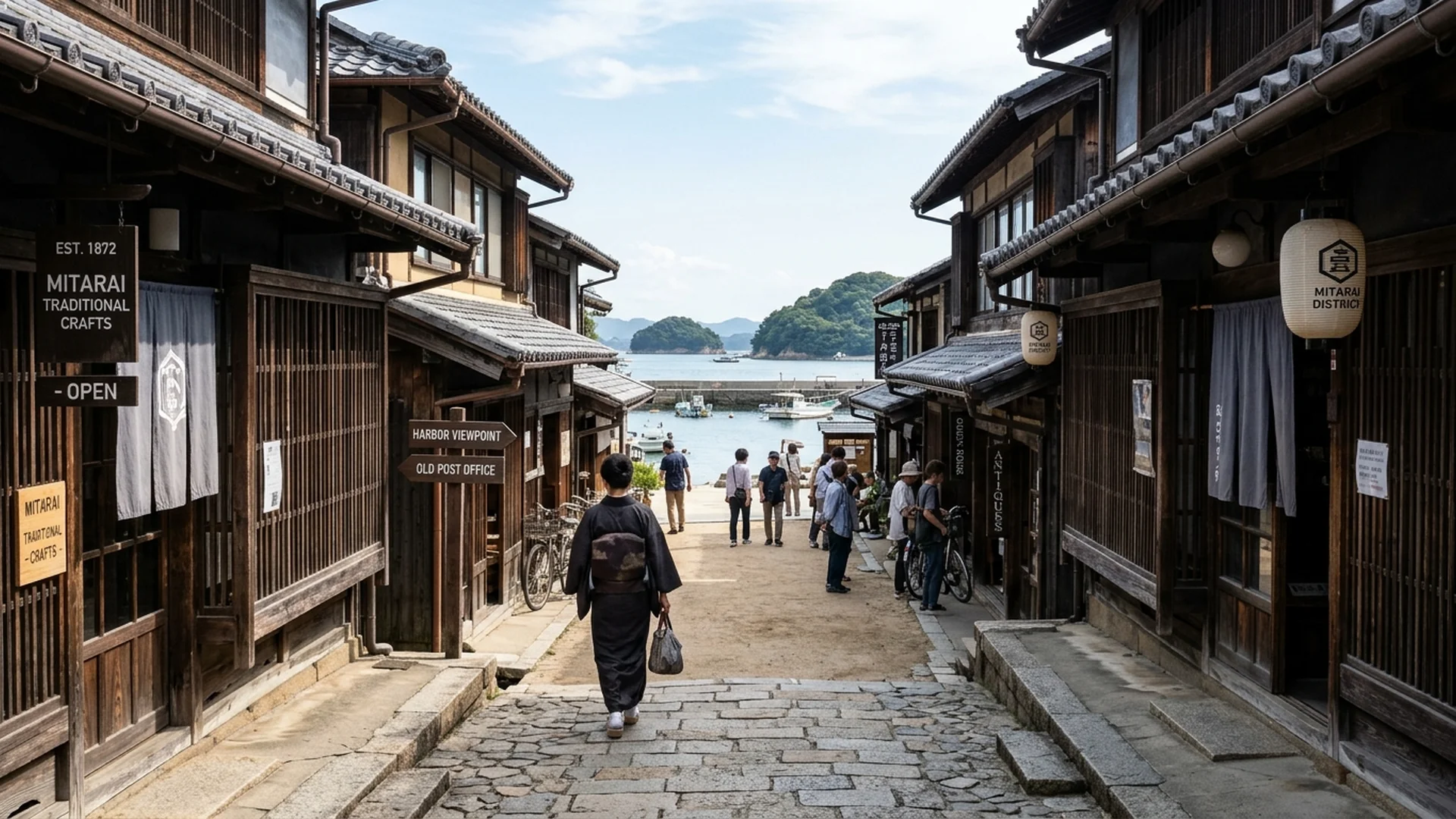
As the gentle breezes of the Seto Inland Sea sweep across the shimmering waters to the tranquil shores of Osakishimojima Island, time itself appears suspended in a delicate equilibrium between past and present. This is Mitarai, a historic preservation district hidden along a magnificent chain of island-linking bridges, wonderfully removed from the hurried currents of mass tourism. The air here remains subtly perfumed with the lingering romance of an era when sleek sailing merchant vessels dropped anchor in the harbor, waiting patiently for favorable winds and tides before pressing onward toward their distant destinations.
Crossing the threshold into Mitarai is akin to turning the pages of an impeccably preserved historical manuscript. Pristine wooden merchant dwellings dating from the Edo through the Showa eras line the narrow, quiet alleyways, bearing silent witness to traditional vernacular architecture that has miraculously survived the relentless march of modernity. The gentle lapping of waves against the tiered stone gangi steps and the long shadows cast by antique stone lanterns along the waterfront evoke the enduring maritime heritage of a community forever wedded to the sea.
The Wind-Waiting Port: A Maritime Legacy of the Seto Inland Sea
During the Edo epoch, when maritime navigation relied entirely upon the capricious whims of nature, Mitarai on Osakishimojima Island functioned as an indispensable harbor of refuge and maritime crossroads. Kitamaebune merchant vessels, diplomatic delegations bound for Korea, and regional daimyos traveling on official shogunate business were compelled to cast anchor here, waiting for the precise alignment of wind and tide. The immense wealth generated by this maritime commerce catalyzed Mitarai’s rapid evolution into a culturally sophisticated community boasting refined teahouses, traditional inns, and elaborate merchant residences whose structural integrity remains remarkably intact today. Its formal designation in 1994 as an Important Preservation District for Groups of Traditional Buildings stands as a profound testament to its cultural value.
Timeless Architecture: Gangi Stone Stairs and the Showa Playhouse
Wandering through Mitarai is an immersive masterclass in architectural detailing rarely encountered elsewhere. The journey begins along the waterfront, where historic breakwaters and towering stone lanterns once served as lighthouses for weary mariners. Nearby stand the gangi—ingenious stone staircases engineered to submerge and emerge with the relentless rhythm of the tide, facilitating seamless cargo transfer from deep-water vessels. Venturing deeper into Tokiwamachi Street reveals a harmonious juxtaposition of grand and modest merchant homes, alongside Wakaebisuya, an esteemed former teahouse licensed to operate since the early 18th century. Another essential cultural landmark is the Otomeza Theater, a charming 1937 Showa-era playhouse that vividly channels the vibrant popular entertainment of this historic port.
A 360-Degree Panorama from Rekishi-no-mieru oka Park
To fully comprehend the breathtaking geography of Mitarai, one must undertake the gentle ascent to Rekishi-no-mieru oka Park, translated aptly as History-View Hill Park. The thirty-minute walk from the lower parking area meanders past terraced groves of Ocho mandarin oranges—a prized regional citrus nurtured by the island’s volcanic soil and abundant Mediterranean-like sunshine. Upon reaching the summit pavilion, a sweeping vista of the Seto Inland Sea unfolds, revealing emerald and sapphire islands scattered across the horizon like fine brushstrokes. The deep azure waters catch the brilliant afternoon glare, contrasting sharply with the dark tiled rooftops of the village below to induce a profound sense of serenity.