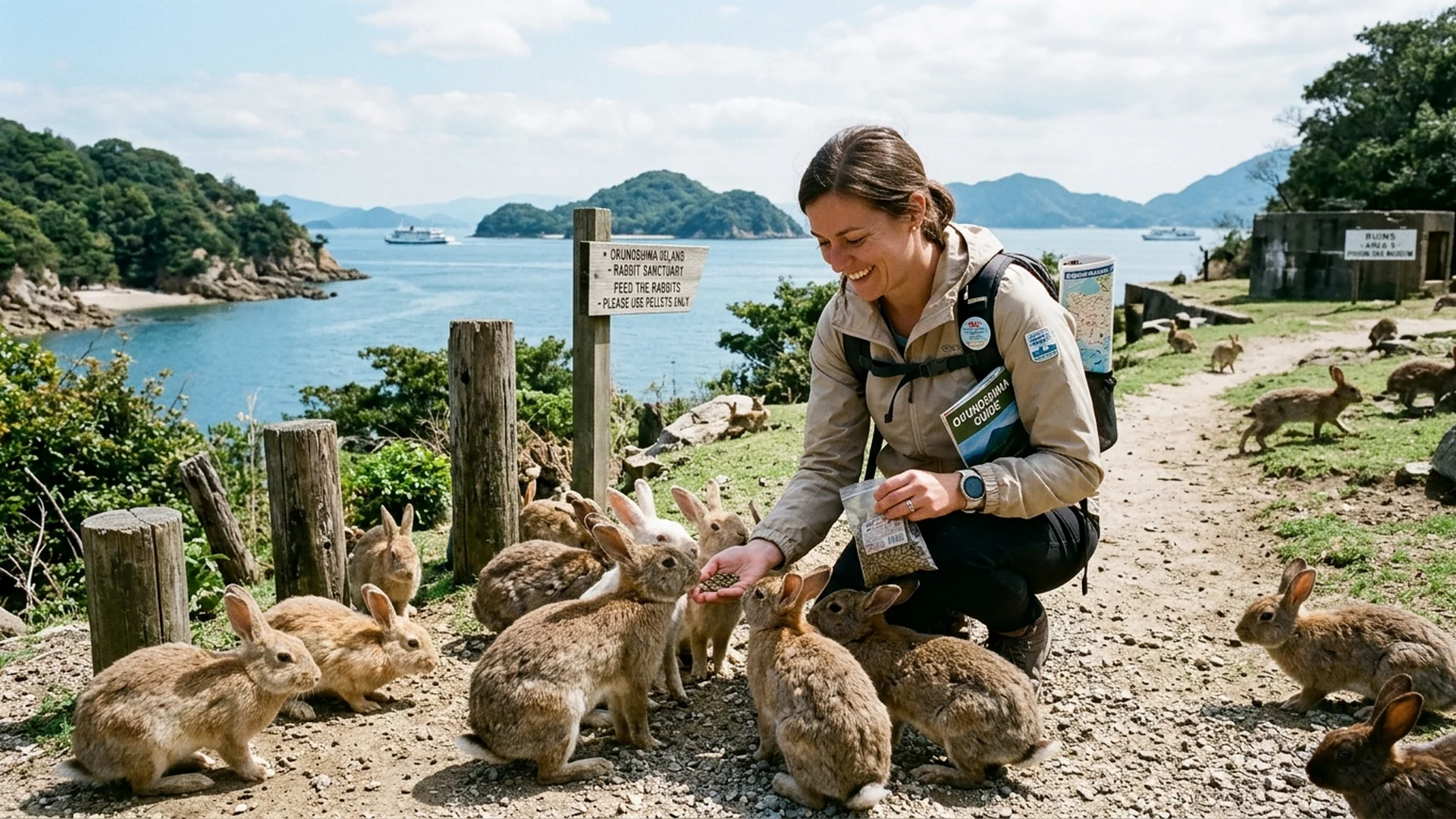
As the crisp, restorative breeze from the Seto Inland Sea sweeps across the shimmering expanse, a lush, emerald crescent emerges from the quiet waters. To many, this sanctuary is lovingly known as Usagi-shima, or Rabbit Island, a realm where soft-furred colonies bound toward visitors with untamed innocence. Yet beneath this tranquil veneer lies a somber, deeply layered narrative inscribed during the shadows of the Second World War. A journey to Okunoshima is thus far more than a leisurely escape; it is a profound passage into another dimension of Japan—one where pristine natural beauty and indelible history intertwine in quiet contemplation.
For the discerning traveler seeking depth, silence, and cultural resonance, this island offers a rare juxtaposition. Here, the sorrow of human conflict has been gently blanketed by the resilience of nature and the gentle presence of hundredfold life, inviting an unhurried meditation on peace, memory, and the delicate balance of our global ecosystem.
A Dual Heritage: From Clandestine Military Bastion to Sanctuary of Calm
Nestled in the central expanse of the Seto Inland Sea, just off the shores of Takehara and Mihara in Hiroshima Prefecture, Okunoshima was once deliberately erased from official maps. During the Second World War, the island served as a classified stronghold for the production of chemical arms and poison gas. Weathered red-brick ruins, crumbling armories, and skeletal fortifications now overtaken by encroaching greenery stand as silent sentinels to a painful chapter of history. When the hostilities ceased, nature slowly reclaimed its dominion, accompanied by the arrival of wild rabbits that evolved into living emblems of healing and renewal. This stark contrast between austere military architecture and the vibrant innocence of the rabbit population evokes a powerful, lingering resonance for every visitor.
The Art of Sustainable Exploration and Harmonious Coexistence
In the realm of high-end, conscious travel, approaching Rabbit Island requires a spirit of profound respect for the surrounding environment. The hundreds of rabbits inhabiting the shores are not domesticated farm animals, but wild creatures relying on natural foraging and balanced stewardship. Feeding must be conducted with deliberate care, using appropriate nutrition to safeguard their health and maintain the pristine integrity of the island landscape. Furthermore, the exclusion of private motor vehicles preserves an atmosphere of profound quietude, free from combustion and clamor. Only the rhythmic wash of the waves, pedestrian footsteps, and the gentle whir of bicycle wheels along coastal paths accompany the traveler, ensuring an authentic immersion in nature’s rhythm.
Historical Remnants and the Monument to Global Peace
A comprehensive understanding of Okunoshima necessitates quiet contemplation within the Okunoshima Poison Gas Museum, which curates archival documents, photographs, and historical artifacts detailing chemical warfare production. This documentation serves as a sobering reminder of human devastation and the imperative of safeguarding humanity. Standing before the decaying remnants of research stations and production facilities half-engulfed by emerald foliage offers a profound philosophical lesson. It mirrors the absolute tenacity of nature to heal human-inflicted scars while powerfully reaffirming the enduring global necessity for peace.