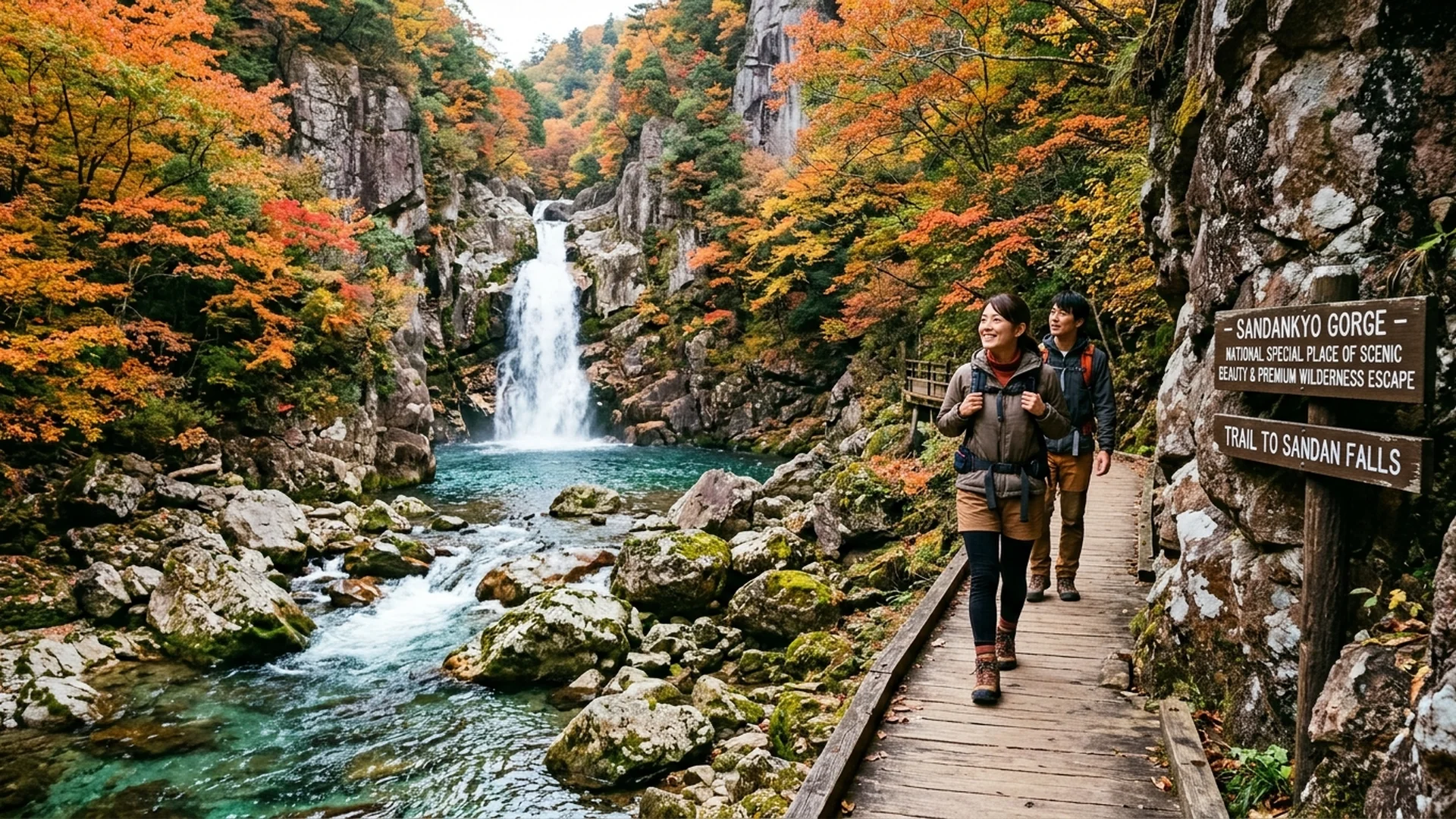
When the relentless hum of the metropolis fades, it is replaced by the gentle, eternal roar of rushing waters carving through ancient stone, accompanied by the scent of rain lingering in a primeval forest. Sandankyo Gorge in Hiroshima Prefecture is far more than a mere natural attraction; it is a sacred emerald sanctuary designated as a ‘Special Place of Scenic Beauty,’ an esteemed accolade reserved exclusively for Japan’s crown-jewel landscapes.
Enveloped in profound tranquility, this thirteen-kilometer gorge serves as a dream pilgrimage for discerning travelers seeking spiritual rejuvenation through shinrin-yoku—the ancient art of forest bathing. Every footstep along its pristine wilderness paths offers an exquisite detachment from haste, allowing time itself to slow down and inviting every sense to awaken to nature’s unfiltered majesty.
The Five Majestic Views: A Geological Symphony Carved by Time
At the beating heart of Sandankyo Gorge lies the renowned collection of vistas known simply as the ‘Five Majestic Views,’ a sequence of dramatic waterfalls and rock formations that define the canyon’s sublime geography. The journey begins with Sandan-no-taki, a magnificent three-tiered cascade plunging gracefully into an azure pool, followed by the formidable two-tiered Nidan-no-taki and Mitsutaki, where three distinct torrents converge with the harmonious precision of a classical ink painting.
Beyond these thunderous cascades, the gorge conceals topographical wonders such as Sarutobi, a narrow chasm embraced by towering cliffs where sunlight filters down only in delicate golden slivers, creating an aura of timeless mystery. The sequence culminates at Kurobuchi, a serene, deep-emerald pool that mirrors the surrounding canopy like an undisturbed obsidian glass. Through every passing season, these ever-shifting landscapes offer an entirely transfigured expression of natural artistry.
The Art of the Wooden Skiff: Intimate Navigation Through Emerald Canyons
To truly comprehend the soul of Sandankyo is to surrender oneself to the water rather than observing it from a distance. The traditional hand-prowled wooden skiffs, operated through ancestral boatman techniques, offer an immersive passage unattainable by foot. Expert boatmen utilize wooden poles with quiet mastery, guiding the craft through churning currents and compressed stone corridors with effortless precision.
As the slender wooden vessel slips quietly into the Sarutobi chasm, towering vertical rock walls rise impossibly close, evoking an instantaneous sense of awe. The rhythmic whisper of the wooden pole against the water and the soft breath of the surrounding forest merge into a symphony of absolute peace. For the traveler, it remains a rare, deeply personal communion with the unbridled scale of the wilderness, cooled by the mist of ancient falls.
Forest Therapy Road: Restoring Body and Spirit in an Emerald Sanctuary
Dense with ancient canopy foliage, botanical diversity, and air rich in therapeutic phytoncides, the hiking trails tracing Sandankyo Gorge have earned official certification as a premier ‘Forest Therapy Road.’ This dedicated pathway is intentionally curated to mend the frayed edges of modern fatigue, offering a sanctuary for physiological and psychological realignment.
The trail network accommodates a contemplative range of journeys, from gentle riverside strolls to more invigorating ascents along cliffside paths. Each measured stride functions as an act of quiet healing; the rustle of leaves, the damp aroma of earth, and filtered sunlight dancing through the boughs combine to lower cortisol, steady the heartbeat, and invite the spirit back into quiet alignment with the natural world.