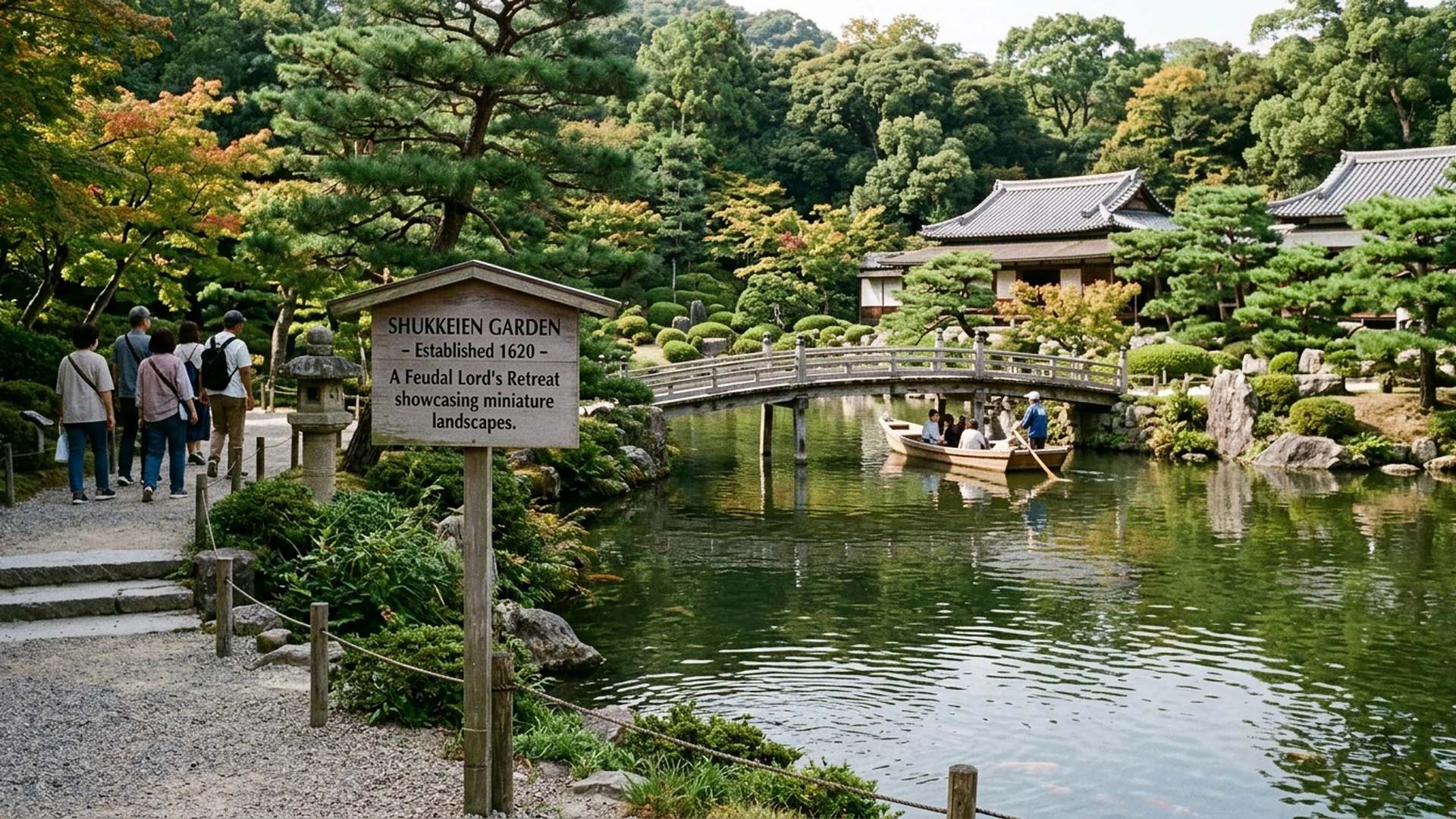
Crossing the threshold through the weathered brick walls and vermilion gates of Shukkeien Garden, the energetic pulse of modern Hiroshima instantly recedes into silence. The world outside seems to pause, replaced entirely by the gentle whisper of wind through ancient pines and the soft lapping of water against manicured shores. This sanctuary is far more than a mere urban park; it is a four-hundred-year-old architectural essay in contemplation, reflecting the refined aesthetic philosophy of the ruling elite of the Edo period. Conceived under the principle of shukkei—meaning compressed scenery—the entire expanse miniaturizes the majestic geography of towering peaks, deep valleys, and legendary vistas into a harmonious sanctuary spanning just 4.7 hectares at the city’s heart.
Commissioned in 1620 by Asano Nagaakira, the feudal lord or daimyo of Hiroshima, the garden was placed in the visionary hands of Ueda Soko, a trusted vassal, master tea practitioner, and peerless landscape architect. Every element within the sanctuary was arranged with deliberate strategy. The circular tour path invites visitors to experience shifting perspectives with every unhurried stride, offering a passage through both time and idealized nature.
The Philosophy of Shukkei and the Mastery of Ueda Soko
The enduring aesthetic value of Shukkeien lies in the profound meaning behind its name, which translates to ‘garden of contracted scenery.’ Ueda Soko applied the principles of daimyo garden design not merely for visual splendor, but as a physical manifestation of Zen spirituality and the Way of Tea. At the center of the grounds lies Takuei-chi, a vast pond that evokes the vastness of the Seto Inland Sea, dotted with more than a dozen islands including symbolic sanctuaries of longevity dedicated to the crane and the turtle.
The winding circular pathway guides visitors through shifting visual dimensions. One moment finds the traveler standing beside a simulated cliffside evoking a deep mountain gorge; the next opens up to expansive lawns and serene waterside pavilions. The precise placement of arched stone bridges and weathered granite lanterns has been calculated with acute attention to shadow and light, ensuring every perspective evokes the evocative brushstrokes of classical East Asian landscape painting.
Echoes of Time: The Kokokyo Bridge and a Spirit Reborn from Ashes
The history of Shukkeien has not been without profound trials. In 1758, a devastating fire swept through the grounds, necessitating extensive reconstruction during the late Edo era. More tragically, the atomic bombing of August 6, 1945, located just 1.2 kilometers away from the hypocenter, reduced the historic landscape to absolute ruin.
Yet, driven by an unwavering dedication to preserving the spirit of their ancestors, the citizens of Hiroshima painstakingly restored the garden according to original blueprints over several decades. Iconic landmarks such as the graceful stone arch of the Kokokyo Bridge, which casts a brilliant rainbow reflection upon the water, and the Seifukan guest tea house were successfully resurrected. Today, they stand as profound monuments of resilience, narrating a journey from devastation to enduring peace.
Four Seasons of Aesthetic Grace and Refined Tea Ceremonies
The beauty of Shukkeien shifts in graceful tandem with the changing breath of the seasons. In spring, hundreds of cherry trees burst into delicate blossoms around the pond, followed by vibrant carpets of seasonal flora. When autumn arrives, the miniature forests ignite in brilliant shades of crimson and amber Japanese maples, highlighted after dark by evening illuminations that cast mesmerizing reflections across the quiet waters.
Crucially, true immersion into this luxury experience is found by participating in traditional tea ceremonies hosted continuously throughout the year within the garden’s historic pavilions. Whether marking the early plum blossoms in February, the peak cherry blossoms in April, or the fiery foliage of November, guests kneel upon tatami mats to listen to the gentle bubbling of iron kettles. Tasting a bowl of frothy, bitter matcha paired with seasonal wagashi confections offers an authentic encounter with the sublime simplicity of wabi-sabi.