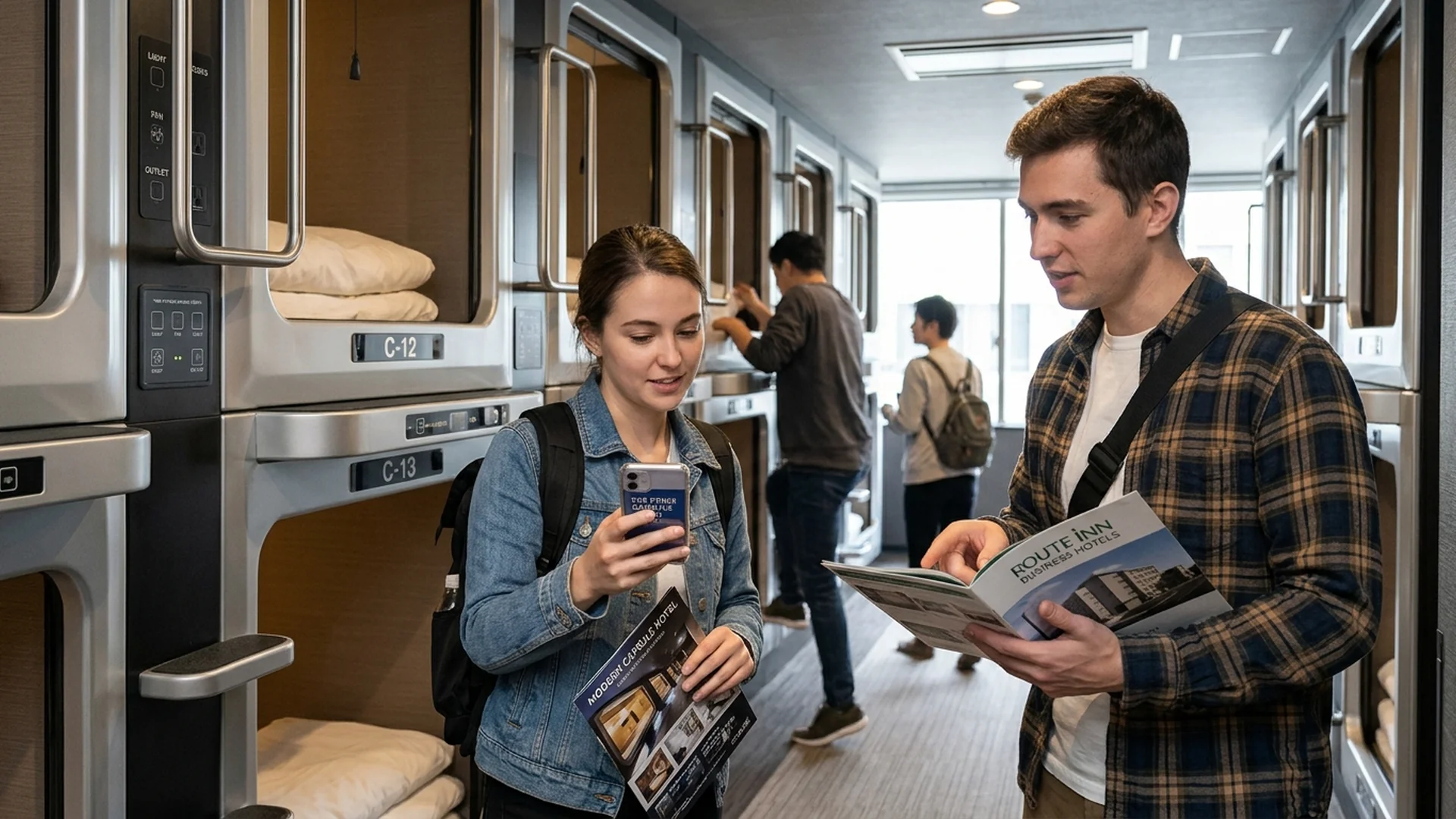
When the neon luminescence of Tokyo and Osaka begins its nightly crescendo, the pursuit of a tranquil and economical resting place amidst the concrete expanse transforms into an elevated discipline for the modern traveler. Caught between the compact yet self-contained sanctuaries of popular business hotel chains and the radical evolution of futuristic capsule hotels that entirely discard antiquated tropes, the lodging decision transcends mere economics. It becomes a delicate balancing act of personal space, baggage choreography, and the quiet aesthetics of repose.
Visiting contemporary Japan introduces increasingly intricate spatial and budgetary equations. Understanding the structural taxonomy, architectural nuances, and amenity philosophies of these dual lodging typologies unlocks a seamless journey, banishing anxieties regarding nocturnal refuge and elevating ordinary evenings into cherished chapters of your voyage.
The Business Hotel Realm: Perfection Engineered Within Spatial Constraints
Japanese business hotels—exemplified by distinguished names such as APA Hotel, Daiwa Roynet, and Dormy Inn—are meticulously architected to satisfy corporate travelers and discerning tourists demanding uncompromising cleanliness and comprehensive convenience. Though famously compact, with footprints frequently initiating at eleven to fifteen square meters, interior spatial planning is executed with cerebral precision. Every square inch is optimized, featuring high-grade ergonomic mattresses designed to absorb kinetic energy, streamlined writing desks, and modular prefabricated bathrooms containing bathtubs deep enough to immerse aching limbs after arduous days of urban exploration.
The defining hallmark here is absolute predictability of quality. Guests encounter crisp yukata robes, exhaustive vanity provisions, and rigorous security architecture. Furthermore, select innovators distinguish themselves through bespoke offerings; Dormy Inn entrances travelers with authentic natural hot spring baths (Daiyokujo) on-site, complemented by the comforting nocturnal ritual of complimentary Yonaka Soba noodles. Consequently, residing within a business hotel transcends mere slumber, evolving into a restorative ritual of physical and mental renewal.
The Evolution of Modern Capsule Hotels: Minimalism Meets Avant-Garde Design
Amnesia must be granted to outdated perceptions of capsule lodging as claustrophobic, stacked plastic chambers. Contemporary pioneers like Nine Hours (9h) and First Cabin have revolutionized the sector through minimalist philosophies and architectural interiors favoring airiness, acoustic discretion, and visual serenity. Strict gender-segregated zoning is universally enforced to preserve sanctuary, privacy, and peace of mind.
These modern alcoves prioritize sensory refinement through sophisticated light-blocking curtains, advanced acoustic damping, ergonomically tuned mattresses, and localized micro-climate ventilation. While ablution spaces remain communal, they undergo rigorous, round-the-clock sanitation regimens and provide premium amenities rivalling traditional establishments. Such havens prove singularly ideal for unburdened solo explorers who prize pristine hygiene, uncompromising security, and hyper-central addresses at fractional tariffs.
The Art of Luggage Choreography in Japan’s Compact Interiors
A quintessential challenge for international travelers anchoring themselves in Tokyo or Osaka involves reconciling voluminous luggage with constrained architectural footprints. Opting for a business hotel necessitates clever deployment of twenty-eight-inch suitcases—either sliding them gracefully beneath elevated bedframes or utilizing folding luggage stands to preserve unobstructed pathways toward ablution facilities. Conversely, capsule hotels generally allocate designated communal luggage alcoves or segregated lockers independent of sleeping quarters, occasionally prohibiting oversized cases from entering the sleeping pods directly. Discerning visitors therefore master the discipline of packing cubes, segmenting essential garments into streamlined daypacks to effortlessly retrieve nocturnal necessities without disturbing fellow guests.