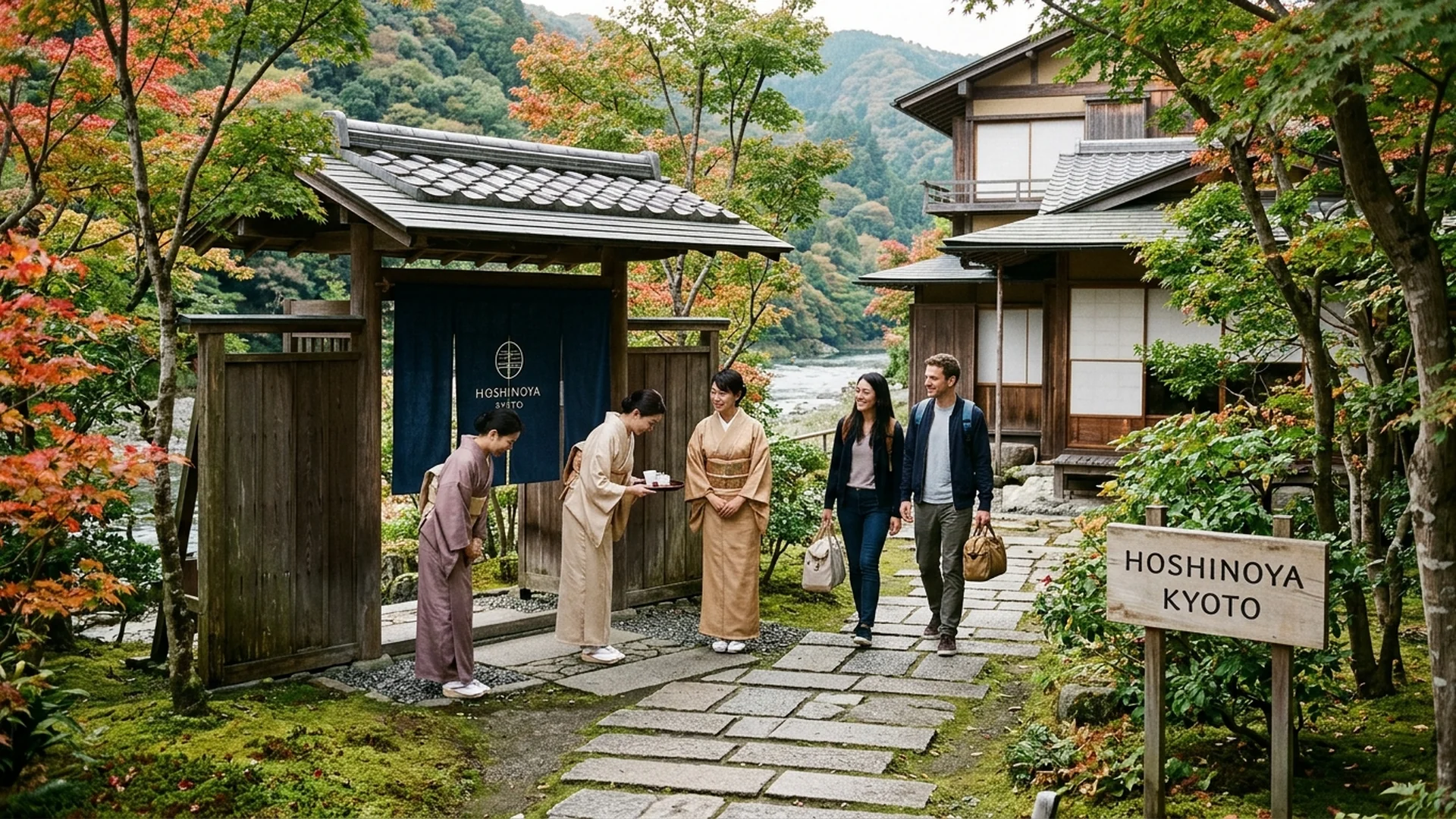
When the boundary between international modern refinement and time-honored architectural grace begins to dissolve, a journey to the Land of the Rising Sun transcends mere accommodation. It becomes an inquiry into the very essence of living artfully. Standing at a fascinating crossroads in contemporary luxury travel, discerning guests must weigh the impeccably seamless service of world-renowned architects against the quiet resonance of tatami mats steeped in centuries of heritage.
Discerning the distinction between ultra-luxury flagships like Aman or Hoshinoya and heritage lodges such as Asaba or Hiiragiya is not simply a matter of taste or pedigree. It is an intentional choice of lexicon—deciding the precise language through which your spirit wishes to commune with nature, silence, and the relentless march of time.
Architecture of the Spirit: Global Minimalism Versus Sabi-Wabi Aesthetics
International luxury hotels frequently champion a design ethos that marries contemporary minimalism with contextual locale. Expansive floor plans, soaring ceiling heights, and floor-to-ceiling glass frame panoramic vistas of Mount Fuji or the pine forests of Karuizawa without interruption, managed effortlessly by intuitive, invisible technology. Conversely, within heritage ryokan, time appears to decelerate. Constructed from fragrant sugi cedar or hinoki cypress according to ancient spatial wisdom, these properties speak in subtle whispers: the gentle creak of polished timber floors, the verdant scent of fresh woven rush grass, and meticulously raked Zen stone gardens that bridge the traveler directly to the natural world without synthetic artifice.
The Ritual of Waters: Decoding Gensen Kakenagashi and Private Onsen
The sacred heart of any distinguished Japanese inn is its thermal spring water. Premier ryokan strictly utilize Gensen Kakenagashi—unadulterated natural mineral water flowing directly from source to tub at 100% purity, entirely free of mechanical recirculation or artificial chemical treatment. While high-rise urban luxury properties may face architectural constraints or strict municipal filtration mandates, the choice of a suite with a private Rotenburo offers a profound duality: steaming amidst misty mountain valleys where time stands still, versus gazing out at glittering city skylines from a high-altitude terrace.
The Palette of Seasons: Kaiseki Artistry and the Philosophy of Omotenashi
Dining within a five-star ryokan transcends mere sustenance; it is an immersive tasting of seasonal poetry known as shun, celebrating nature at its absolute peak of flavor. Ingredients harvested daily from surrounding forests and coastal tides are presented with quiet reverence by a dedicated nakai-san—a personal attendant who oversees your comfort from arrival until departure. Unlike international hotel dining rooms offering diverse global menus, traditional ryokan extend a deep, intensely personal form of omotenashi, creating the sensation of returning to a cherished ancestral home.