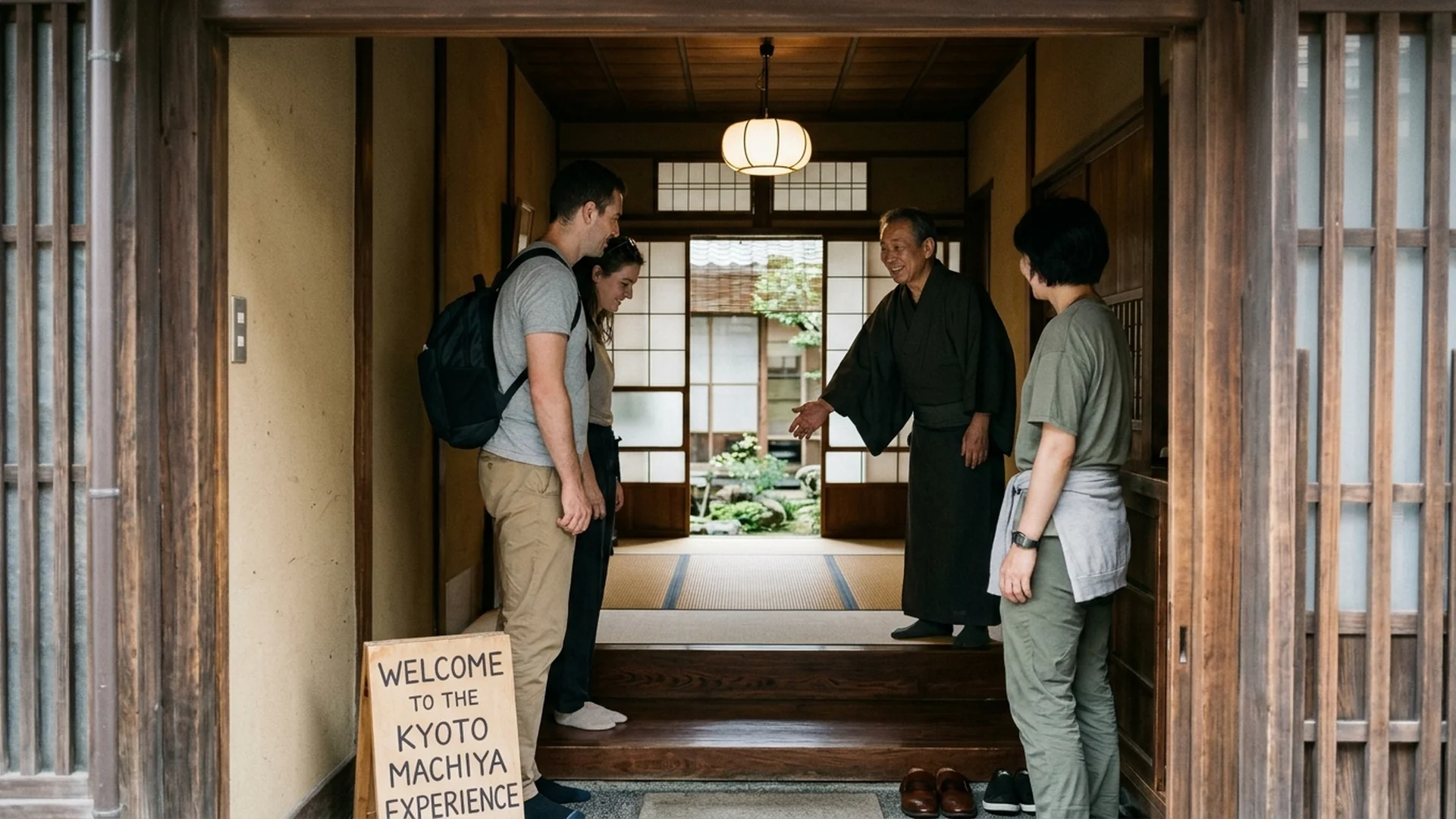
The gentle whisper of footsteps upon aged tatami mats, the faint, earthy aroma of woven rush grass blending with minimalist contemporary design, and soft morning sunlight casting shadows across an interior courtyard—this is the antithesis of the standard hotel stay. In an era where travel has evolved beyond mere relocation into an intentional search for meaning and local rhythm, the Machiya, Japan’s traditional wooden townhouse, has emerged as a treasured sanctuary for discerning global travelers and families alike.
Yet beneath the striking aesthetic of dark timber pillars and the narrow yet remarkably deep floor plans known to Kyoto residents as unagi-no-nedoko—or the eel’s bed—lies a delicate cultural heritage. Reserving a Machiya is not simply a matter of securing convenient lodging; it is an invitation to step quietly into a living, breathing historic community, carrying with it a profound responsibility to honor ancestral codes of conduct.
Architecture Across Time: Decoding the Mastery of Machiya Design
A Machiya is far more than an antique wooden dwelling; it is an architectural marvel forged through centuries of intelligent adaptation to local climates and societal structures. The exterior is famously characterized by kōshi, delicate vertical wooden lattices that artfully filter sunlight while preserving privacy from the bustling lane outside. Meanwhile, the interior extends deep into the plot, a clever historical response to feudal property taxes levied according to street frontage.
At the spiritual and environmental heart of the townhouse lies the tsuboniwa—a compact inner garden that serves as the dwelling’s breathing lung, circulating fresh air and drawing soft, natural light into the deep core of the structure. Contemporary renovations of these historic spaces gracefully bridge the past and present, pairing raw, structural timber chosen for its enduring strength with state-of-the-art luxuries, including digital spa-like bathrooms, radiant floor heating, and modern kitchens artfully concealed behind antique cabinetry and vintage apothecary chests.
A New Dimension of Group Travel: The Intimacy Unattainable in Hotels
For multi-generational families or close circles of friends, booking a whole-house Machiya rental offers an incomparable alternative to five-star homogenization: the rare privilege of temporary domestic custodianship. Gathering around a warm kotatsu table in absolute stillness, or waking to prepare a gentle breakfast sourced fresh from historic vendors at Nishiki Market, fosters an intimacy that ordinary accommodations simply cannot replicate.
The fluid interior spaces, divided by delicate fusuma paper sliding doors and shoji screens, allow bedrooms and sitting parlors to transform effortlessly according to your needs. Every square meter of these timber sanctuaries carries the weight of history, inviting guests to slow their pace and savor the quiet rhythms of daily life.
The Art of Communal Harmony: Unwritten Rules of Historic Neighborhoods
Residing within a Machiya carries social responsibilities that international visitors frequently overlook. Because these structures are crafted from traditional materials—wood, earth, and straw—acoustic insulation is inherently limited. Furthermore, most Machiya are nestled within tranquil residential quarters shared by generations of elderly locals.
The most inviolable rule is the absolute cessation of loud noise after 9:00 PM, encompassing elevated conversations, music, and heavy footsteps on second-story wooden floors. Additionally, meticulous waste separation according to strict municipal codes in cities like Kyoto and Kanazawa is mandatory. Disregarding these protocols risks fracturing the delicate equilibrium between the historic community and the travelers who pass through.
Prime Coordinates: Exploring Premier Machiya Enclaves
Kyoto remains the undisputed heartland of the Machiya, particularly within Kamigyo Ward and the atmospheric lanes of Gion, where geisha traditions and timber facades still flank cobblestone streets. Residing in these districts allows for quiet morning strolls through mist-veiled alleys long before the arrival of daytime crowds.
Meanwhile, Kanazawa—the historic capital of traditional arts and crafts in the Hokuriku region—offers an equally compelling alternative. In the beautifully preserved Higashi Chaya district, immaculate Machiya rentals provide an immersive atmosphere where travelers can connect deeply with the region’s legendary artisan heritage.