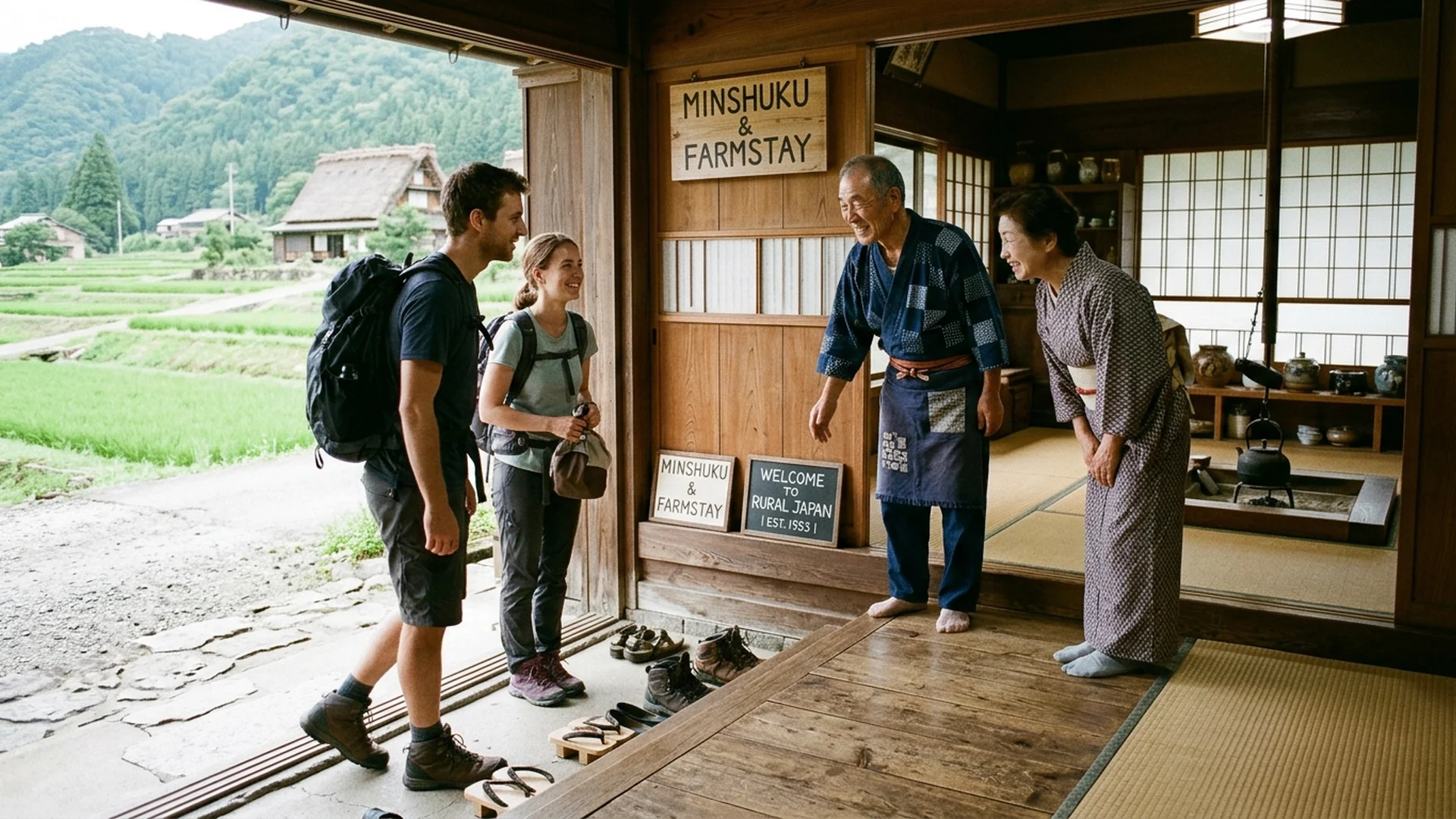
When the rhythmic hum of the bullet train slowly dissolves, replaced by the gentle rustle of wind through terraced paddies and the faint, earthy aroma of drying straw, another Japan reveals itself. This is a dimension untouched by the glittering glass of metropolitan high-rises. Crossing the weathered wooden threshold of a traditional minshuku—a family-run Japanese guesthouse—or settling into a rural farmstay is akin to stepping across the threshold of time itself, straight into the sanctuary of Inaka, the soulful Japanese countryside.
Here, beneath ancient timber rafters scented with the quiet nostalgia of tatami mats and the comforting warmth of a hearth, evenings unfold unhurriedly. The hospitality offered is not born of corporate hospitality manuals or commercial luxury standards, but of an enduring, generational bond with the land and the changing of the seasons. In these quiet valleys, guests are welcomed not as paying patrons, but as returning members of the family.
The Allure of Minshuku: Unpretentious Grace Versus Grand Ryokans
While both minshuku and traditional ryokans offer contemplative tatami-mat chambers and plush futon bedding, their underlying spirits diverge profoundly. A ryokan often champions refined luxury, meticulous service rituals, and elevated aesthetic curation. A minshuku, conversely, is an intimate, family-run residence where the atmosphere mirrors that of visiting cherished older relatives in the provinces. Architecture typically showcases time-worn cedar pillars and delicate shojipaper screens that filter the soft morning light across woven rushes. Amenities remain delightfully modest, honoring ancestral simplicity. Bathrooms and bathing facilities are frequently communal, fostering a subtle, harmonious awareness of shared spaces and collective living.
The Rhythm of the Farmstay: When the Soil Tells Its Stories
Venturing into a rural farmstay, known locally as nouhaku, releases the traveler from the relentless tyranny of modern itineraries. Daily life begins with the earliest morning light alongside generational agrarians. Whether stepping out to the back-garden plot to harvest dew-kissed seasonal greens for the midday table, kneading freshly milled buckwheat flour for handmade soba, or walking through ancient paddy fields tended by ancestors across centuries, every shared movement forges a profound human connection. The laughter shared in the furrows of the earth offers an intimacy that no guidebook can ever replicate.
Tasting the Seasons: Zero-Kilometer Home-Cooked Feasts
The beating heart of any minshuku or farmstay experience is shokuji—the home-cooked meal prepared with profound mindfulness. Nearly all ingredients travel zero kilometers from the family’s organic plots or the surrounding forests and mountain streams. Each dish preserves ancient preservation arts and local culinary wisdom: crisp, probiotic-rich pickles crafted by the matriarch, steaming bowls of miso fermented in earthenware crocks, river fish kissed by sea salt over charcoal embers, or a bubbling nabe hotpot brimming with mountain vegetables and pristine broths. Gathering around a low chabudai dining table with the hosts, communicating through smiles and shared gestures, elevates dining into a sacred cultural communion.