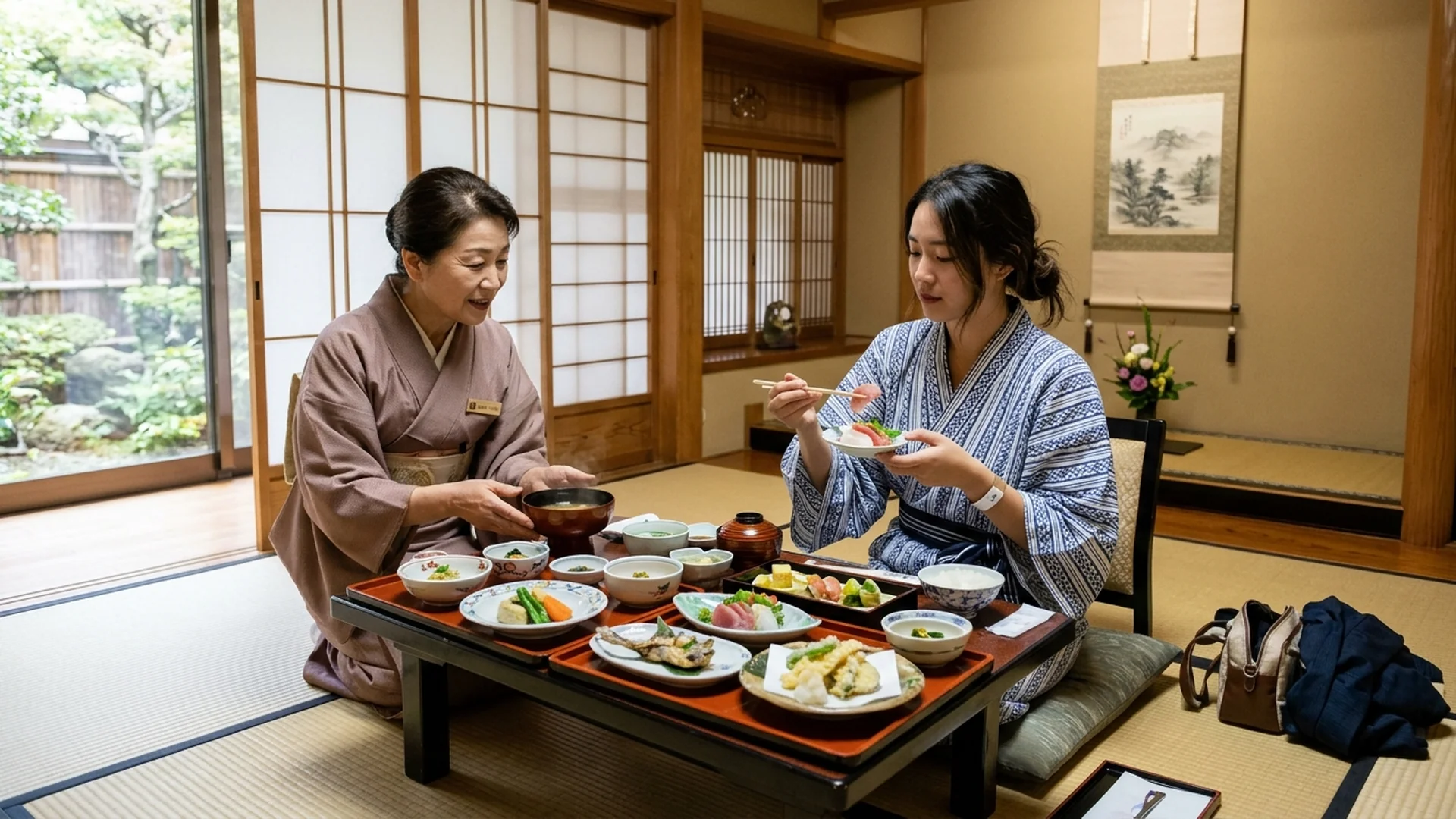
The moment the sliding wooden door glides open, a delicate, earthy fragrance of natural woven rush grass drifts across the senses, as if the outside world and its hurried modern pace have been gently excised from existence. Crossing the threshold into a ryokan—Japan’s venerable traditional inn—is not merely about securing a place to sleep for the night; it is stepping fully into a living kingdom of aesthetics where every footstep and nuance is imbued with profound philosophy.
Yet, for the international traveler accustomed to the standardized conventions of global hospitality, entering this sacred realm can occasionally stir a quiet hesitation. From the precise choreography of removing footwear to the sacred geometry of wrapping a yukata, and onward to the sophisticated cadence of an in-room kaiseki feast, the rituals require mindful attention. This definitive guide decodes every traditional protocol, ensuring your immersion into authentic Japanese culture is impeccably graceful and profoundly understood.
The First Bow: The Genkan Threshold and the Philosophy of Omotenashi
Upon arriving at a ryokan, your first encounter is with the genkan—the raised entry threshold that acts as a physical and spiritual boundary separating the bustling outside world from the serene sanctuary within. The primary and most inviolable rule here is to remove your shoes, turning them to face outward toward the door so they are ready for your eventual departure. You then step into guest slippers for navigating the common corridors. Crucially, these slippers must never touch the delicate tatami mats of your private guest room. Tatami, woven from natural rush straw, is exquisitely sensitive and demands the utmost preservation of cleanliness.
Once inside, you are warmly greeted by your nakai-san, your personal room attendant. She serves as the living embodiment of omotenashi—Japan’s peerless ethos of hospitality, which transcends mere duty to encompass a heartfelt intuition for the guest’s comfort. The nakai-san welcomes you with steaming green tea and seasonal confectionery, gently introducing the ryokan’s amenities with a soft grace and an authentic smile.
The Art of Attire: Decoding the Yukata and Essential Dressing Rules
The freshly pressed yukata laid out upon your room’s low table serves as an invitation to shed worldly tensions entirely. Yet donning this casual cotton kimono demands adherence to strict traditional etiquette. The cardinal rule is absolute: the left lapel must always fold over the right lapel. Folding the right side over the left is reserved solely for dressing the deceased in traditional funeral rites. Therefore, one must exercise careful mindfulness when adjusting the robe before the mirror.
The matching sash, or obi, should be tied snugly without causing discomfort—traditionally secured around the lower hips for gentlemen, and around the waist or just beneath the bust for ladies. While the yukata is principally designed for lounging within your room, wandering the peaceful gardens, or visiting the inn’s hot springs (onsen), guests should layer it with a traditional haori jacket during cooler weather and ensure the attire remains neat and properly fastened whenever venturing into shared public spaces.
A Symphony of the Seasons: The Aesthetics of Heyazoku Kaiseki
The crown jewel of any ryokan residency is partaking in kaiseki ryori, the zenith of traditional Japanese culinary artistry, particularly when served heyazoku—meaning course by course directly within the intimate sanctuary of your own guest room. Each dish is not merely a remedy for hunger, but a poetic narrative reflecting the micro-season, locally foraged delicacies, and the wabi-sabi philosophy of finding transcendent beauty in simplicity and imperfection.
The nakai-san orchestrates the meal with quiet precision, presenting each course in deliberate sequence—from the delicate appetizer (sakizuke) and sashimi to grilled specialties, simmered dishes, soups, and seasonal sweets. Etiquette invites you to first admire the artistry of the ceramics and lacquerware, chosen specifically to harmonize with the culinary theme of the month. Once you have finished, there is no need to clear the table; simply leave the arrangement to the nakai-san, who will return to prepare your plush futon bedding for the night.