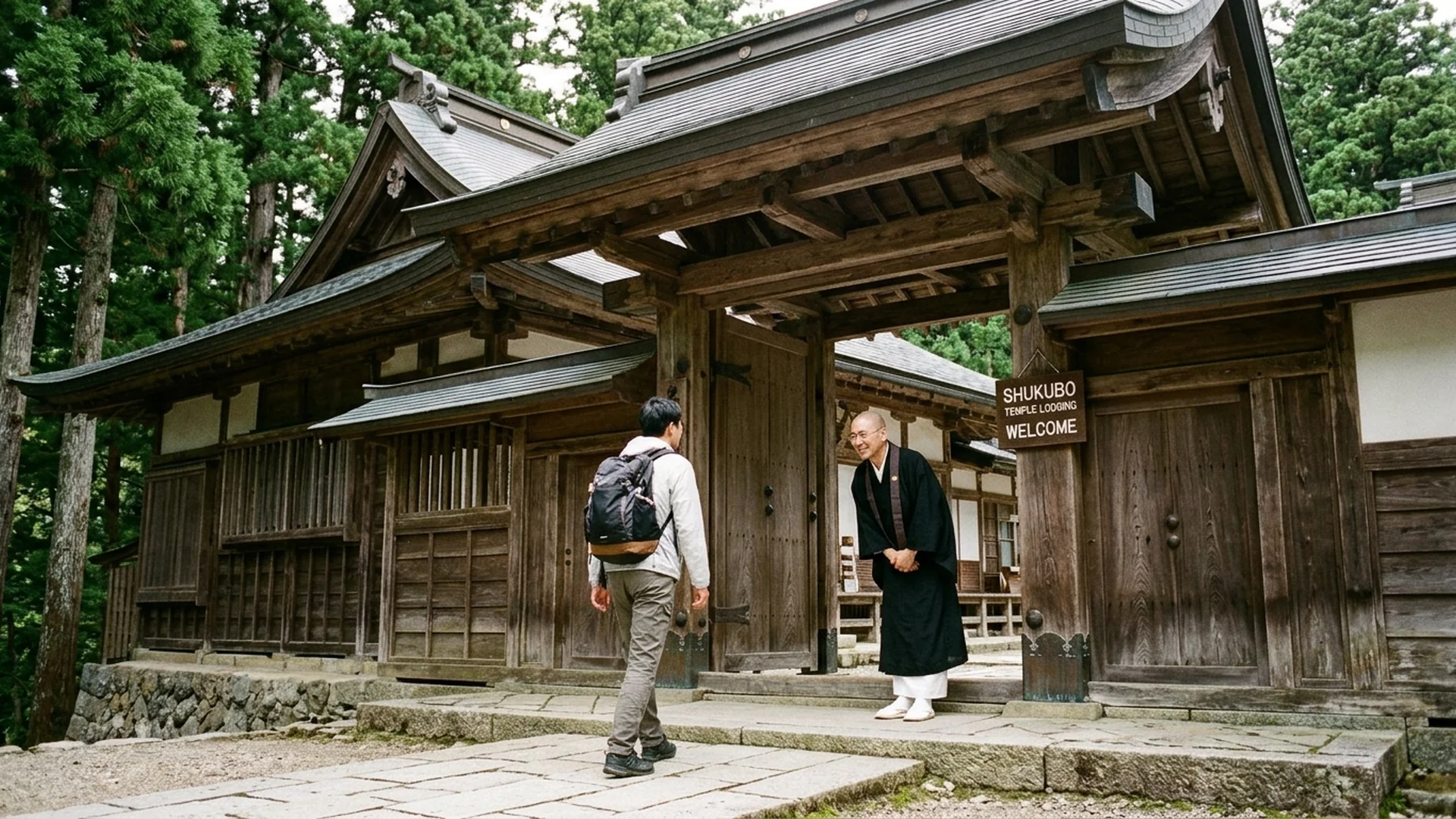
When the resonant bronze temple bell tolls through the heavy morning mists of ancient pine forests on the high mountain summits, the clamor of the secular world simply dissolves. The sliding shoji paper doors glide open, inviting the discerning traveler into an ageless realm of profound stillness known as Shukubo—traditional lodging within a Japanese Buddhist monastery. This is far more than a mere alternative to conventional hospitality; it is an unhurried portal into a sacred continuum of art, spirituality, and disciplined monastic life preserved across a millennium.
Journeying to the sacred heights of Koyasan, the historic heartland of Shingon Buddhism, or seeking out secluded historic precincts in Kyoto, offers an encounter far deeper than standard cultural sightseeing. Here, guests don traditional cotton yukata robes, sit in quiet contemplation amid flickering candlelit shrines, and savor exquisite plant-based gastronomy crafted in reverent harmony with nature. This is an inward pilgrimage governed by aesthetics, quiet luxury, and temporal grace.
Roots of Faith: From Ascetic Pilgrim Shelters to Contemporary Shukubo
In bygone eras, undertaking arduous pilgrimages into the rugged, mist-shrouded peaks of Mount Koya—founded by the visionary master Kobo Daishi, also known as Kukai, in the ninth century—was a formidable test of endurance. Local monasteries established sanctuaries to shelter traveling monks and devoted seekers navigating the Dharma. These ancestral waystations laid the foundational architecture of the modern Shukubo. While contemporary temple lodgings have evolved to offer refined comforts for international travelers, the foundational ethos of omotenashi—authentic Japanese hospitality rooted in unpretentious grace—remains entirely uncompromised. Sleeping upon immaculate, fragrant rush-grass tatami mats topped with plush futon bedding, framed by views of masterfully raked Zen rock gardens, embodies a rare, quiet luxury that cannot be bought.
Spiritual Rites: Dawn Chants and the Esoteric Goma Fire Ceremony
The beating heart of any Shukubo residency is participation in sacred liturgical rites rarely witnessed by the outside world. In the pre-dawn chill, the deep, resonant rhythm of the taiko drum summons guests to the main prayer hall for Otsutome, the morning service. Chanting alongside resident monks amid drifting sandalwood incense and antique oil lamps creates a transcendent atmosphere of inner purification.
Furthermore, select monastic sanctuaries host the Goma fire ritual, a profound ceremony rooted in Esoteric Buddhism. Monks consecrate wooden prayer sticks, casting them into a towering consecrated hearth to symbolically incinerate worldly delusions, emotional turbulence, and spiritual obstacles. The harmonic reverberation of Sanskrit mantras fused with crackling flames evokes an arresting duality of fierce awakening and absolute, unshakeable peace.
Philosophy on a Plate: The Art of Shojin Ryori Gastronomy
Dining at a Shukubo is not merely about appeasing physical hunger; it is an active meditation on philosophy through Shojin Ryori—traditional Buddhist vegetarian cuisine prepared entirely without animal proteins, fish, or pungent root vegetables such as garlic and onion, which are believed to agitate earthly passions.
Each meticulously arranged lacquer tray is a masterclass in Japanese aesthetic restraint. Core ingredients feature house-pressed tofu, rich sesame tofu known as goma tofu, foraged mountain greens, and seasonal mushrooms. While the flavor profiles may initially appear understated, their subtle complexity reveals a profound reverence for all living things, honoring the foundational zero-waste ethos known as mottainai.