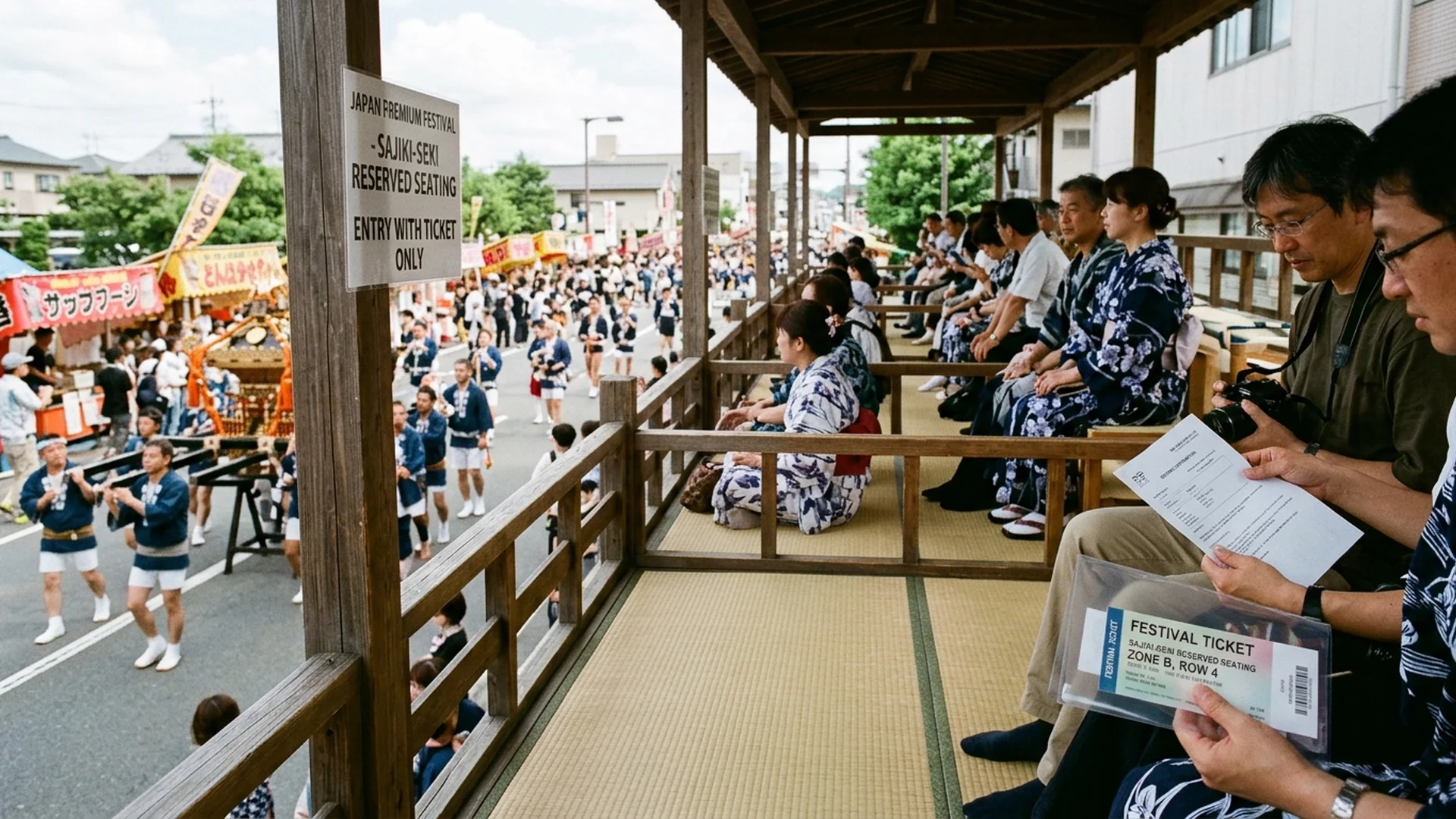
When the season of celebration descends upon the Land of the Rising Sun, the skies and ancient thoroughfares quicken with centuries of ancestral heritage. Yet, the timeless spectacle of sacred palanquin processions or incandescent fireworks blooming across the summer night sky is invariably accompanied by the restless tide of hundreds of thousands lining the avenues. For the discerning traveler who wishes to savor the aesthetics of a Japanese festival untethered from the exhaustion of hours of standing, Sajiki-seki—the meticulously curated grandstands, private tables, and raised platforms—serves as the gateway to a sophisticated new dimension of luxury travel.
Guaranteed effortless enjoyment through unobstructed vantage points at strategic vantage points, whether witnessing the intricate Yamahoko float processions during Kyoto’s legendary Gion Matsuri or the thundering riverside pyrotechnics, these reserved seats are far more than mere viewing chairs. They are intentionally crafted sanctuaries where absolute comfort and sacred tradition converge in flawless harmony.
The Aesthetics of Sight: The Distinction Between General Crowds and Sajiki-seki
Engaging with the profound scale of traditional Japanese festivals—whether witnessing towering decorative palanquins weighing dozens of tons in Kyoto or masterclass hanabi fireworks mirroring across expansive waterways—demands hours of advance territorial claiming for those confined to general street-side viewing. Spectators frequently endure obstructed sightlines, obscured by thousands of fellow attendees or fragmented by utility poles and urban infrastructure.
Conversely, Sajiki-seki spaces are deliberately engineered to elevate the experience into an atmosphere of privacy and dignified ease. Elevated wooden terraces and tiered seating afford sweeping, unencumbered panoramic vistas, inviting guests to admire the intricate brocade embroidery upon festival floats or the flawless symmetry of nocturnal fireworks with absolute clarity. Every element is orchestrated so that the eye communes seamlessly with cultural artistry, leaving the kinetic energy of the crowd as a distant, harmonious backdrop.
Mapping the Icons: National Flagship Festivals Featuring Sajiki-seki
Not every celebration incorporates this elevated infrastructure, yet national flagship festivals prioritize refined crowd management to accommodate discerning travelers. The most prominent manifestation occurs each July during the Gion Matsuri in Kyoto, where special viewing credentials are released along Oike-dori for both the Saki Matsuri and Ato Matsuri processions.
Similarly, legendary pyrotechnic traditions such as the Nagaoka Fireworks Festival or the prestigious Tsuchiura All-Japan Fireworks Competition construct elaborate Sajiki-seki zones along riverbanks. Divided into tatami-matted tiers or private seating arrangements, these venues allow audiences to fully absorb the physical resonance and thunderous acoustic beauty of the shells while receiving attentive care from dedicated hospitality staff.
Elevated Privileges and Impeccable Attention to Detail
Holding a Sajiki-seki credential unlocks far more than a preferred front-row seat; it delivers the nuanced hospitality intrinsic to Japan’s omotenashi ethos. Across numerous celebrations, ticket holders receive detailed historical guidebooks, authentic local souvenirs such as traditional indigo-dyed tenugui cotton cloths, or thoughtfully composed seasonal bento boxes showcasing regional culinary arts.
Essential amenities, such as impeccably maintained private restrooms reserved exclusively for ticket holders, represent an invaluable privilege amidst densely populated gatherings. This thoughtful provision removes logistical anxieties, empowering seniors and family members alike to immerse themselves in hours of continuous celebration without navigating congested public facilities.