When the first pristine snowflakes drift down to mantle the Japanese archipelago, the familiar tableau of colossal winter pageants in northern metropolises invariably returns to the traveler’s imagination. Yet, the moment one steps beyond the neon glow and festive stages of mainstream destinations like Sapporo, deep mountain valleys and ancient hamlets unveil a far more serene and profound winter poetry. Here, hundreds of flickering candles cast a warm, amber glow from within diminutive snow domes, and rising plumes of steam from thermal springs contrast sharply against the immaculate white landscape, evoking the timeless atmosphere of a classic fable.
For discerning travelers yearning for tranquility and a refined winter aesthetic, venturing off the beaten path to uncover secret snow festivals unlocks a hidden dimension of Japan. In these quiet redoubts, time slows its relentless march amid breath turning to mist in the crisp air and ancient forests embracing their indigenous heritage. This journal explores five lesser-known winter celebrations, offering a comprehensive guide to navigating sub-zero temperatures with effortless elegance.
1. Yunishigawa Onsen Kamakura Matsuri: Hundreds of Candles in the Nikko Mountains
Tucked away deep within the mountainous folds of Nikko National Park in Tochigi Prefecture lies Yunishigawa Onsen, an ancient hot-spring hamlet steeped in legends of the vanquished Taira samurai clan. As winter descends, this historic enclave transforms into an ethereal dreamscape during the Yunishigawa Onsen Kamakura Matsuri. The primary allure centers along the banks of the Sawaguchi River, where hundreds of miniature snow huts, known as mini kamakura, are meticulously arranged and illuminated to earn recognition as a designated Japan Night View Heritage site. As dusk settles, each individual candle is hand-lit, casting a shimmering, amber reflection across the pristine snowbanks to evoke an ambiance of profound stillness, romance, and sanctity.
2. Ouchi-juku Snow Festival: The Timeless Magic of an Edo-Period Thatched Village
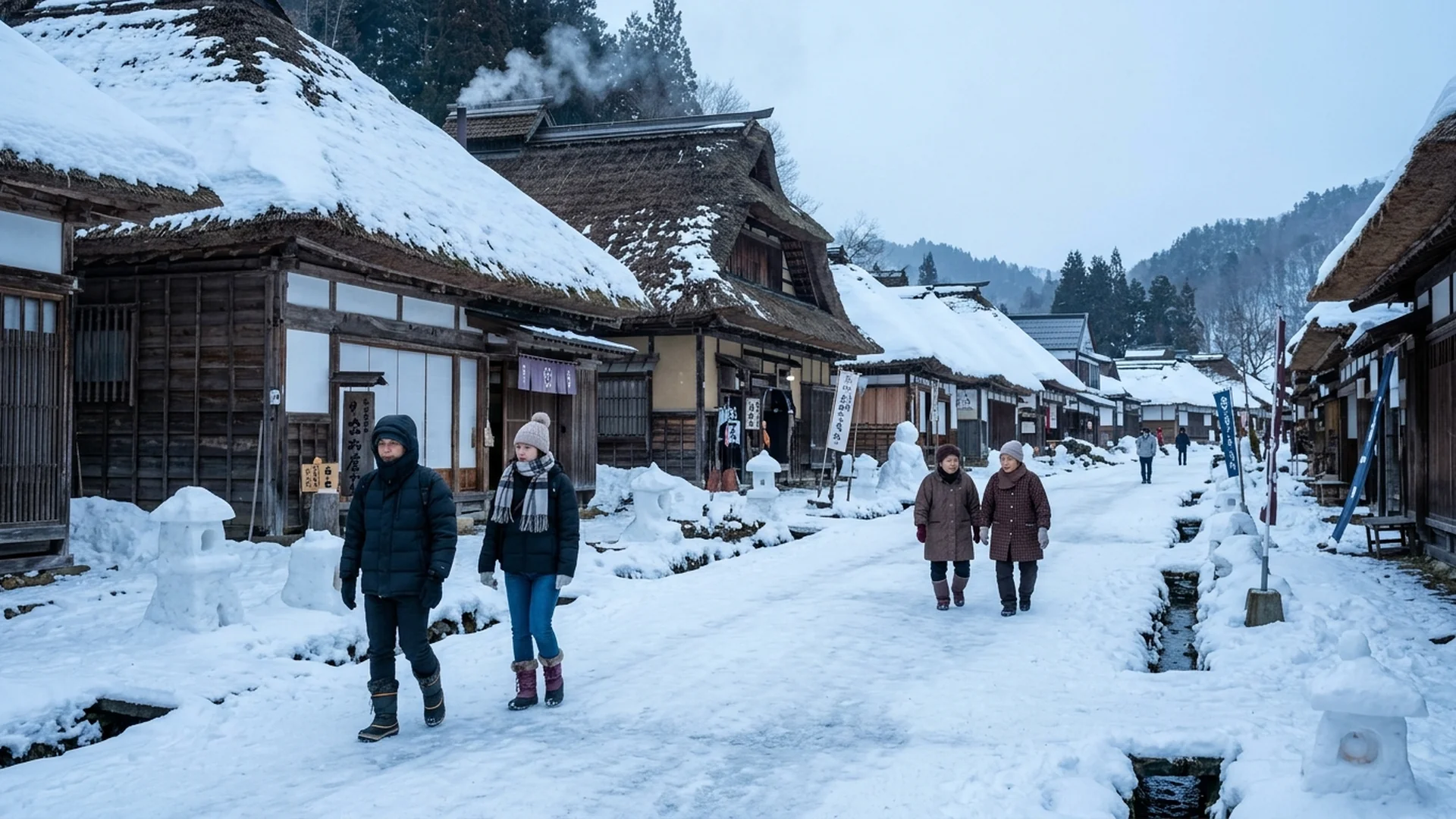
Journeying south to Fukushima Prefecture reveals Ouchi-juku, a remarkably preserved post town along the historic Aizu Nishi Kaido trade route of the Edo period. During the second weekend of February each year, this architectural sanctuary hosts the Ouchi-juku Snow Festival, commencing with the solemn Gojinka Itadaki ritual. Local residents donning historical attire process through the snow with blazing torches, carrying sacred fire to ignite snow lanterns and traditional hearths throughout the village. Set against the rhythmic reverberations of taiko drums and folkloric performances, the sight of heavy snow blanketing steeply pitched thatched roofs while glowing softly in the winter dark captures the enduring spirit of rural Japan.
3. Northern Luminance: Hirosaki Castle, Lake Towada, and Asahikawa
Venturing further north into the Tohoku region and Hokkaido broadens the canvas of winter splendor infinitely. In Aomori Prefecture, the Hirosaki Castle Snow Lantern Festival illuminates historic castle grounds with intricately carved snow sculptures and lanterns crafted by local citizens, set against the austere silhouette of an ancient fortress. Further along, the Lake Towada Winter Story presents mesmerizing fireworks blooming above a volcanic caldera lake reflecting the icy waters. Finally, the Asahikawa Winter Festival offers a grand celebration just beyond Sapporo, showcasing monumental snow sculptures with the warm, convivial hospitality characteristic of Hokkaido locals.