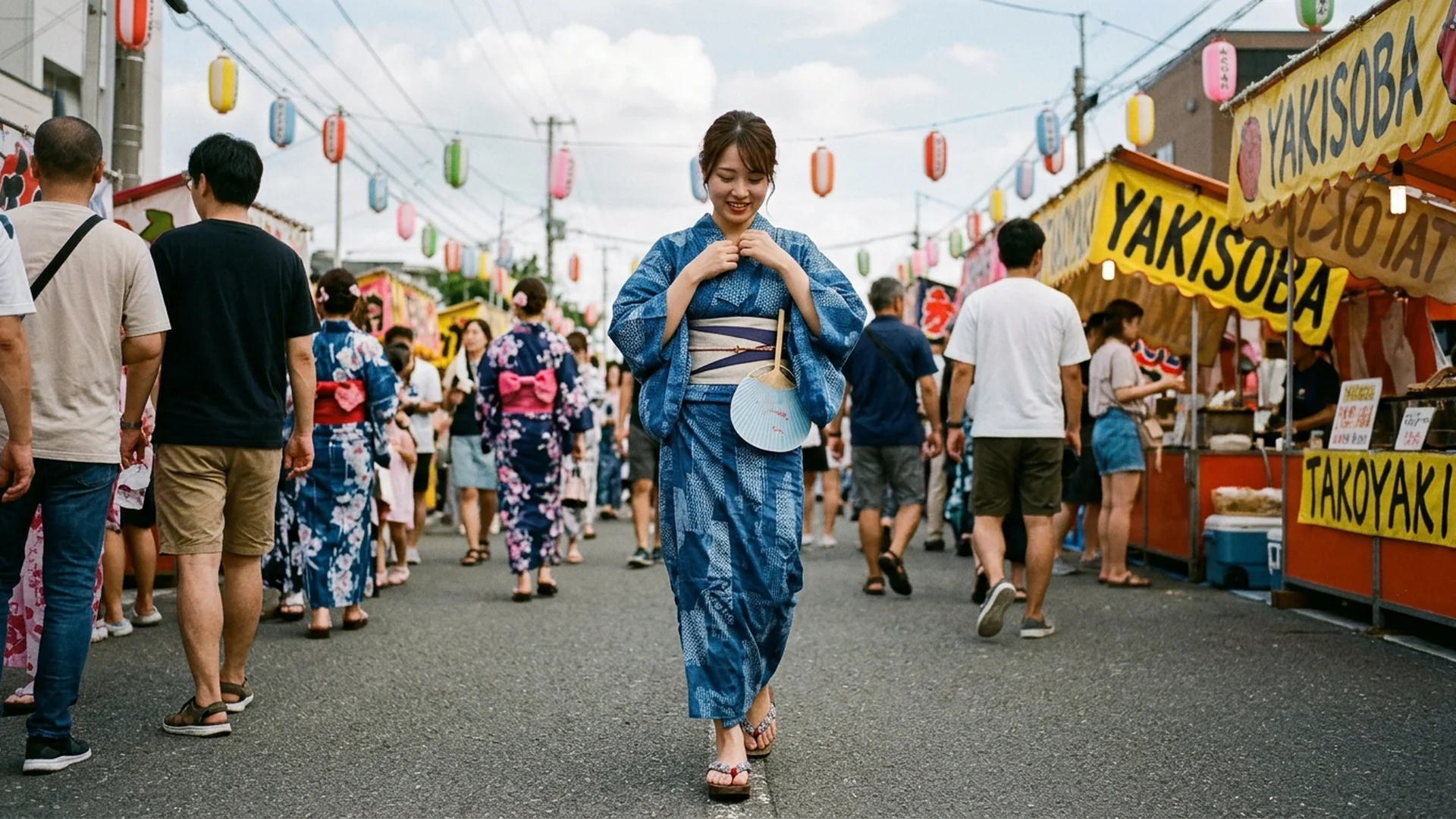
As the final embers of the summer sun slip beyond the horizon, the resonant, chest-deep roll of the taiko drum reverberates through the heavy evening air, intermingling with the melodic chants of approaching festival processions. This is the unmistakable herald of the matsuri—Japan’s revered seasonal celebrations where centuries of spiritual heritage pulse with vibrant, living energy. The humid stillness of the evening yields instantly to the cheerful rustle of cotton garments, while the rich, savory aromas of grilling takoyaki and yakisoba drift effortlessly upon the twilight breeze.
To cross the threshold into this illuminated realm with genuine appreciation is to look beyond the surface spectacle and master the subtle cultural language woven into every facet of the tradition. From the precise folding of a yukata collar to the respectful sidestep as a portable shrine surges past, understanding these nuanced protocols transforms the journey from mere observation into a profound cultural immersion.
The Art of the Yukata: Summer Vestments and Unyielding Rules
The yukata stands as the quintessential vestment of a Japanese summer, meticulously tailored from lightweight, breathable cotton designed to navigate the humid, balinese warmth of the season. To stroll along granite pathways leading toward lantern-lit shrine courtyards clad in these indigo-dyed garments is to step into a living canvas of aesthetic heritage. Yet, this elegance demands strict adherence to traditional protocol—most notably the precise alignment of the collar. The left side must invariably cross over the right; reversing this configuration instantly signals mourning attire. Furthermore, the obi sash should be secured firmly enough to maintain poise without restricting movement, allowing for graceful navigation through crowded precincts while wooden geta sandals tap a rhythmic, echoing cadence against the stone.
Sacred Burdens: Navigating the Mikoshi Processions with Reverence
At the beating heart of nearly every grand matsuri is the mikoshi—an ornate, miniature Shinto sanctuary believed to serve as the temporary dwelling place of local deities. Borne upon the straining shoulders of dedicated neighborhood communities chanting rhythmic, guttural rallying cries of ‘Wasshoi! Wasshoi!’, these processions surge forward with raw, visceral power.
For the discerning traveler, observing these sacred parades demands unwavering decorum. One must never cross the sacred shimenawa ropes demarcating the ritual boundary, nor attempt to touch the mikoshi or its bearers without explicit invitation. Most crucially, cutting directly across the path of the procession is considered an affront to both the divine presence and the participating parishioners. A subtle bow as the palanquin sweeps past is an understated gesture of respect deeply appreciated by locals.
The Allure of the Yatai: Culinary Heritage of the Festival Stalls
Flanking the pathways toward the central shrine grounds are the ephemeral timber stalls known as yatai, breathing out fragrant clouds of culinary temptation. Culinary staples endure across generations: crisp-shelled, molten-centred takoyaki, savory yakisoba tossed upon wide iron griddles, and mounds of shaved kakigori syrup-drenched ice offering sweet respite from the humid evening.
The etiquette governing yatai dining is both distinct and purposeful: purchase your fare and consume it entirely within the immediate vicinity of the stall. Visitors are discouraged from walking through congested corridors while eating or drinking to prevent accidental spills upon neighboring garments. Once finished, refuse must never be discarded indiscriminately; each stall maintains its own dedicated sorting bins, or waste must be returned to central recycling stations established for the festival.