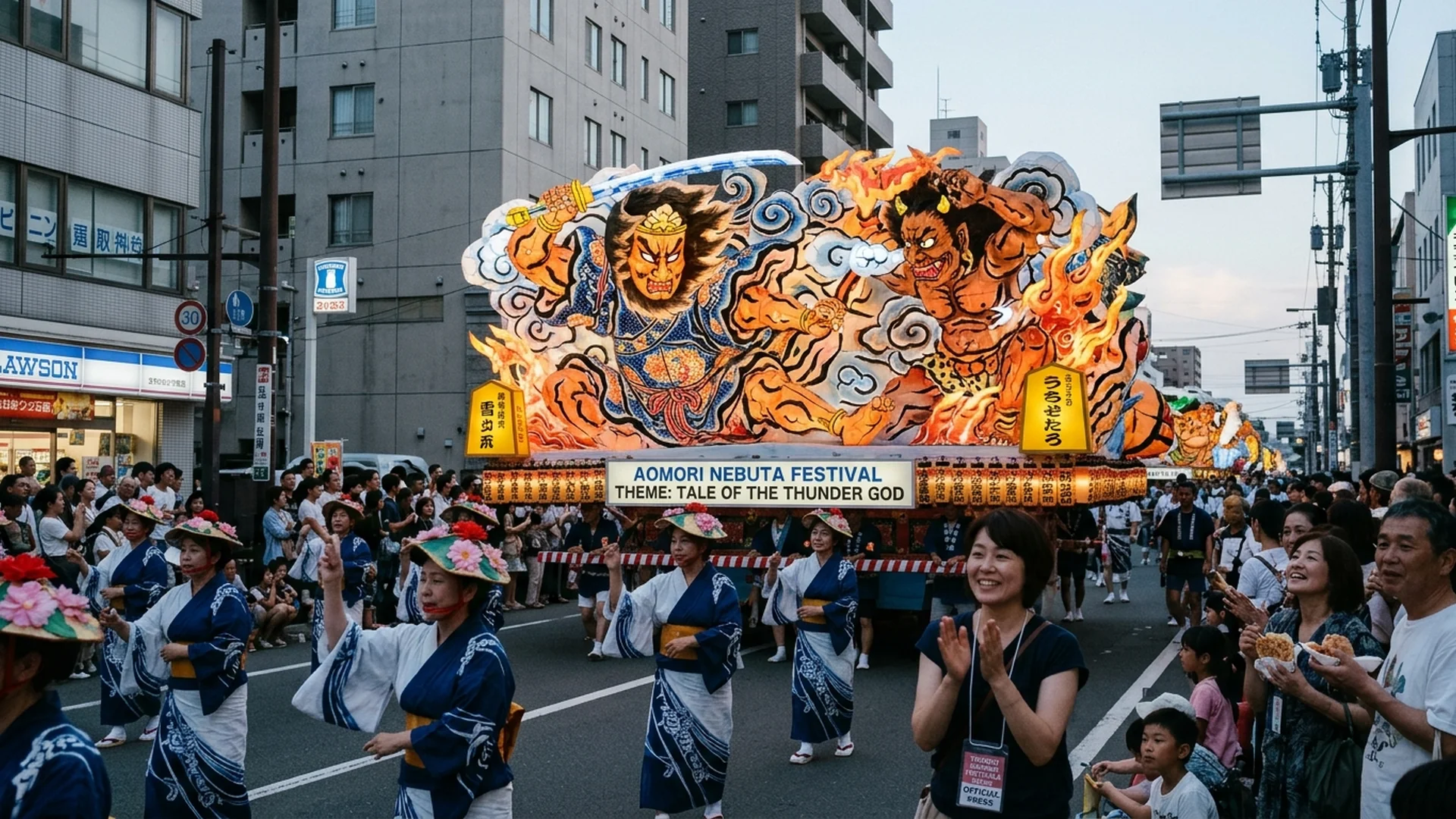
As August dawns across the northern reaches of Honshu, the vast and contemplative landscapes of the Tohoku region shed their customary serenity, awakening to a season of profound, electrifying celebration. The Tohoku Sandai Matsuri—the region’s legendary triad of summer festivals comprising Aomori’s Nebuta, Akita’s Kanto, and Sendai’s Tanabata—unfold in a synchronized choreography that sets the land ablaze with lantern light, thunderous taiko drums, and centuries of living heritage.
Yet, to witness all three spectacles in a single, seamless journey demands more than mere impulse; it requires the precision of a seasoned logistical strategist. With the primary festival cities scattered across rugged mountain ranges and sweeping coastal plains against a backdrop of millions of eager travelers, mastering the railway network is paramount. This transcreation decodes the art of traversing the region via the Shinkansen network, offering sophisticated solutions to seasonal lodging scarcity so you may immerse yourself in the luminous heart of northern Japan with absolute grace.
Architecture of Light and Shadow: The Essence of the Tohoku Triad
Though unspooling across the very same week, each of these three festivals evokes a distinct emotional resonance and aesthetic temperament. The journey begins with the Aomori Nebuta Matsuri (August 2-7), a breathtaking parade of colossal paper lantern floats depicting mythical heroes and ancestral legends. Constructed from intricate timber frameworks and delicate washi paper, these monumental sculptures—often exceeding nine meters in breadth and five meters in height—are drawn through the heart of Aomori amid the echoing cry of ‘Rasse-ra, Rasse-ra!’ and the infectious bounds of the Haneto dancers, whose ranks welcome any visitor properly attired in traditional costume.
Crossing the mountainous spine to the western seaboard brings you to the Akita Kanto Matsuri (August 3-6), which transforms the dusky summer nights into a shimmering field of golden rice ears. Master performers demonstrate astonishing equilibrium, balancing towering bamboo poles—known as kanto, adorned with dozens of glowing lanterns, weighing over fifty kilograms, and reaching up to twelve meters into the night air—upon their foreheads, shoulders, and hips against the challenging autumn-like mountain breezes. The pilgrimage concludes at the Sendai Tanabata Matsuri (August 6-8) in Miyagi Prefecture, where subterranean shopping arcades transform into enchanted forests of five-meter-long cascading washi paper streamers, honoring ancient celestial legends with supreme artisanal delicacy.
Strategic Transit: Mastering the Shinkansen Network Across Three Cities
Time management is the beating heart of an effortless Tohoku itinerary. The ultimate routing begins in Sendai, accessible directly via the Tohoku Shinkansen, before journeying north to Shin-Aomori to witness the grandeur of the Nebuta festival between August 2nd and 4th.
Upon the conclusion of the Aomori festivities, travelers board the Limited Express Tsugaru, cutting across the Sea of Japan coastline toward Akita City for the Kanto celebrations on August 4th to 6th, perfectly aligning with the shifting festival calendar. Finally, retrace your path southward to Sendai for the delicate elegance of Tanabata from August 6th to 8th. The unwavering punctuality and frequency of the JR Shinkansen and Limited Express networks alleviate long-distance transit anxiety entirely. However, reserved seating cabins book out weeks in advance; early ticket acquisition or securing a rail pass is essential for a frictionless passage.
The Art of Accommodation: Conquering Sold-Out Urban Hubs
A sobering reality of traveling during the Tohoku festival season is that accommodations in primary hubs like Aomori and Akita are frequently booked out months in advance by tour operators and domestic travelers alike. Clinging to the aspiration of securing a hotel in the immediate city center often leads to disappointment. Savvy international travelers instead deploy a Hub-and-Spoke strategy.
Rather than forcing a stay in Aomori, look toward neighboring municipalities such as Hirosaki—a mere thirty-to-forty-minute local or limited express train ride away—or establish your base in Morioka, a major Shinkansen transit hub offering greater room inventory and seamless connections to both Akita and Sendai. Trading a brief morning or evening rail commute for a wider selection of dignified accommodations and rational pricing pays handsome dividends. Furthermore, always confirm the final return train schedules back to your base city to avoid stranding amidst the post-festival crowds.