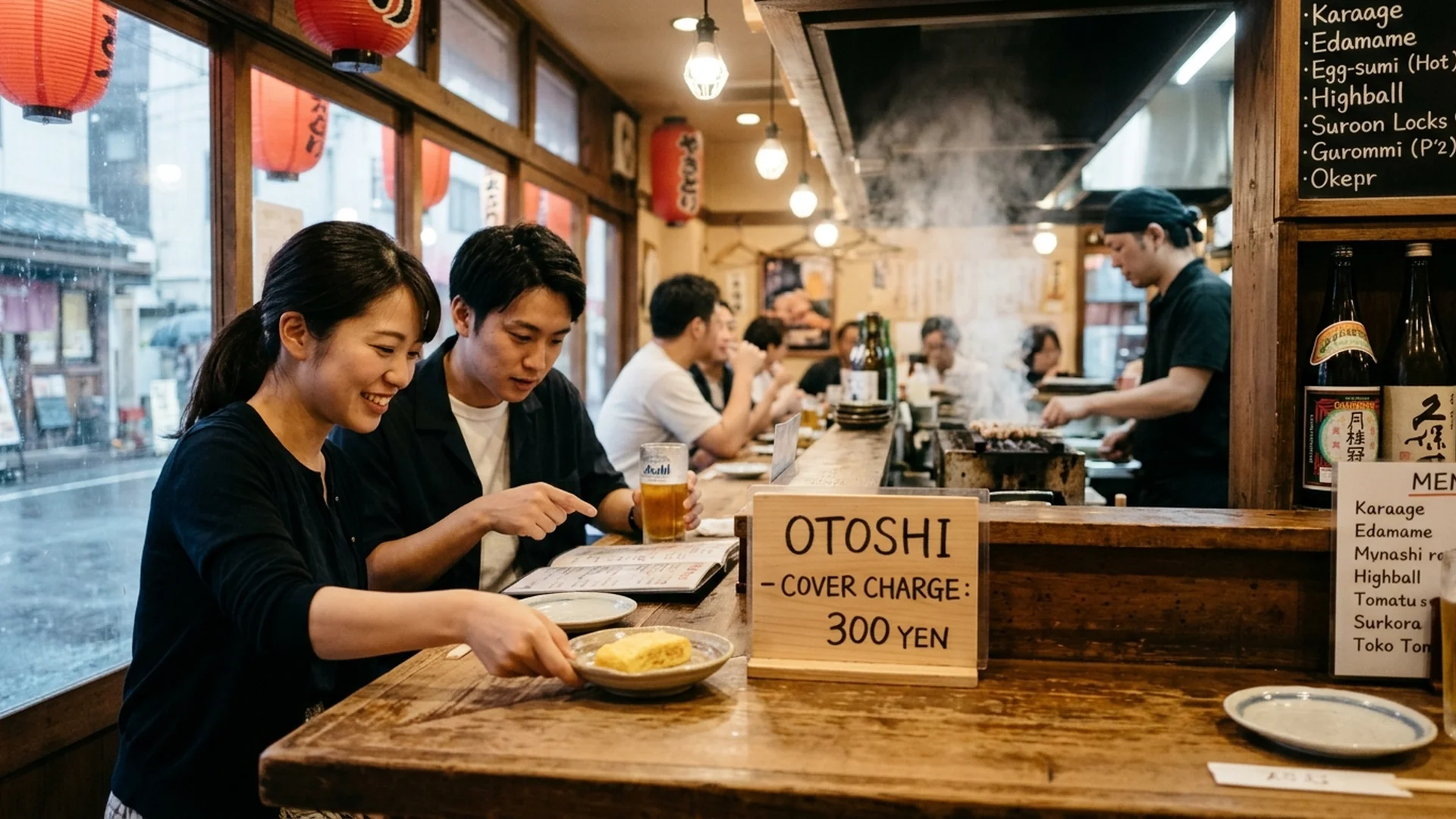
The rhythmic clinking of frosted beer mugs, the unison chorus of ‘Kampai!’, and the gentle drift of charcoal smoke from the grill create an immediate, enveloping symphony of warmth. The indigo noren curtains hanging before an izakaya doorway do more than demarcate the threshold between the bustling street and the sanctuary within; they serve as a portal into the beating heart of Japan’s evening social fabric, where the day’s corporate armor is slowly shed amid convivial laughter and shared plates.
Yet, for the uninitiated traveler, crossing that threshold can prompt a fleeting moment of hesitation. The boisterous greeting from the staff, the dense Japanese-only menus, and the quiet bewilderment when an unsolicited small plate appears at your table all point to a deeply layered culinary tradition. Once these subtle codes are understood, however, the izakaya transforms from a mere dining establishment into an immersive masterclass in Japanese camaraderie.
The Mystery of the First Plate: Decoding Otoshi and the Unseen Bill
The moment you settle onto a tatami mat or a low wooden stool, staff will typically present an oshibori (warmed hand towel) alongside a miniature dish—perhaps edamame, simmered tofu, or seaweed salad dressed in sesame. This is ‘Otoshi’ (or ‘Tsukidashi’ in certain regions), a long-standing custom that functions as an informal cover charge.
From a Japanese perspective, otoshi is never intended as an imposition, but rather as an immediate gesture of hospitality designed to offer something to nibble on with your drink while the kitchen prepares your primary selections. The charge is automatically calculated into your final bill—typically ranging from 300 to 500 yen per person. Understanding and embracing this custom dissolves initial confusion, revealing the quiet thoughtfulness extended to guests from the very first moment.
The Ritual of ‘Kampai’ and the Art of the First Drink
When the time arrives to set the evening in motion, the indispensable protocol in any izakaya is to order ‘nomimono’—beverages—before anything else. Locals almost invariably begin with a frosty mug of nama-biiru (draft beer) to refresh the palate, or opt for a highball or chu-hai. The instant the drinks arrive, everyone at the table waits until all glasses are accounted for before raising them together, exchanging a cheerful ‘Kampai!’ and meeting each other’s eyes to officially inaugurate the hours of relaxation.
An essential insider tip is to resist the urge to order your entire meal at once. Izakaya culture encourages a leisurely, measured cadence, ordering in small waves so that food and drink complement each other perfectly throughout the changing phases of the evening.
The Symphony of Ordering: From Delicate Textures to Deep Satisfaction
Navigating an izakaya menu resembles the movements of a classical symphony. The evening commences with light, refreshing dishes (sunomono or salads) such as tofu salad or raw octopus with wasabi, designed to awaken the appetite, followed shortly by pristine raw fish selections sourced directly from local markets.
Once the palate is fully engaged, the journey moves into deep-fried items (agemono) and charcoal-grilled skewers (yakitori), which represent the very soul of the izakaya. Various cuts of chicken are skewered, kissed by secret tare sauces or sea salt, and left to sizzle over glowing embers. The evening reaches its serene crescendo with heavy carbohydrate comfort foods—garlic fried rice, charcoal-grilled onigiri, or chilled somen noodles—bringing the culinary narrative to a harmonious close.