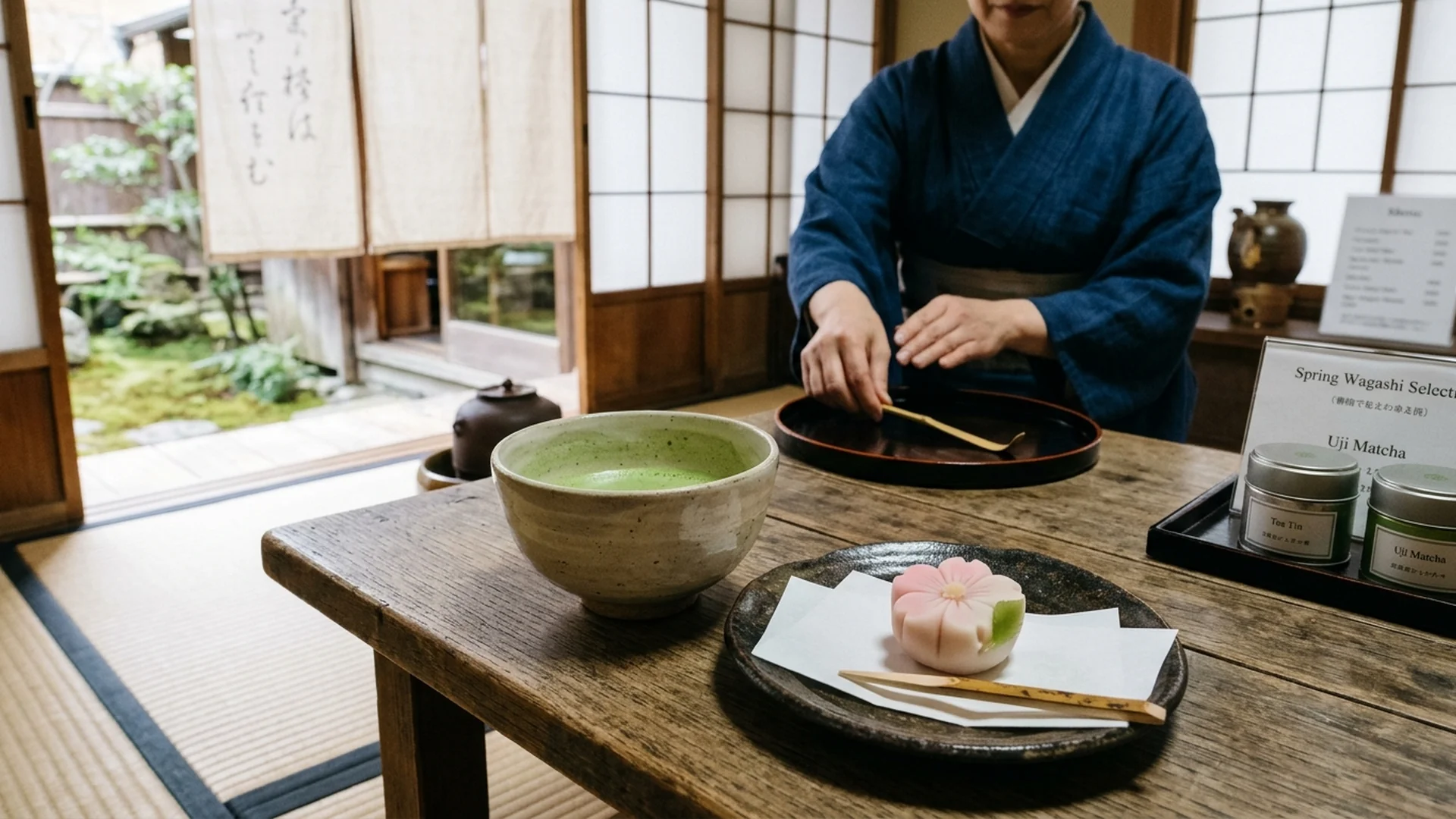
As a soft breeze whispers through the emerald moss gardens of Kyoto, the gentle simmering of water in a cast-iron kettle evokes the sound of wind through ancient pine forests—a natural symphony that quiets the soul. In an era dictated by unrelenting velocity, the Japanese tea ceremony (Sadō or Chadō) serves as a grounding anchor, pulling us back to the present moment through rituals of profound philosophical grace.
Enjoying green tea alongside delicate wagashi is far more than a simple afternoon refreshment; it is a profound sensory dialogue designed to honor mujokan, the transient beauty of the natural world. Each handcrafted confection mirrors the fleeting blossoms of the season, while the deep, umami-rich bitterness of the brewed tea creates an exquisite counterbalance perfected over centuries by Zen masters and artisans alike.
The Taxonomy of Green Tea: From Shaded Groves to Roasted Leaf
The soul of Japanese green tea begins long before the harvest, rooted in meticulous agricultural traditions. Gyokuro, among the most revered grades, has its leaves shaded beneath straw matting for roughly three weeks prior to picking. This deprivation of direct sunlight inhibits photosynthesis, elevating amino acids like L-theanine and chlorophyll while softening tannins. The resulting infusion is a deep emerald nectar brimming with savory umami complexity.
Matcha, stone-ground from shade-grown tencha leaves using traditional granite mills, forms the ritualistic centerpiece of Chanoyu. Meanwhile, sencha remains the beloved daily staple across Japan, offering a luminous, refreshing balance of brisk astringency and vegetal sweetness. For quiet evening hours, hōjicha—pan-roasted over intense heat until the leaves turn a rich reddish-brown—offers a comforting, low-caffeine profile imbued with smoky, toasted aromas.
Wagashi: Poetry Formed Through Confectionery Craft
Companion to every bowl of tea is ogashi, or wagashi, traditional confections crafted from delicate plant flours and sweetened azuki bean paste (anko). Categorized by their moisture content, nerikiri stands as the pinnacle of this craft. Sculpted from white bean paste and gyūmochi, artisans shape and carve these ethereal morsels by hand to capture the ephemeral essence of Japan’s twenty-four traditional micro-seasons.
Alongside nerikiri, one finds daifuku—pliant, cloud-like mochi encasing sweet-yet-savory bean fillings—and monaka, crisp glutinous rice wafers enclosing delicate azuki preserves. These confections are never meant merely to provide a sugar rush; rather, they are architectural triumphs designed to bridge the flavor chasm, preparing the palate for the unadorned purity of green tea.
The Science of Pairing: When Bitterness Embraces Sweetness
The cardinal rule of partaking in wagashi with green tea is absolute: consume the confection entirely before taking your sip of tea. The rich sweetness and silky, coating texture of the bean paste linger upon the palate. When the astringent, umami-dense tea subsequently flows over the tongue, the intense sugar recedes, leaving behind a lingering, ethereal sweetness that dances within the senses.
Intense preparations like koicha (thick matcha) or gyokuro demand the luxurious sweetness of a fine nerikiri to achieve equilibrium. Conversely, the vibrant, grassy briskness of standard sencha pairs gracefully with toasted nut confections or dry, crisp higashi, allowing the natural sweetness of the tea leaves to shine forth unhindered.
Terroir and Tradition: Tracing Legendary Tea Origins
To truly comprehend the spirit of Japanese tea, one must journey to its sacred ancestral ground. Uji, nestled within Kyoto prefecture, is the historic cradle where Buddhist monks first cultivated tea seeds brought from the mainland. The misty river valleys of Uji nurture leaves that unfurl slowly, yielding the most delicate infusions in the archipelago.
Further south in Yame, Fukuoka Prefecture, sun-drenched terraced hillsides shape exceptional gyokuro, while Nishio in Aichi serves as a powerhouse of ceremonial matcha production. These are not merely agricultural zones, but sacred landscapes where the very topography dictates the contemplative tempo of Japanese tea culture.