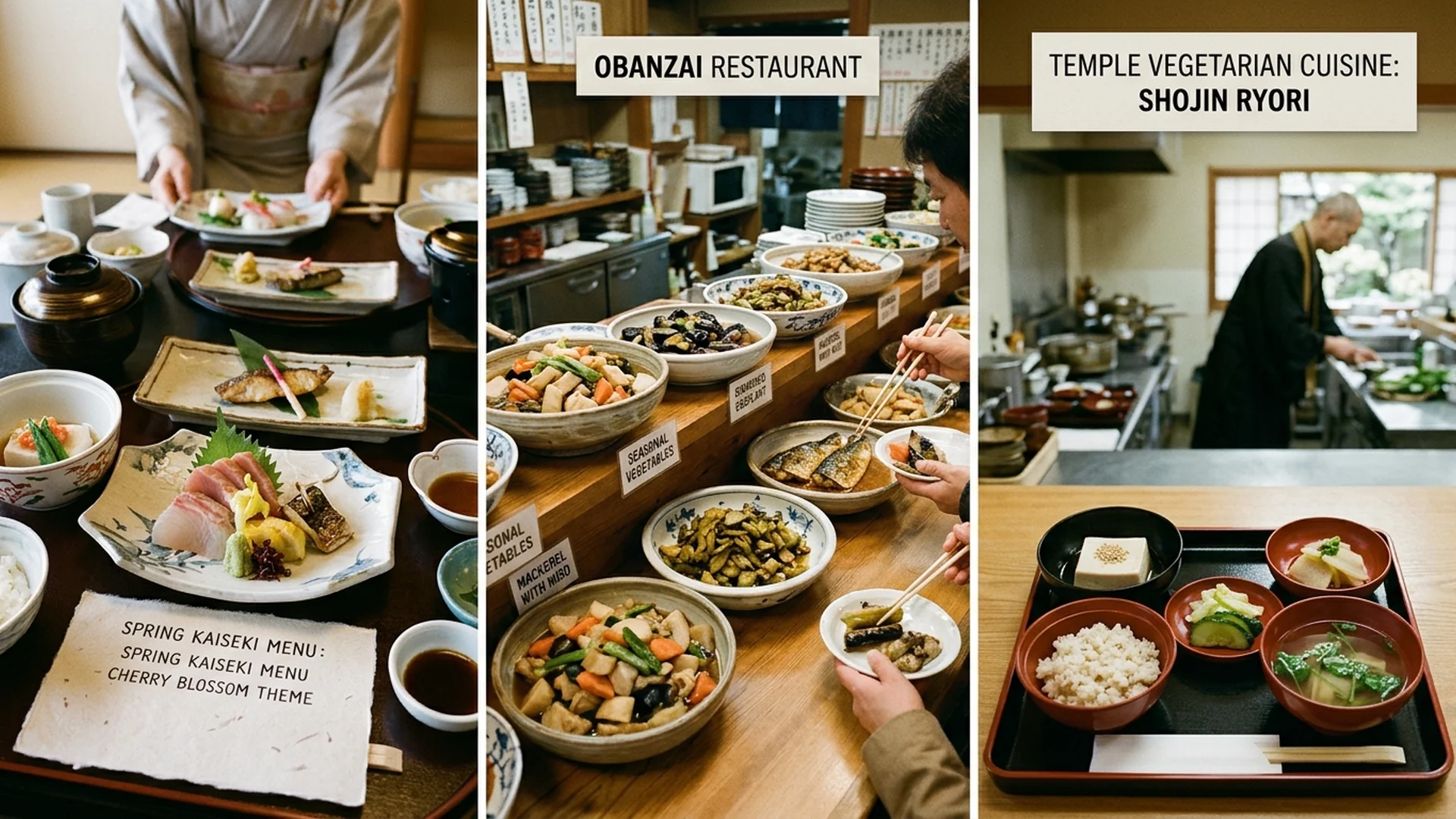
As the winter wind drifts across the pine groves and ancient temples of Kyoto, the echoes of the past resonate not merely through dark timber architecture or evening temple bells, but upon the dining table where time, nature, and spirit intertwine. The former imperial capital is much more than a repository of handed-down recipes; it is a cultural laboratory where the lifestyles of different social strata have diverged and harmonized over centuries. Through its three great pillars of taste—Kaiseki, born of the refined aesthetic of the court and aristocracy; Obanzai, the comforting, warming dishes of ordinary households; and Shojin Ryori, the pure vegetarian creations of Zen Buddhist sanctuaries—we uncover the historical depth of Kyoto one exquisite bite at a time, discovering a profound complexity hidden beneath deceptive simplicity.
Obanzai: The Hearth Spirit and Kyoto’s Zero-Waste Philosophy
If Kaiseki represents aristocratic grandeur, Obanzai is the beating heart of everyday Kyoto households. The term refers to heartfelt home-style dishes prepared for family dining, governed by the strict rule of utilizing seasonal ingredients (shun) and indigenous heritage vegetables known as Kyo-yasai. Historically, Kyoto homemakers were renowned for their ingenuity in ensuring that no part of any ingredient went to waste. This zero-waste ethos, forged through past resource limitations, has evolved into a cultural legacy that marries frugality with profound culinary wisdom. Signature dishes often feature seasonal vegetables simmered alongside fried tofu or delicate small fish cooked until their bones soften to a gentle tenderness. Flavors are understated rather than aggressive, relying on dashi broth that permeates every fiber of the vegetables, eloquently narrating the intimate bond between humanity and the natural world.
Shojin Ryori: The Art of Awakening Through Pure Temple Flavors
Deep within the tranquil enclosure of Zen Buddhist temples, Shojin Ryori functions as far more than mere sustenance; it is a form of active meditation. The word shojin translates to the dedicated refinement of the mind and spirit. Consequently, this cuisine is entirely devoid of animal products and omits pungent root vegetables such as garlic or onions, preventing the mind from becoming restless or agitated. Temple chefs, or ussu-kai, draw upon a profound understanding of natural umami, extracting deep savory notes from kombu seaweed, dried shiitake mushrooms, and artisanal tofu. Every step—from slicing and simmering to thoughtful plating—is executed with mindfulness and deliberate intention. Iconic dishes such as sesame tofu (goma dofu), silken in texture and bathed in aromatic sesame sauce, alongside lightly battered seasonal vegetables, invite diners to contemplate the inherent value of every living existence and every drop of water that nourishes our world.
Kaiseki Ryori and Kyo-yasai: High Aesthetics and Rooted Ingredients
While Obanzai and Shojin Ryori grew organically from domestic hearths and monastic retreats, Kaiseki Ryori evolved from the Japanese tea ceremony (chado) and elite governance banquets to become the crown jewel of Japanese gastronomy, seamlessly fusing art, literature, and the changing seasons. The courses of a Kaiseki meal are meticulously composed to narrate the specific mood of the season, presented on hand-selected ceramics and lacquerware. The vital thread connecting all three culinary expressions is Kyo-yasai—Kyoto’s heirloom vegetables, such as the elongated Shogoin daikon or the deep-red Kintoki carrot. Grown in Kyoto’s distinctive soil and microclimate, these vegetables yield an intense, naturally sweet flavor and unique textures that have captivated global travelers for centuries.