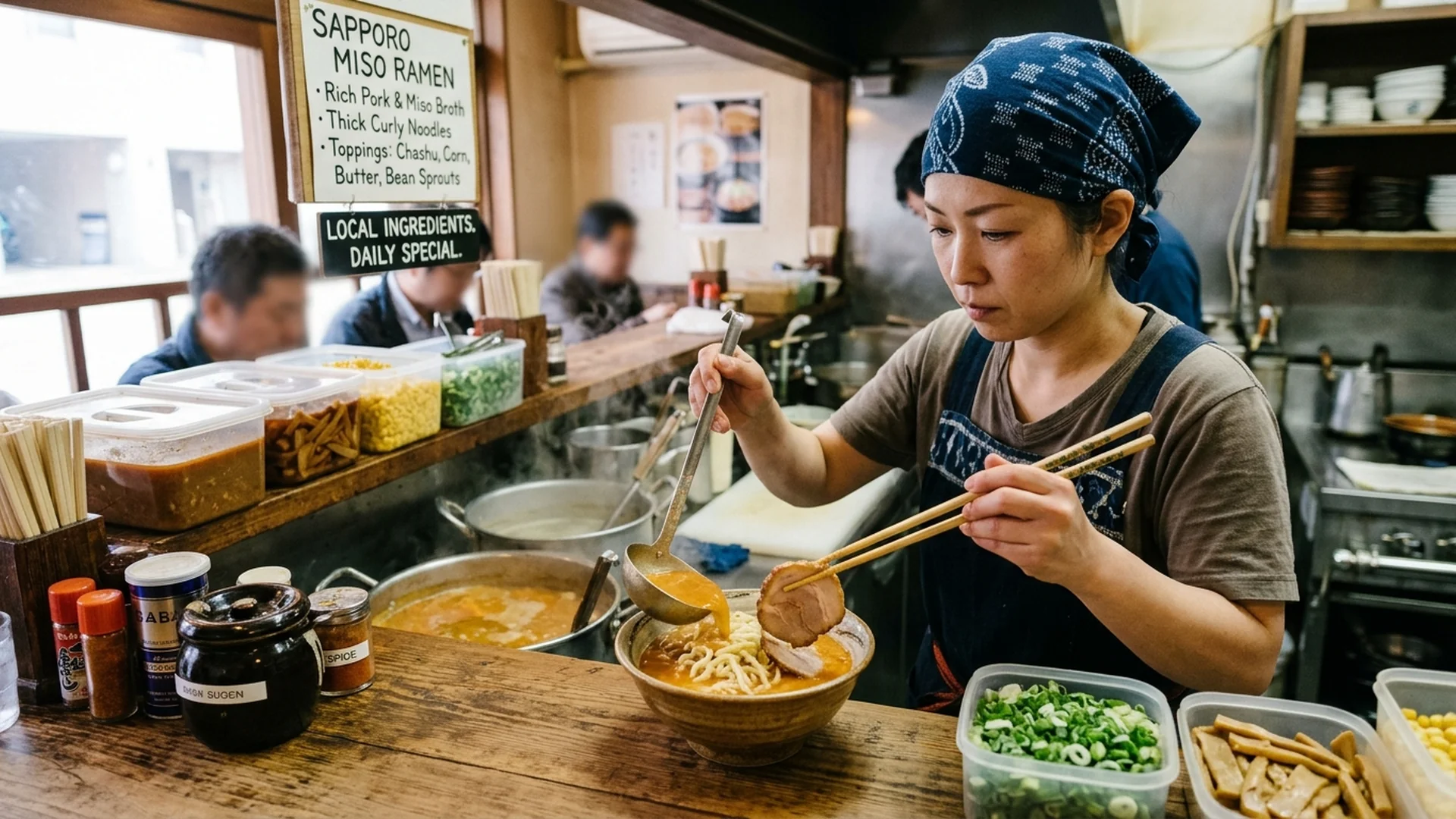
The heavy ceramic bowl radiates a steady plume of steam, carrying with it the deep, comforting aroma of marrow simmered for hours through the quiet hours of the night. Across the archipelago, a bowl of ramen is never merely a hurried meal to quell an appetite; it is an artisanal testament reflecting the distinct geography, climate, and culinary philosophy of its birthplace.
As our culinary pilgrimage winds through mist-shrouded mountain passes and bustling metropolitan alleyways, the character of the broth, the cut of the noodle, and the arrangement of toppings shift in quiet dialogue with the natural world. From the bracing chill of Hokkaido to the gentle warmth of Kyushu, each bowl serves as an edible map, chronicling the soul of its community with rare precision and grace.
The Architecture of Flavor: Decoding the Three Pillars of Ramen
Beneath the surface of a transcendent bowl of ramen lies a tripartite harmony of meticulously crafted elements. At its heart is the broth, the soul of the dish, traditionally categorized into rich Tonkotsu (slow-simmered pork bone), earthy Miso (fermented soybean paste), sophisticated Shoyu (brewed soy sauce), and delicate Shio (sea salt that allows foundational flavors to shine), often elevated with Dashi drawn from dried bonito and kelp to impart deep umami.
Next comes the noodle, whose texture relies on the precise alchemy of flour, water, and Kansui, an alkaline mineral water that yields either springy, wavy strands designed to cling to lighter broths or sleek, straight lines tailored for dense liquids. Finally, the toppings—ranging from tender Chashu pork belly and fermented bamboo shoots (Menma) to scallions and soft-boiled marinated eggs (Ajitama)—are chosen not merely as adornments, but to provide critical textural contrast and palate cleansers.
From North to South: Exploring Five Distinct Regional Legacies
On the northernmost island, Sapporo Miso Ramen was born to conquer bitter winters, featuring an intensely rich soybean broth wok-fried with lard and cabbage, yielding a smoky fragrance paired with thick, wavy, chewy noodles.
Venturing south to Kitakata in Fukushima Prefecture reveals the gentle charms of Shoyu Ramen, distinguished by hand-cut, crinkled noodles and a crystalline broth redolent of dried fish and superior soy sauce, offering a soothing, effortless sip.
Crossing toward the Sea of Japan brings the bold, uncompromising character of Toyama Black, where deeply savory soy sauce is simmered to a dark amber hue, spiked with cracked black pepper and a mountain of scallions—a historical creation designed to restore electrolytes to hardworking laborers.
Further south in Kyushu, Hakata Tonkotsu Ramen welcomes the traveler with an ivory-hued pork bone broth simmered until the marrow emulsifies into a silken collagen-rich elixir, paired with slender straight noodles and sharp pickled red ginger.
Concluding in Tokyo, the innovative tradition of Tsukemen invites a mindful ritual where chilled, springy noodles and a concentrated dipping broth are served separately, allowing the diner to appreciate the pure elasticity of the wheat before each immersion.
Sacred Rituals: Local Customs and the Art of Ordering
Ordering ramen in Japan involves a quiet appreciation of individuality. In Hakata-style establishments, when servers inquire about noodle firmness, purists often request Katame (firm) or Barikatame (very firm) to ensure the noodles retain a pleasant bite as they absorb the steaming broth. When the noodles are finished but broth remains, the tradition of Kaedama allows diners to order an additional portion of noodles seamlessly.
At the entrance, self-service ticket vending machines require a moment of contemplation to select and purchase vouchers before presenting them to the chef. Inside, the gentle, appreciative sound of slurping is not discourtesy, but rather the highest form of culinary flattery, aerating the broth to release its aromatic complexities directly to the palate.