When the doors of a Shinkansen bullet train slide shut, the rush of transit instantly gives way to a profound, almost reverent stillness. A gentle chime sounds, and the seamless movement begins—a scene immediately familiar to anyone who has stepped foot in the Land of the Rising Sun. Japan is celebrated not merely for its breathtaking landscapes, but for a society anchored in quiet consideration and a meticulous respect for shared communal space.
For the discerning international traveler, grasping the intricacies of Japanese public etiquette is far more than simply memorizing a list of prohibitions to avoid disapproving glances. Rather, it is an invitation to unlock a deeper cultural architecture. Behind every refined regulation lies a thoughtful, collective philosophy designed to preserve harmony, comfort, and safety for everyone sharing the environment.
A Symphony of Silence: Transit Etiquette and Mindful Commuting
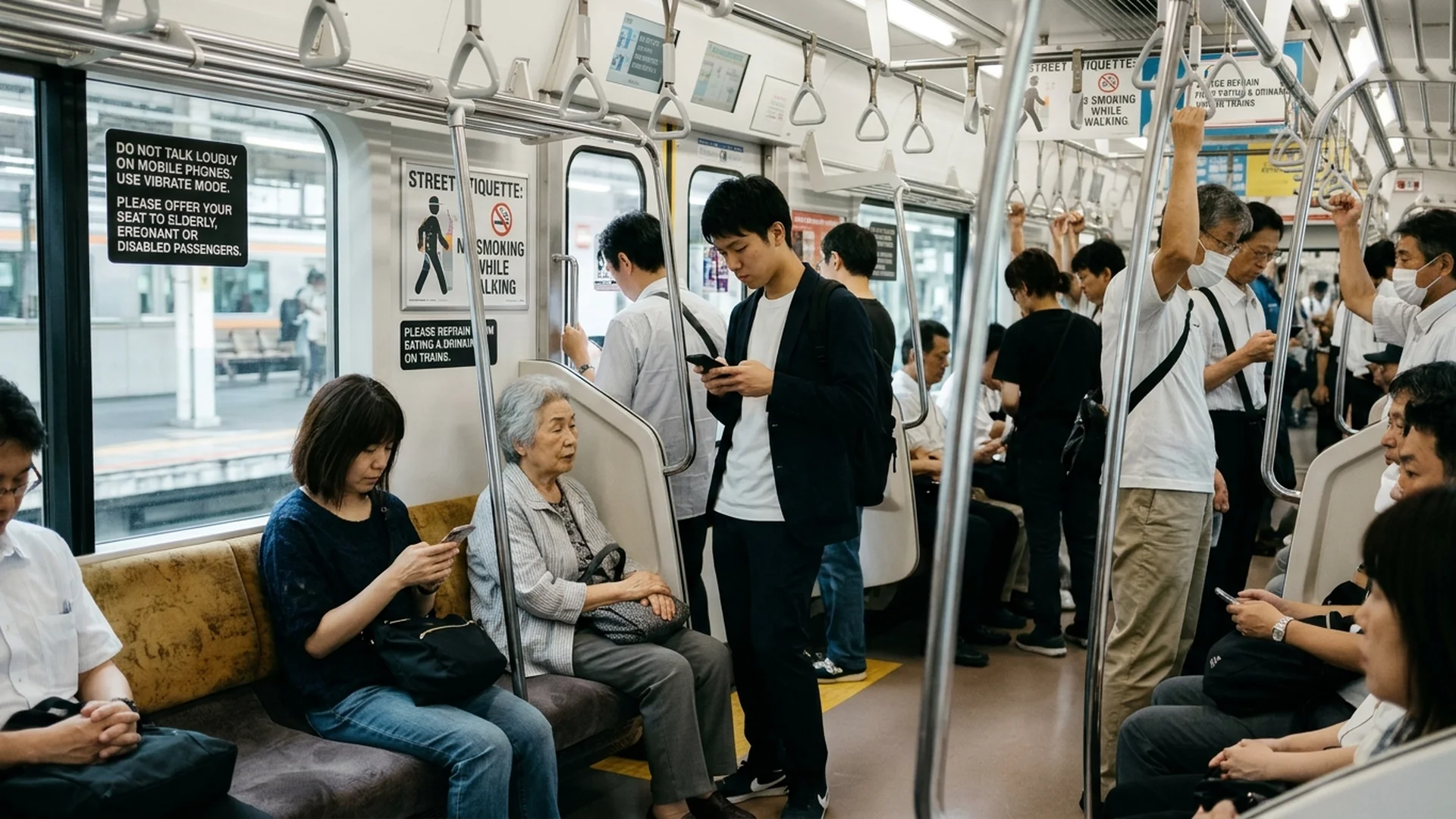
Japanese trains function almost like moving living rooms, where hundreds of individuals journey together in remarkable quietude. The foundational rule for all passengers is to set mobile devices to ‘Manner Mode’ and completely abstain from phone calls. In a confined compartment, vocal resonance and verbal chatter easily disrupt the rest of weary fellow travelers returning from demanding days. Additionally, during peak commuting hours, wearing a bulky backpack on one’s back is considered poor form as it encroaches upon personal space. Carrying bags at your side or placing them on designated overhead racks is a quiet courtesy practiced instinctively by locals.
The Mystery of the Binless City: Cleanliness Born of Personal Discipline
First-time visitors are frequently surprised by the apparent absence of public waste receptacles along city streets. While historically rooted in security measures, this policy has evolved into a vital pillar of environmental stewardship and civic responsibility. Japanese citizens are socialized from childhood to take absolute ownership of their refuse. Consequently, keeping a dedicated waste pouch inside one’s bag is an essential habit for the experienced traveler. When purchasing beverages from automated vending machines, compact recycling bins for bottles and cans are typically positioned nearby—requiring precise sorting. All other personal waste should be retained and disposed of within your private accommodation or at designated station facilities.
The Art of Consumption and Spatial Respect: From Tabearuki to Ethical Photography
The vibrant street food culture, known as ‘tabearuki’, holds undeniable appeal, yet consuming food while walking is frowned upon in traditional quarters and near sacred precincts. Doing so risks staining the garments of passersby or contributing to wandering litter. The proper custom is to enjoy your purchased delicacy standing quietly near the storefront. Furthermore, in an era dominated by digital sharing, capturing picturesque scenery demands vigilant respect for personal privacy, ensuring strangers—particularly the geiko and maiko of Kyoto’s Gion district, who are protected by strict local ordinances—are never inadvertently photographed without consent. Honoring personal boundaries remains the cornerstone of sustainable modern travel.