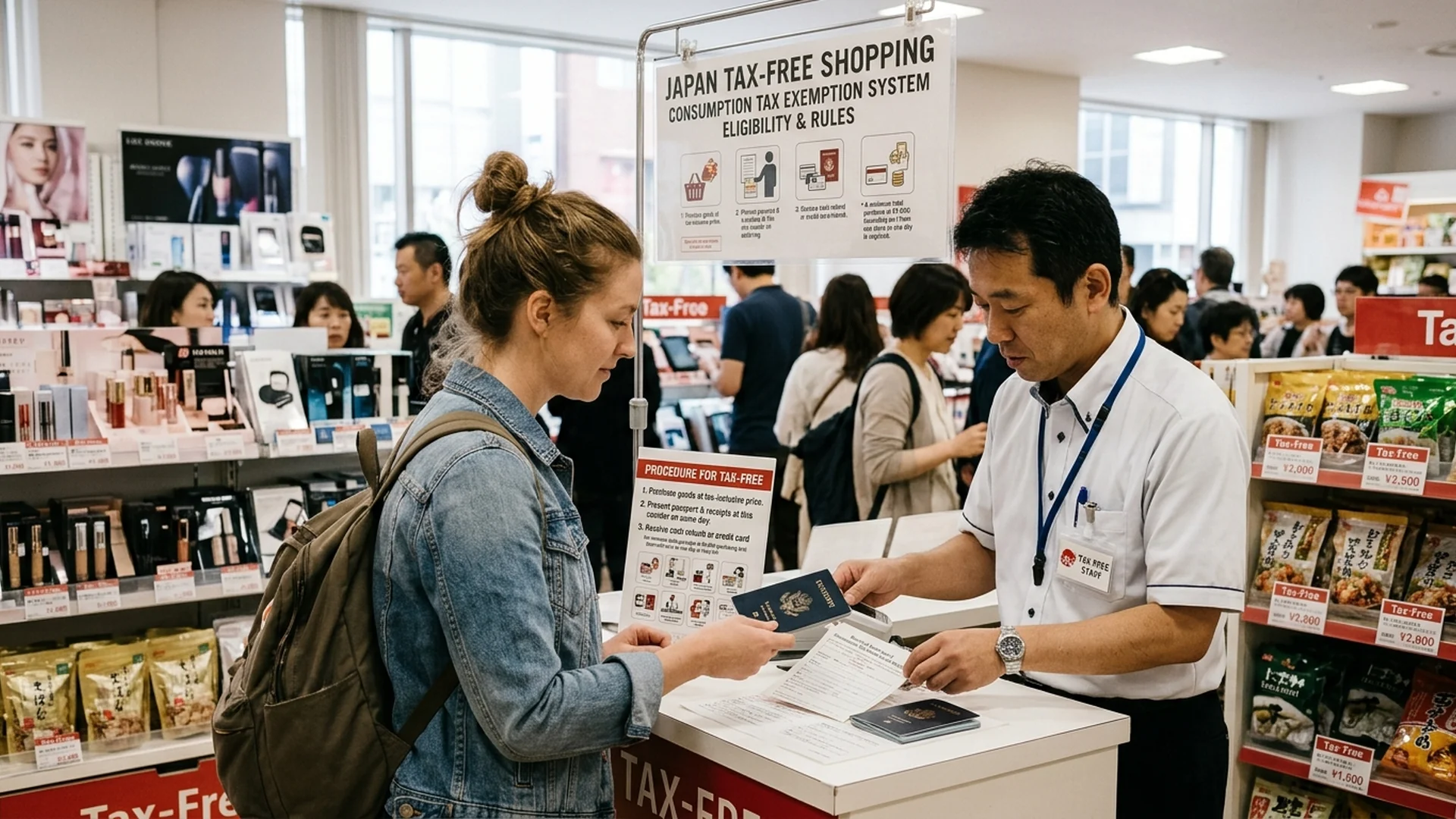
Strolling through the bustling backstreets of Tokyo or the vibrant commercial arcades of Osaka offers an undeniable sensory pleasure, yet for the discerning contemporary traveler, understanding the architectural framework behind price tags and tax refunds is the definitive key to a frictionless journey.
As Japan’s consumption tax refund architecture embraces a fully digitized framework centered around the modern ‘Pay Now, Refund Later’ model, every global visitor must acquaint themselves with these refined mechanics. From navigating the standard 10% and reduced 8% value-added tax tiers to mastering digital identity verification with customs officials at international terminals, this intelligence ensures your departure remains entirely unclouded by retrospective tax inquiries.
Decoding the Consumption Tax Structure for Global Travelers
Japan’s national consumption tax is levied across the country to support public infrastructure and fiscal obligations, operating at a standard rate of 10%—which incorporates a 2.2% local consumption tax. This encompasses high-end fashion, electronics, artisanal souvenirs, and specialized services. Concurrently, a reduced rate of 8% (inclusive of a 1.76% local tax) is maintained for general food items, beverages, and contracted periodical publications to alleviate household cost burdens. Comprehending these numerical tiers empowers travelers to instantly compute precise budgets against retail price tags, whether displayed inclusive or exclusive of tax.
A New Paradigm in Retail: Mastering the ‘Pay Now, Refund Later’ Model
The cornerstone evolution of Japan’s tax-free ecosystem is the policy requiring full tax-inclusive payment at the point of sale, followed by electronic refund processing upon departure using receipts and passport credentials. The distinct advantage of this transition is the abolition of cumbersome historical limitations: the elimination of the 500,000 yen daily consumable cap per merchant, and the removal of rigid departmental divisions separating general goods (such as timepieces and apparel) from consumables (such as confections and cosmetics). This grants an unprecedented level of fluidity and autonomy to modern curation and retail aggregation.
Airport Verification and Refund Execution Protocols
Upon reaching your departure date, the tax reconciliation process transitions into an expedited digital workflow. Travelers scan their passports at automated Tax-Free Procedure Terminals or utilize the Visit Japan Web digital platform within the terminal concourse prior to dispatching checked luggage.
A green indicator on the terminal interface signifies that export verification is complete, cueing the subsequent transfer of funds to your designated credit card or chosen financial channel. Conversely, a red indicator prompts a mandatory physical customs inspection to preserve regulatory transparency. Consequently, travelers are advised to pack tax-exempt acquisitions within easily accessible compartments prior to checking heavy baggage.