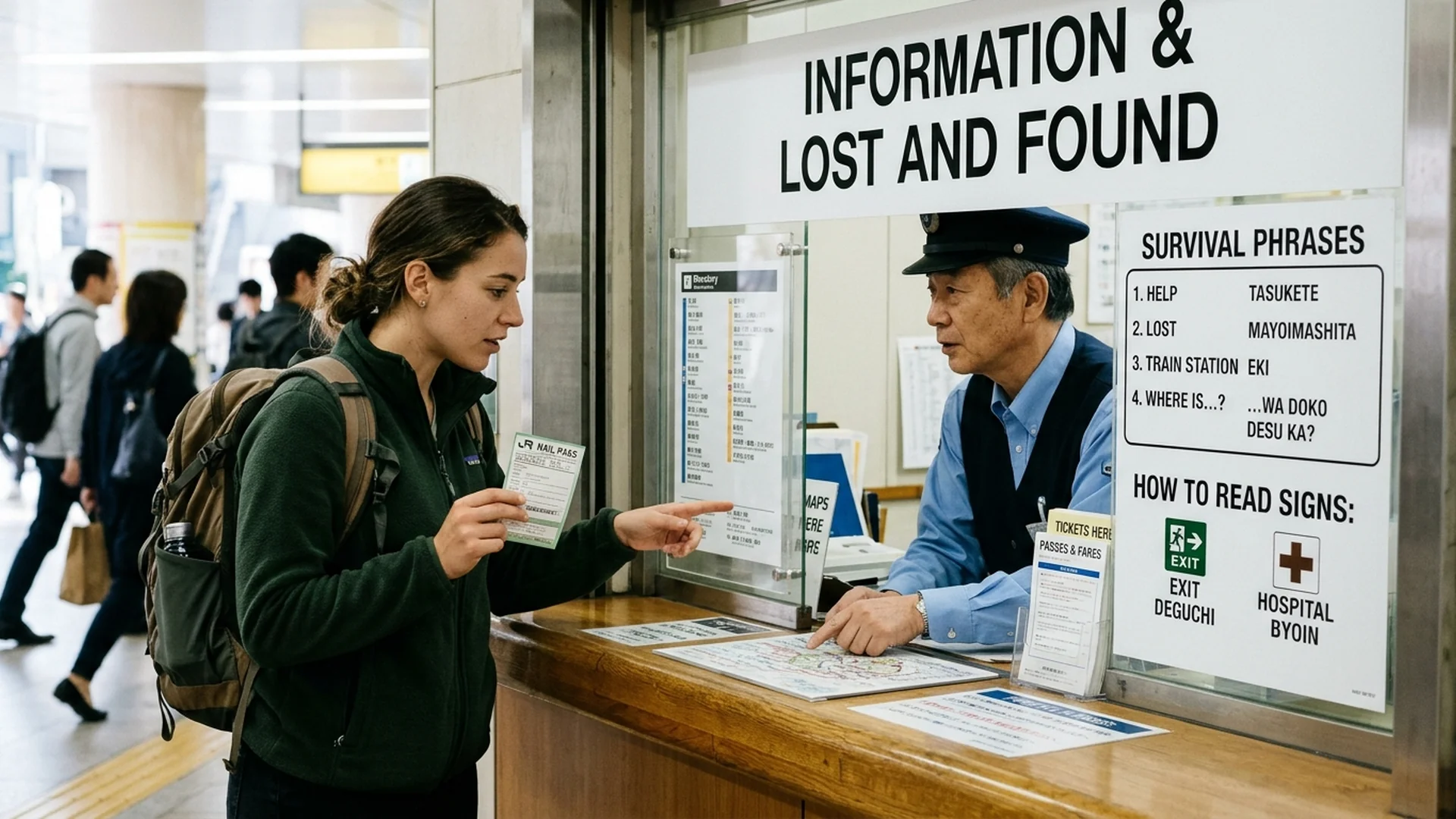
The sublime silence of early morning Tokyo or the moss-draped serenity of a Kyoto alleyway may momentarily pause when your gaze encounters a restaurant menu devoid of English script or an enigmatic announcement aboard the Shinkansen. This gentle jolt of uncertainty is a classic rite of passage when journeying through the Land of the Rising Sun, where the visual language of Chinese characters, or ‘Kanji’, serves as a secret code whispering the stories and unwritten rules of Japanese culture.
Navigating Japan without spoken fluency is far from intimidating once you grasp the foundational essence of its symbols and a handful of powerful linguistic tools designed to transform unexpected moments into effortless flow. This article serves as your condensed yet authoritative map, unlocking every door from hidden ramen counters to unforeseen contingencies.
Decoding Public Kanji: Your Compass in the Metropolis
Upon descending onto a bustling railway platform in Japan, you are immediately enveloped by cascading streams of humanity and a dizzying array of signage. Although the public transport infrastructure is remarkably internationalized, committing a few foundational kanji to memory dramatically shortens transit times and instills quiet confidence. The characters ‘出口’ (Deguchi, meaning exit) and ‘入口’ (Iriguchi, meaning entrance) form the vital dual anchors you must seek first. Furthermore, restroom designations commonly appearing as ‘お手洗い’ (Otearai) or ‘化粧室’ (Keshoshitsu), alongside gender markers for men ‘男’ and women ‘女’, represent essential knowledge that spares you unnecessary guesswork. When encountering boundary markers or restricted zones, signs bearing ‘立入禁止’ (Tachiri Kinshi - Do Not Enter) or ‘撮影禁止’ (Satsuei Kinshi - Photography Prohibited) act as cultural demarcations that every mindful traveler observes with absolute respect.
The Art of Dining: Reading Menu Kanji Without Misstep
One of the enduring pleasures of visiting local dining establishments in Japan is encountering handwritten menus or traditional storefront banners that frequently lack photographic accompaniment. Cultivating an understanding of basic food kanji is therefore the key to a thoroughly satisfying culinary immersion. Begin with the primary animal proteins foundational to many dishes: ‘牛’ (Gyu - beef), ‘豚’ (Buta or Ton - pork), and ‘鶏’ (Tori - chicken), which allow individuals with dietary restrictions or ethical preferences to meticulously avoid unwanted ingredients. Additionally, recognizing ‘水’ (Mizu - water) alongside ‘会計’ or ‘勘定’ (Kaikei / Kanjyo - the bill or settlement) ensures your dining narrative flows effortlessly from the first morsel to the final farewell without fumbling through ambiguous hand gestures.
Golden Phrases and Body Language: The Borderless Power of Politeness
The Japanese language possesses an intricate architecture of politeness, yet for the visiting global traveler, a mere handful of short phrases suffices to win local goodwill and navigate immediate situations. The word ‘Sumimasen’ (Pardon me / Excuse me) functions as a versatile master key, useful for summoning a server in a crowded dining room, requesting passage down a narrow corridor, or gently initiating contact with a stranger to ask for assistance. When ordering a dish or selecting an item, pointing to your target while stating ‘Kore kudasai’ (I’ll have this, please) instantly dissolves hesitation. Finally, upon receiving help, offering ‘Arigato gozaimasu’ (Thank you very much) accompanied by a warm smile and a slight bow bridges any emotional distance between guest and host, reflecting the essence of a hospitality that spoken words alone can rarely capture.