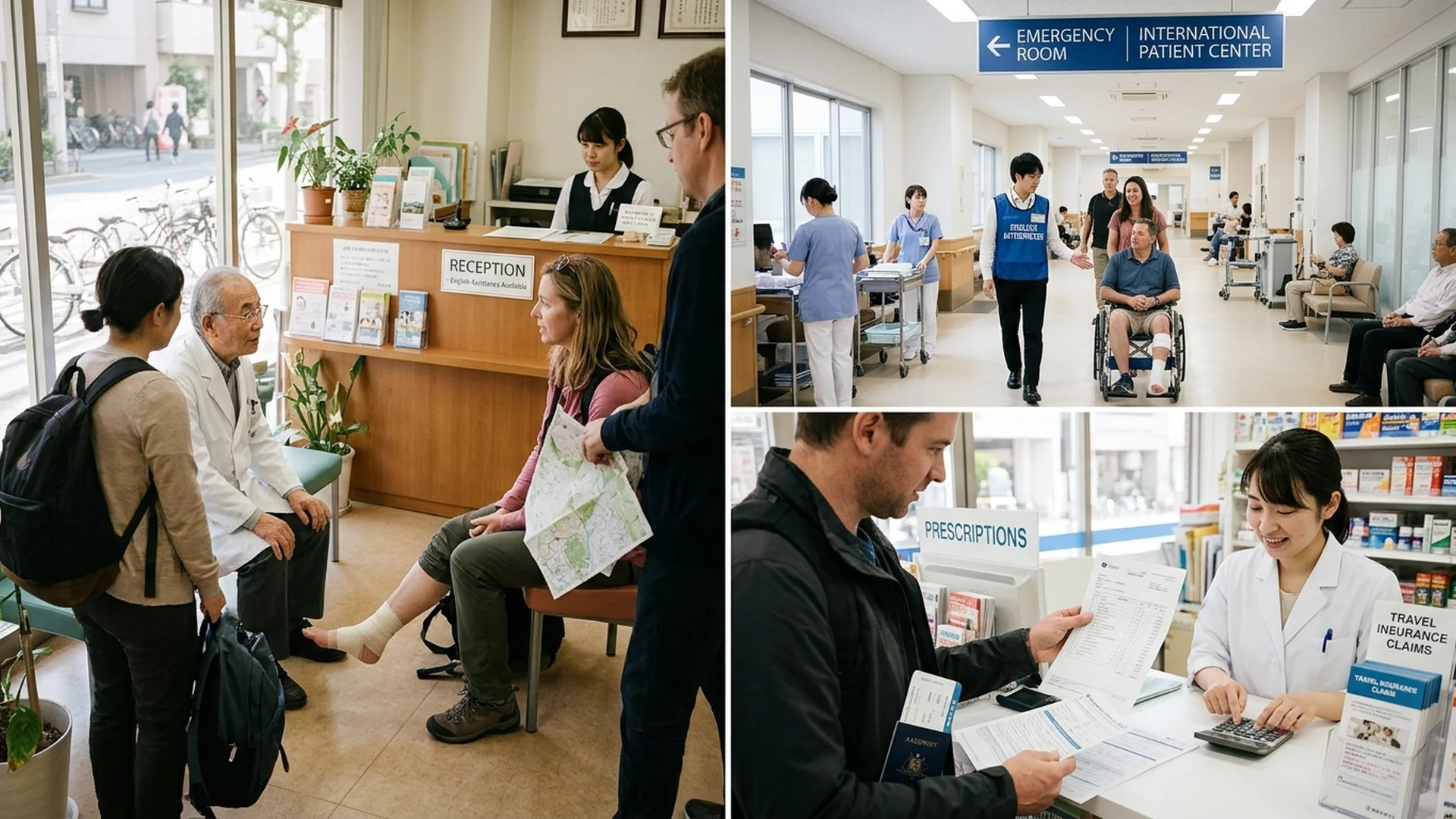
Amidst the fleeting beauty of spring sakura or the fiery canopy of autumn foliage, the memory of a Japanese journey is customarily woven with grace and wonder. Yet, in the quiet shadows of exploration, sudden illness or unforeseen accidents can emerge without warning. When the body signals distress amid the relentless velocity of a metropolis, understanding Japan’s public health and emergency medical infrastructure ceases to be a distant abstraction; it becomes an essential armor that every discerning traveler should carry.
Facing illness in a foreign land generates profound vulnerability, particularly when compounded by linguistic barriers and stringent medical protocols. Fortunately, Japan possesses one of the most sophisticated emergency management and healthcare systems in the world. With precise preparedness—from navigating communications and locating international-friendly medical facilities to managing expenses through comprehensive travel insurance—every unexpected crisis can be met with composure and absolute peace of mind.
Decoding the JMIP Standard: A Beacon in the Land of the Rising Sun
When illness strikes during an itinerary, the initial anxiety invariably centers around communication and selecting the correct medical sanctuary. In Japan, an accreditation system known as JMIP (Japan Medical Service Accreditation for International Patients) serves as a vital benchmark. This certification affirms that a hospital or clinic is fully prepared to welcome and serve international patients comprehensively. This encompasses medical personnel fluent in English or other foreign languages, multilingual documentation systems, and a profound sensitivity to cultural and religious nuances. Opting for a JMIP-accredited facility drastically reduces clinical friction, empowering physicians to diagnose conditions with remarkable precision and speed. Furthermore, the Japan National Tourism Organization (JNTO) curates systematic directories and digital applications cataloging these vetted institutions for traveler convenience.
When the Critical Hour Arrives: Dialing 119 and Managing Emergencies
In instances of severe trauma or acute medical emergencies, the vital number to commit to memory is 119, which summons an ambulance (Kyukyu). While dispatch services for the vehicle itself incur no charge, the primary challenge remains effective communication with the dispatcher. Upon connection, maintaining absolute composure to convey the precise location, the patient’s symptoms, and your identity is paramount. Major urban dispatch centers routinely deploy three-way calling interpreters—bridging the patient, the officer, and a translator—to ensure rapid deployment of medical teams. For minor ailments such as seasonal influenza, acute gastrointestinal distress, or superficial injuries, visiting a local neighborhood clinic or the outpatient department of a general hospital during operating hours proves far more appropriate and fluid than deploying emergency transit.
Managing Financial Exposure: The Sobering Reality of Medical Costs and Insurance
Japan’s healthcare ecosystem is universally celebrated for its pioneering sophistication and immaculate hygiene, yet it commands exorbitant costs for foreign visitors lacking eligibility under the national health insurance scheme. Overnight hospitalization or minor surgical interventions can easily scale into hundreds of thousands of baht or equivalent currencies. Traveling without international health insurance is akin to walking a tightrope. Selecting a policy offering high coverage limits for emergency medical expenses alongside worldwide global assistance completely dismantles these financial liabilities. Leading insurers frequently provide direct settlement services if partnered with network hospitals, or alternatively require out-of-pocket settlement followed by international reimbursement.
The Art of Documentation: The Cornerstone of Seamless Insurance Claims
The success of post-trip insurance indemnification hinges entirely upon the integrity and completeness of documentation secured from Japanese medical facilities. The moment treatment concludes, patients or their caregivers must explicitly request essential English-language documents: a detailed Medical Certificate or Diagnosis Certificate outlining causes, symptoms, and clinical findings; the Original Receipt; and an Itemized Medical Bill segregating pharmaceutical, physician, and facility fees. Moreover, any ancillary expenses—such as ambulance utilization or localized pharmacy purchases—must be meticulously archived. This scrupulous attention to administrative detail ensures that insurance underwriters review claims swiftly and disburse entitlements in full accordance with policy terms.