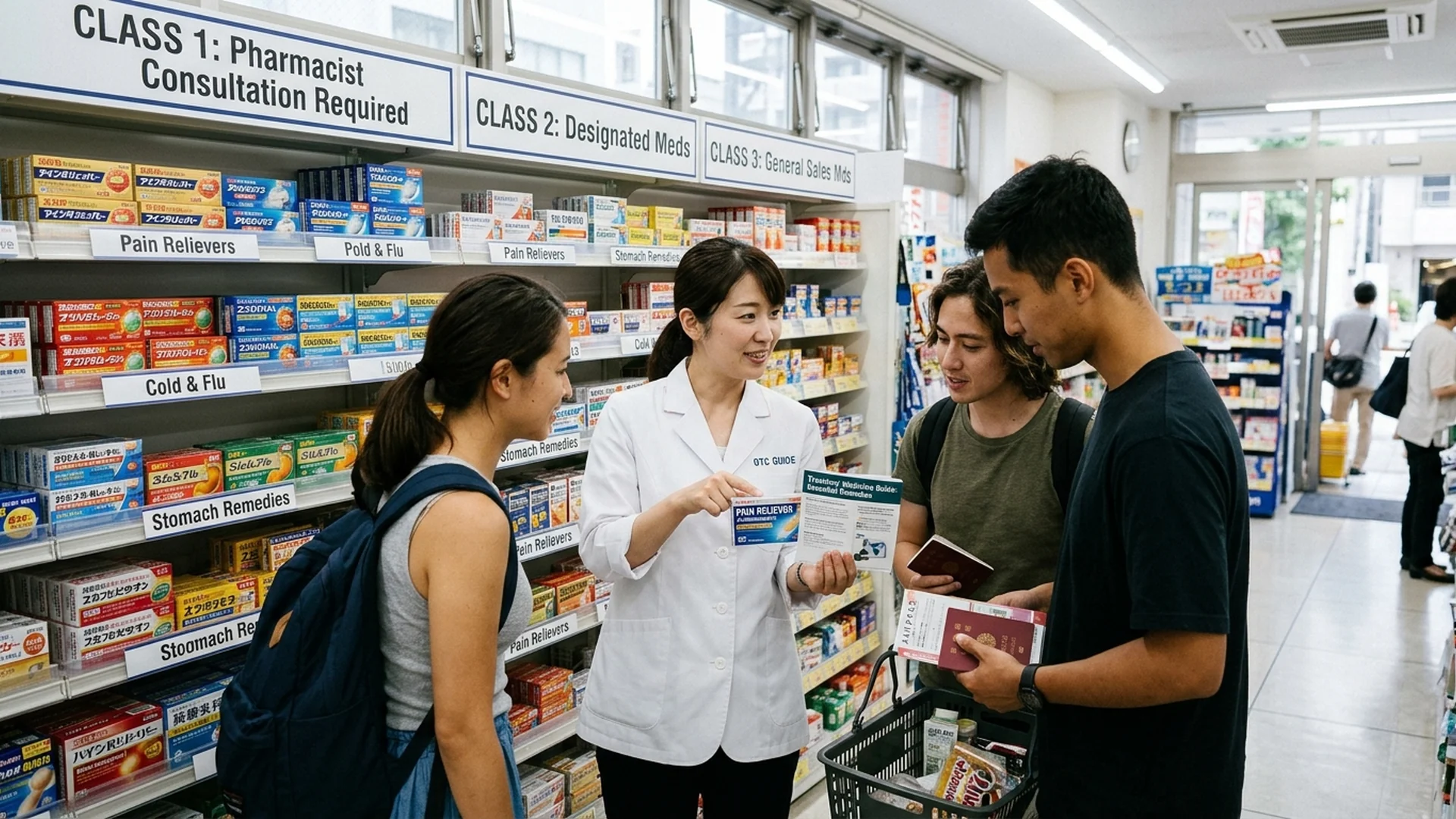
An afternoon in Tokyo, amid lingering rain and the chill winds sweeping past skyscraper terraces: sudden illness respects neither itinerary nor schedule. Whether it is a dull throbbing headache born from a full day exploring ancient neighborhoods, or a fever striking without warning, stepping into brightly lit apothecaries such as Matsumoto Kiyoshi or Sundrug offers the immediate refuge. Yet behind the neatly organized shelves lies a labyrinth of kanji characters and a stringent classification system that can easily leave international visitors feeling as though they are deciphering ancient script.
A single misstep in cross-border pharmacy navigation can lead to unexpected side effects or run afoul of Japan’s rigorous public health regulations. Sophisticated travel through the Land of the Rising Sun extends far beyond railway planning or securing Michelin-starred reservations; it demands the self-reliance to navigate unexpected health concerns through an understanding of a home remedy infrastructure celebrated for uncompromising global safety standards.
Decoding Classes 1, 2, and 3: The Guardian Walls of Japanese Pharmacies
Japan’s healthcare ecosystem places paramount importance on consumer safety. Over-the-counter (OTC) medications are systematically divided into three distinct tiers directly on their packaging, ensuring buyers remain acutely aware of potency and potential side effects. Class 1 medications (第1類医薬品) comprise potent formulations or novel compounds requiring rigorous observation for adverse reactions. Acquiring these remedies mandates a formal consultation and safety screening with a qualified on-site pharmacist. Shoppers cannot simply select these boxes from the open sales floor and proceed directly to the register.
Following this are Designated Class 2 medications (指定第2類医薬品), the ubiquitous choice for common ailments such as analgesics, antipyretics, antihistamines, and decongestants. While freely accessible on standard retail shelves, they feature prominent rectangular or triangular warning borders because their active ingredients may induce drowsiness or interact with cardiovascular and neurological systems. The final category, Class 3 medications (第3類医薬品), encompasses high-safety remedies with minimal side effects—including dietary supplements, mild expectorants, and topical treatments—allowing patrons to select them independently without complex medical oversight.
Reading the Kanji: Survival Japanese for Emergency Apothecary Visits
Standing before crowded pharmacy shelves during an urgent moment, relying solely on pictorial packaging is rarely sufficient. Familiarizing yourself with fundamental kanji symbols printed on product labels ensures unerring selection. For the universal ailment of a headache, look for the characters 頭痛 (Zutsuu), while a fever or elevated temperature is designated by 発熱 (Hatsunetsu) or simply 熱 (Netsu). When throat inflammation accompanies your symptoms, scan the packaging for 咽頭痛 (Intoutsuu) or 喉の痛み (Nodo no itami).
Regarding the digestive tract, sudden distress brought on by unfamiliar regional cuisine requires recognizing 下痢 (Geri) for diarrhea, or 腹痛 (Fukutsuu) for abdominal cramping and spasms. Furthermore, if the rhythmic sway of a shinkansen or coastal ferry induces motion sickness, 乗り物酔い (Norimono-yoi) serves as your vital key to acquiring reliable anti-nausea remedies that restore seamless motion to your itinerary.
The Discerning Traveler’s Pharmacy Arsenal: Essentials from Matsumoto Kiyoshi and Sundrug
Among the remedies favored by both residents and seasoned travelers, Japanese NSAID painkillers have earned legendary status for rapid efficacy. Formulations such as EVE Quick and EVE A Tablet are widely respected for alleviating headaches, dental pain, or dysmenorrhea, with the Quick iteration incorporating gastric-mucosa protectors for accelerated absorption. An alternative choice is Loxonin S, a potent Class 1 analgesic exceptionally effective against severe muscular discomfort or high fevers, which strictly requires a pharmacist’s counsel prior to purchase.
For gastrointestinal concerns, Seirogan (正露丸)—affectionately recognized by its distinct herbal aroma—remains a historic standby for acute food poisoning and microbiome stabilization. Alternatively, for a gentle yet swift remedy, Stassa (太田胃散), an aromatic herbal powder featuring mint undertones, offers superb relief for bloating, overindulgence, or sluggish digestion following generous portions of rich Japanese gastronomy.