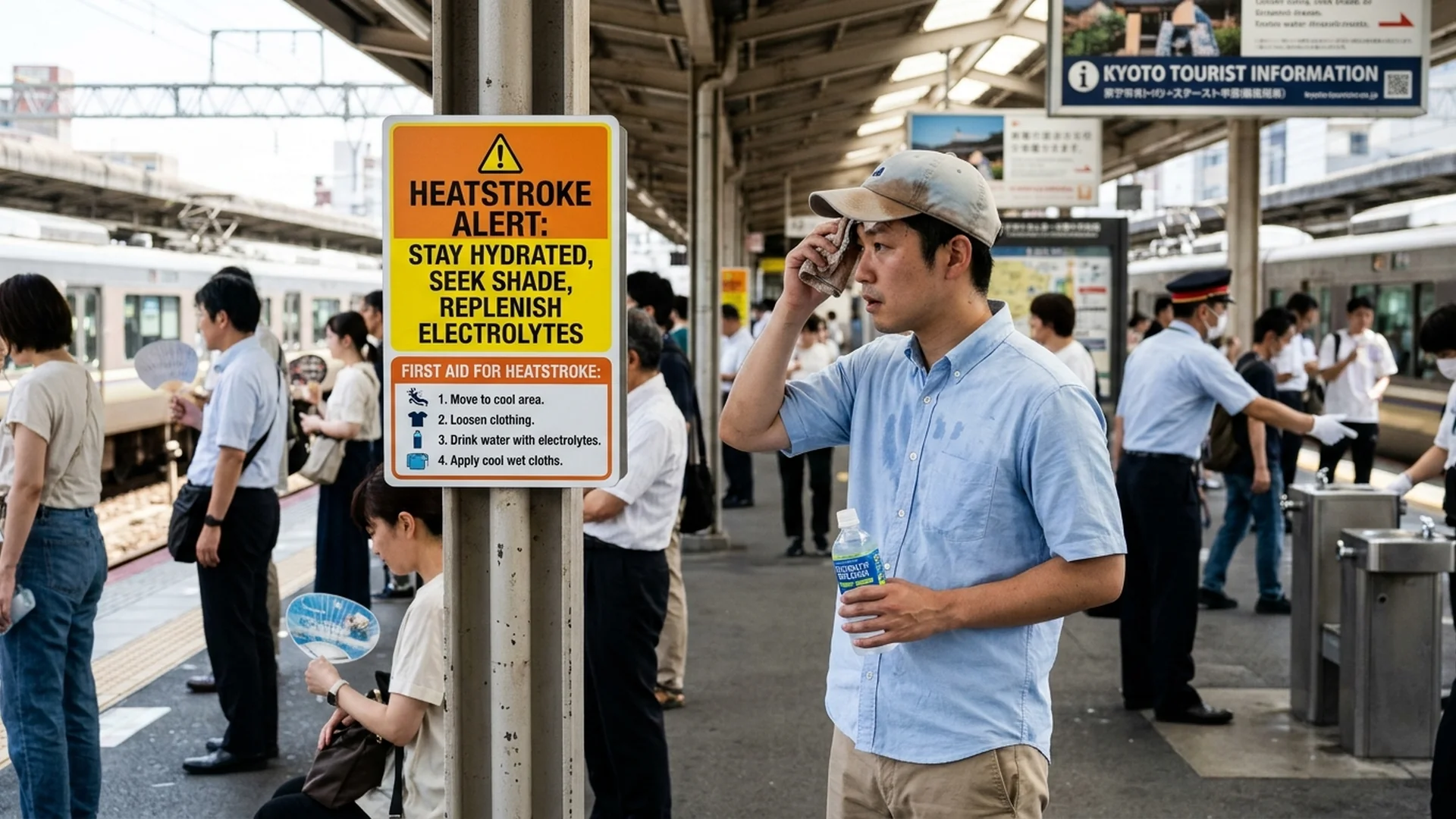
As the vibrant charm of a Japanese summer ushers in temperatures soaring past 35 degrees Celsius alongside an oppressive, oven-like humidity, an unspoken threat looms silently over unsuspecting travelers: netsushosho, or heatstroke. Beneath the festive veil of traditional fireworks and azure skies, Japan treats this subtle peril as a matter of national urgency. The unique atmospheric conditions here trap high volumes of moisture in the air, obstructing the body’s natural perspiration and cooling mechanisms, causing core temperatures to rise far faster than one might anticipate.
Seasoned travelers accustomed to tropical climates may dismiss the risk, but the harsh reality of pavement-pounding in Tokyo or Kyoto during July and August proves that urban fatigue combined with dense humidity can easily compromise even the fittest constitution. Understanding natural physiological thresholds, keeping your guard raised, and recognizing early warning alerts are the essential keys to ensuring your journey remains unblemished, safe, and deeply memorable.
Decoding the Menace of Netsushosho: Why Japanese Summers Are Deceptively Severe
In medical science, heat-induced illness is measured not merely by the thermometer’s mercury, but by the heat index—a synthesis of ambient temperature and relative humidity. Japan’s summers, particularly across the Kanto plain, are intensified by urban heat island effects coupled with stagnant sea breezes, sending humidity levels skyward.
When the human body perspires to cool itself, high atmospheric moisture prevents that sweat from evaporating efficiently. Consequently, the cardiovascular system labors intensely to pump blood toward the skin for heat dissipation, rapidly driving up core body temperature. Early symptoms may present merely as mild cramps, lethargy, or queasiness; however, if left unchecked toward critical thresholds, neurological and visceral organ failure can ensue. This underscores why Japanese authorities prioritize stringent daily forecasting and public alerts.
Interpreting National Warning Alerts and Digital Life-Saving Tools
Travelers traversing Japan during peak summer will routinely encounter colored flags, public advisory notices, and emergency broadcast push notifications on their smartphones. These stem from the official Heatstroke Alert system issued by the Japan Meteorological Agency.
Advisories scale across various levels of severity, stretching from baseline cautions to extreme danger warnings. Should weather applications signal high-risk conditions, mindful travelers should adjust their itineraries—substituting midday outdoor walking tours between noon and three o’clock with shaded museum visits, scenic rail journeys, or quiet neighborhood cafés rather than persisting under the blazing sun at temple courtyards or open-air gardens.
The Urban Ritual of Hydration: Finding Remedies at Every Street Corner
Stepping out onto the pavement demands a proactive strategy for water and mineral replenishment. Convenience stores like Lawson, FamilyMart, and Seven-Eleven, alongside vending machines positioned on virtually every corner, serve as critical sanctuaries.
Medical practitioners in Japan frequently recommend ion-supply beverages such as Pocari Sweat or Aquaris, engineered for rapid absorption compared to plain water. Additionally, salt tablets and shio ame (traditional salted candies) are widely available, offering mineral replenishment against heavy perspiration loss. Sipping mineral-rich fluids frequently in small amounts rather than consuming large quantities at once maintains optimal internal fluid equilibrium sustainably.