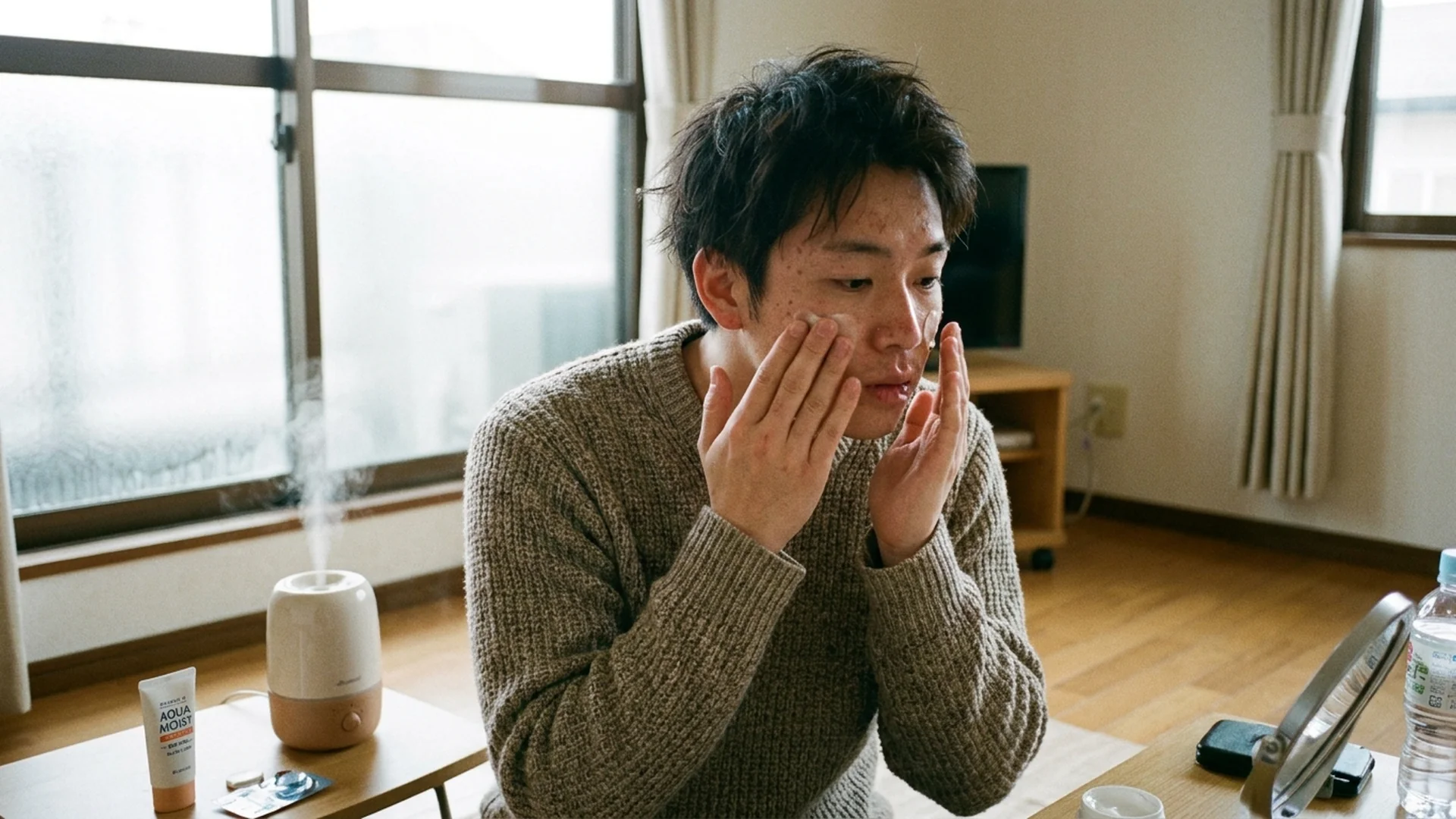
As the final amber leaves of autumn yield to the pristine snows of a Japanese winter, travelers are frequently beguiled by the visual poetry of frost-kissed landscapes, overlooking an invisible atmospheric challenge. Within indoor sanctuaries and heated accommodations, relative humidity can plummet to a stark 20 to 30 percent—drier by far than the humid climes of Southeast Asia. This meteorological shift brings more than just picturesque snowfall; it triggers quiet physiological alarms, manifesting as taut, flaking skin, chapped lips, burning nasal passages, and abrupt morning nosebleeds.
For travelers unaccustomed to such desiccating conditions, navigating the duality of Japan’s sub-zero outdoor air and aggressively heated interiors requires mindful preparation. Understanding the intricate mechanics of this atmospheric dryness is the definitive key to preserving your epidermal and respiratory well-being, allowing you to surrender entirely to the sublime beauty of your journey without the distraction of physical discomfort.
The Anatomy of Aridity: Why Japanese Winter Air Pulls Moisture from Your Skin
Beneath the pristine veneer of snow-draped vistas and crystalline winter skies lies a continental high-pressure system. By its very nature, intensely cold air lacks the capacity to hold ambient water vapor. When we seek refuge from the frost within buildings, traditional machiya, or modern hotels equipped with convective heating systems, the ambient heat aggressively drives off what little residual moisture remains in the indoor atmosphere.
When the skin and respiratory mucosa are subjected to this low-humidity environment for prolonged periods, transepidermal water loss accelerates exponentially. The skin’s protective lipid barrier weakens, resulting in tightness, erythema, flaking, and persistent pruritus. Concurrently, the delicate mucous membranes lining the nasal cavity and pharynx dry out completely, laying the physiological groundwork for irritation, micro-fissures, epistaxis, and the quintessential scratchy throat upon waking.
The Art of Operating the Kashitsuki (Room Humidifier) in Japanese Hotels
The vast majority of Japanese accommodations—from venerable ryokan to streamlined business hotels—thoughtfully equip guest rooms with a dedicated humidifier (加湿器 - Kashitsuki), or make them readily available upon request. Mastering the operation of these appliances is paramount for securing restorative, uninterrupted sleep.
Begin by removing the water reservoir located at the rear or top of the device, filling it with clean water (preferably boiled tap water or pure bottled water) up to the designated maximum line. Select the operational mode; most units feature an automated setting designed to maintain ambient room humidity at an optimal 50 to 60 percent, the biological sweet spot for respiratory and dermal health. It is essential to monitor water levels vigilantly. In the absence of a machine, hanging damp towels near the headboard or leaving the bathroom door ajar with a warm bathtub drawn serves as an effective emergency analogue for elevating room moisture.
The Japanese Drugstore Pharmacopeia: Rescuing Four Critical Vulnerabilities
When the initial signs of dry, irritated skin manifest during your travels, the local Japanese drugstore (Drugstore) reveals itself as an invaluable sanctuary. Essential items to secure include:
- Nasal Moisturizing Sprays (鼻の保湿): Formulated with purified saline or specialized moisturizing gels, these sprays coat the nasal passages, preventing fissures and epistaxis.
- High-Urea Concentrated Creams (Urea Cream): For persistent fissures on the elbows, heels, or limbs, urea concentrations of 10 percent or higher gently exfoliate keratinized buildup while locking in essential hydration.
- Pharmaceutical Lip Treatments: Seek balms enriched with menthol, camphor, or ceramides to shield delicate lips from cracking.
- Preservative-Free Artificial Tears: Bracing winter winds and forced-air heating easily fatigue and irritate the ocular mucosa. Carrying single-use artificial tears restores vital surface moisture throughout the day.