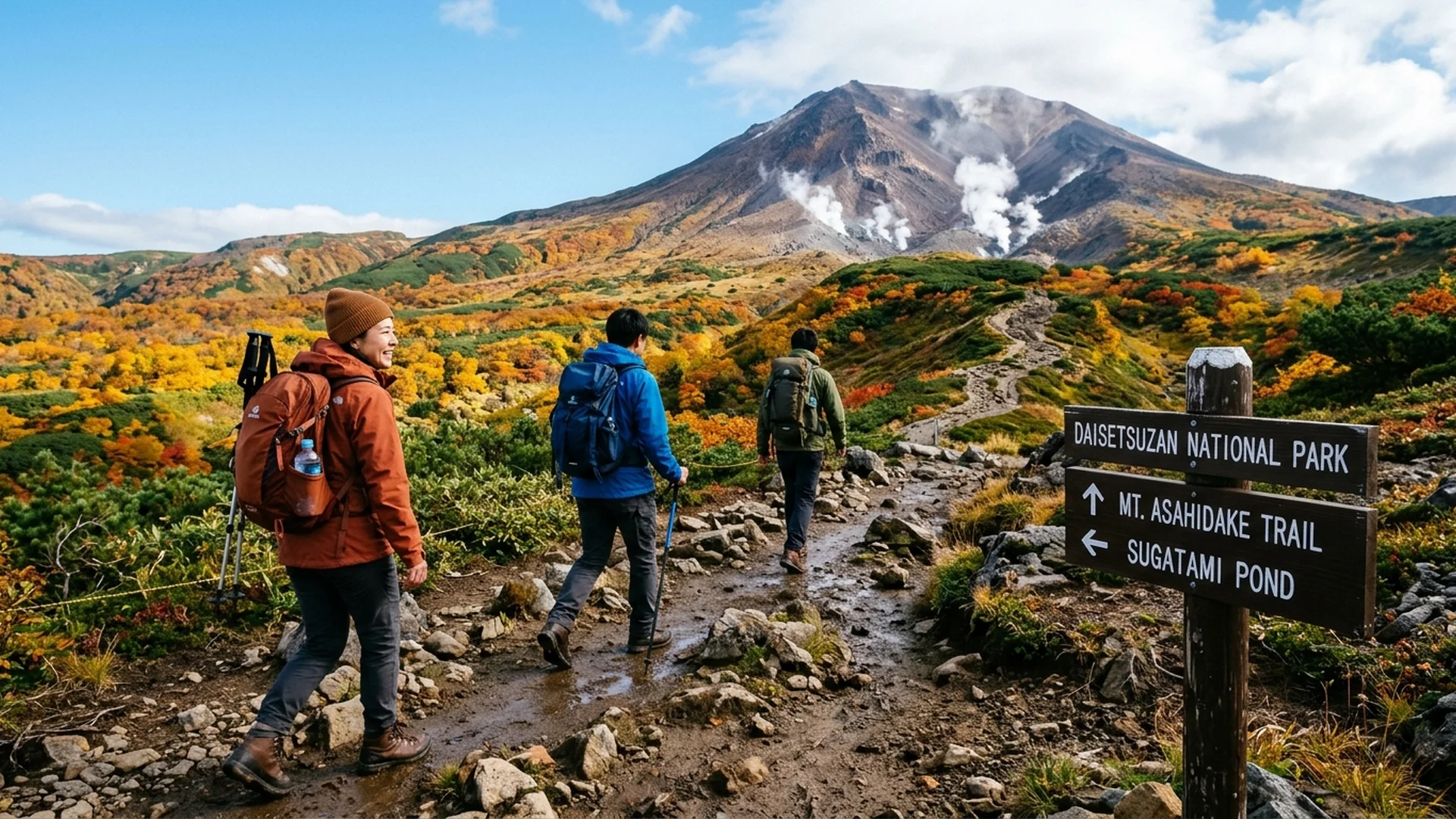
Revered as the roof of Hokkaido, the vast wilderness and soaring peaks of Daisetsuzan National Park form the beating heart of northern Japan’s pristine topography. This is no ordinary sanctuary; it is a profound collision of raw geological force and ethereal beauty, where steaming volcanic vents and mirror-like tarns sit against ancient ridges that turn crimson and gold weeks before the rest of the archipelago.
Navigating this sprawling alpine realm through day hikes—aided by a network of cable cars and ropeways that effortlessly elevate travelers into the thin-air heights—offers unprecedented access to high-altitude ecosystems. Yet, the true signature of these mountains is their meteorological caprice, where crystal-clear blue skies can dissolve into swirling mists and biting gales within minutes. This transcreation invites discerning travelers to explore the park’s legendary trails, from delicate summer wildflower loops to volcanic ascents, while mastering the elemental grandeur of Hokkaido’s highest ground.
Sugatami Pond Loop: Volcanic Vents and Alpine Flora
For those seeking to absorb the majesty of high-altitude sanctuaries without rigorous mountaineering, the Sugatami Pond Loop serves as an exquisite introduction. As the ropeway glides upward to an elevation of approximately 1,600 meters, travelers are greeted by pristine tarns that act as massive obsidian mirrors, capturing the imposing silhouette of Mt. Asahidake.
All around, the living pulse of an active volcanic heartland is unmistakable. Thin plumes of sulphurous vapor hiss from vents, carrying faint earthy minerals across the breeze and testifying to subterranean fires. By July, this high sanctuary erupts in a delicate tapestry of alpine wildflowers—crimson, yellow, and violet blossoms pushing through lingering pockets of snow. Requiring a leisurely one to 1.5 hours, this circuitous trail offers a surreal, almost otherworldly immersion into Hokkaido’s untamed ecology.
Conquering Mt. Asahidake and the Ridge to Kurodake
For travelers seeking a more demanding test of endurance, the push to Hokkaido’s highest apex at Mt. Asahidake (2,291 meters) provides a deeply rewarding day hike. Beyond the Sugatami viewpoint, the terrain transitions into an austere, lunar expanse of dark volcanic scree and ancient basalt fragments.
The round-trip journey takes approximately 4.5 to 5 hours. Experienced trekkers with ample time often favor the full ridge traverse, crossing the massive volcanic depression of the Ohachidaira Caldera toward Mt. Kurodake. This extended backcountry route, which demands careful planning and respectful navigation, rewards the dedicated traveler with unbroken 360-degree panoramas across the roof of Hokkaido—a visual symphony etched permanently into memory.
The Seasonal Harbinger: Japan’s Earliest Autumn Foliage
A crowning distinction of Daisetsuzan is its status as the vanguard of Japan’s autumn foliage. As crisp winds begin to sweep down from the north in late August, the park’s high-altitude shrubs and dwarf pines initiate a breathtaking chromatic shift, blazing in tones of amber, copper, and fiery scarlet long before color touches the lowlands below.
Visiting between early and late September offers a quintessential aesthetic encounter: the stark contrast of jet-black volcanic rock, brilliant golden alpine foliage, and piercing cobalt skies creates an ephemeral masterpiece that draws nature connoisseurs from across the globe.