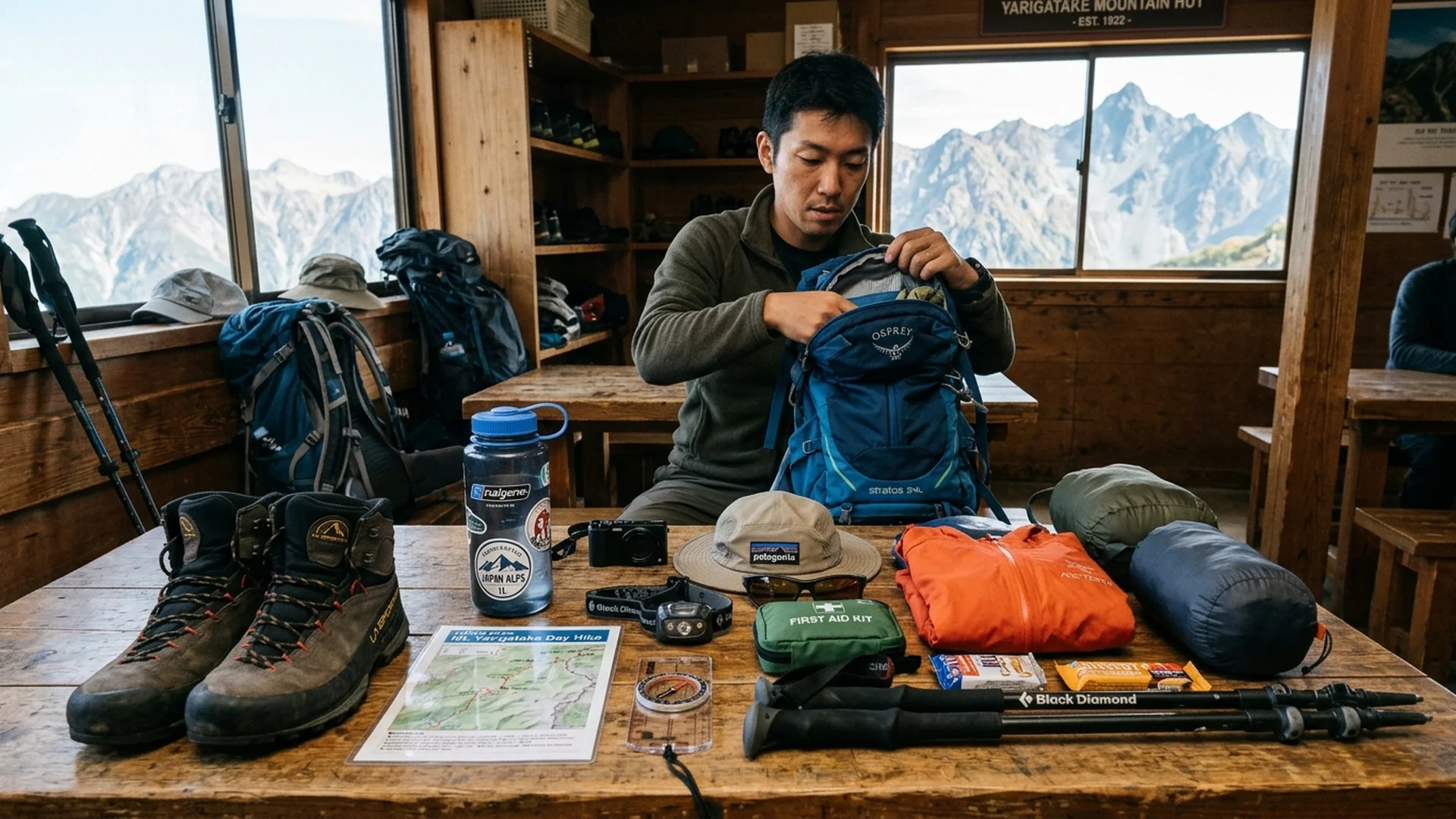
Standing before the sublime majesty of the Japan Alps—whether amidst the tranquil, glacial expanse of Kamikochi, the volcanic allure of Tateyama, or the challenging ridges of Hakuba—one quickly realizes that alpine grandeur demands profound respect. Pristine morning azure skies can surrender to torrential rain or fierce, unyielding ridge winds within mere minutes.
Stepping onto these volcanic scree paths and steep inclines is not merely an act of passion; it requires rigorous technical understanding. Discerning mountaineers must master gear selection, shield the body against plunging temperatures with precise technical apparel, and anticipate the shifting moods of high-altitude nature with absolute precision.
The Architecture of Alpine Dress: Decoding the 3-Layer System
The climate of the Japan Alps possesses a distinct temperament. For every one-hundred-meter increase in elevation, ambient temperatures drop by approximately 0.6 degrees Celsius, while ferocious ridge winds rapidly strip heat from the human frame. Consequently, the philosophy of alpine attire rejects the simplistic notion of wearing a single heavy garment in favor of an orchestrated, three-layered symphony.
The foundation is the Base Layer, crafted from high-performance synthetics or fine Merino wool, engineered to wick moisture swiftly away from the skin and prevent chilling during rest stops. The second tier is the Insulation Layer—such as premium down or lightweight fleece—which traps body heat efficiently. Finally, the Outer Shell employs advanced waterproof technology, such as Gore-Tex, to form an impermeable barrier against biting gales and sudden squalls.
Foundations of Safety: Footwear, Traction, and Volcanic Scree
The trekking routes across the Chubu region rarely offer gentle paths, presenting instead rugged granite surfaces, shifting volcanic scree, and steep gradients that demand absolute concentration. Relying on casual fashion sneakers or standard running shoes introduces severe safety risks. The ideal choice is mid-cut or high-cut hiking boots engineered specifically to lock the ankle in place and avert injuries from rolling stones on precarious slopes.
Soles should feature deep, aggressive lugs crafted by industry standards like Vibram, ensuring superior friction on both wet rock and dry gravel. Furthermore, pairing these boots with properly cushioned technical hiking socks minimizes friction and prevents debilitating blisters, safeguarding an otherwise flawless alpine expedition.
Outfitters and Alpine Sanctuaries: Montbell, Ishii Sports, and Tax-Free Privileges
For travelers seeking to refine their equipment list or acquire specialized apparel upon arrival in Japan, Tokyo and Osaka offer legendary specialty flagships revered by mountaineers worldwide.
The homegrown Japanese house Montbell champions a ‘Light & Fast’ ethos, celebrated for featherlight rain shells and ultralight gear accessible across nationwide branches. Meanwhile, Ishii Sports and L-Breath function as comprehensive department stores for outdoor pursuits, housing everything from technical backpacks and compact camp stoves to premier hiking footwear. International visitors may present their passports to claim a 10% tax-free exemption upon reaching the qualifying purchase threshold.