As the morning mist gradually lifts to reveal the intricate, folded ridges of the Japanese Alps, the profound, sacred stillness of Japan’s wild landscapes begins to work its quiet magic. The hurried heartbeat born of physical exertion slows to match the steady rhythm of footfalls upon leaf-strewn trails and exposed pine roots. Yet, beneath the enchanting veneer of the Rising Sun’s backcountry lies an uncompromising code of ecological reverence and structural regulation that every discerning traveler must honor. Mountaineering in Japan is never merely about conquering a summit; it is an intimate communion with a realm where wilderness and deep-rooted spirituality exist as one.
As more international travelers venture beyond metropolitan skylines to test themselves against these legendary trails, paramount safety practices and local customary stewardship emerge as the absolute keys to transforming an expedition into an enduringly meaningful experience. True preparation encompasses far more than high-performance hiking boots or meticulously packed technical shells; it demands a thorough comprehension of protocols designed to protect both the individual traveler and the astonishingly delicate ecosystems they traverse.
Tozantodoke: The Primary Bastion of Safety and Rescue
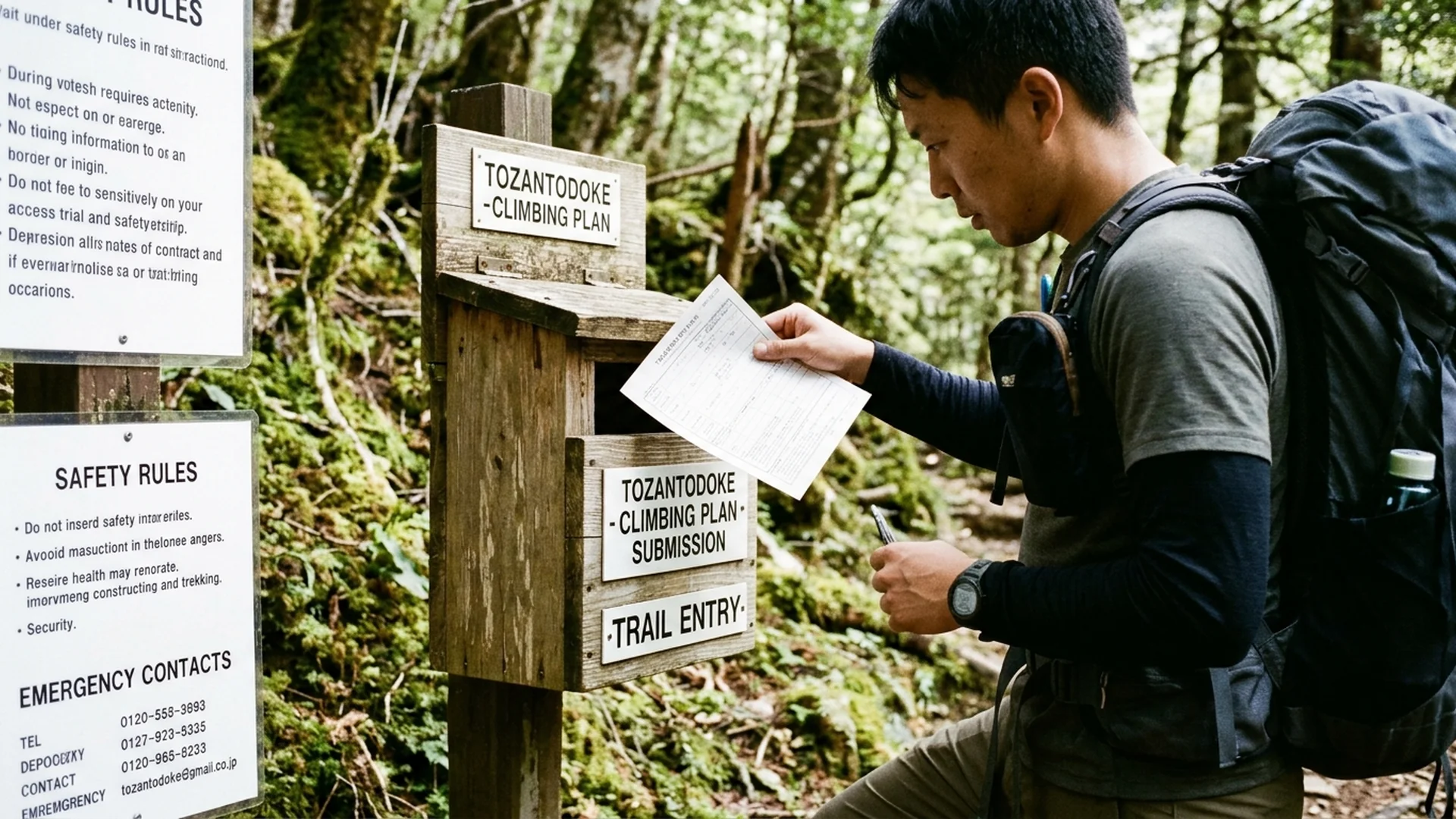
Before the first lug of a hiking boot touches alpine soil, every traveler must master the protocol of the ‘Tozantodoke’ (登山届)—the official mountain climbing notification form. In many alpine regions across Japan, this is either a strict legal obligation or an indispensable recommendation for absolute personal security. Should unforeseen circumstances arise in the high country, the precise details logged within the Tozantodoke serve as an essential roadmap for rescue teams to track and retrieve stranded trekkers without fatal delay. Historically, hikers were required to deposit paper forms into physical drop boxes at trailheads; today, digital integration via platforms such as the ‘Compass’ application allows adventurers to effortlessly register their routes, estimated schedules, and party rosters in English or Japanese. Neglecting this vital administrative step not only introduces grave personal hazard but also places an unwarranted burden on local rescue personnel during emergencies.
The Sovereign Woods: Navigating Encounters with Wild Bears
The bountiful, ancient forests of Japan—ranging from the wild expanse of Hokkaido to the interior Honshu ranges—serve as the natural domain of both the Ussuri brown bear (Higuma) and the Asian black bear (Tsukinowaguma). Consequently, backcountry exploration necessitates a constant, mindful awareness of shared habitation. Subtle accessories such as the ‘Kuma-suzu’ (bear bell), which emits a steady, chiming resonance with every stride, are not mere decorative novelties; they act as crucial advance warnings that alert wildlife to human presence, thereby preventing startling encounters that can trigger defensive aggression. Additionally, carrying specialized bear spray formulated with high-concentration red pepper extract and adhering to airtight food storage practices to eliminate enticing aromas represent essential common sense for every disciplined mountaineer.
Philosophy on the Trail: Mutual Respect and Courtesy
The true grace of hiking in Japan is mirrored in its unique trail culture and unspoken codes of courtesy. When passing fellow travelers or local residents, exchanging a warm ‘Konnichiwa’ accompanied by a slight bow or nod fosters an immediate atmosphere of camaraderie amidst the vast wilderness. Furthermore, an inviolable rule of the trail dictates that ascending hikers maintain the right of way. Because those climbing upwards expend greater energy and possess a restricted field of vision ahead, descending hikers should pause and step slightly to the inside edge of the path to let their counterparts pass securely. Absolute preservation of acoustic tranquility—refraining from loud shouting or playing ambient music—allows every visitor to absorb the subtle whispers of wind through the canopy undisturbed.
The Test of Conscience: Cleanliness and Waste Management
The beating heart of mindful outdoor travel in Japan is found in an elevated interpretation of the ‘Leave No Trace’ philosophy. Japan’s mountains feature virtually zero public waste receptacles along their routes. Every single piece of refuse generated during an ascent—ranging from banana peels and tissue paper to microscopic food scraps—must be secured inside airtight zip-lock bags and carried back down to civilization. Even greywater from cooking or dishwashing is subject to strict disposal protocols to prevent any compromise to pristine watershed ecosystems. This profound reverence for the environment preserves the immaculate purity of Japan’s wilderness across generations, bearing eloquent testimony to humanity’s ultimate responsibility toward the grand forest.