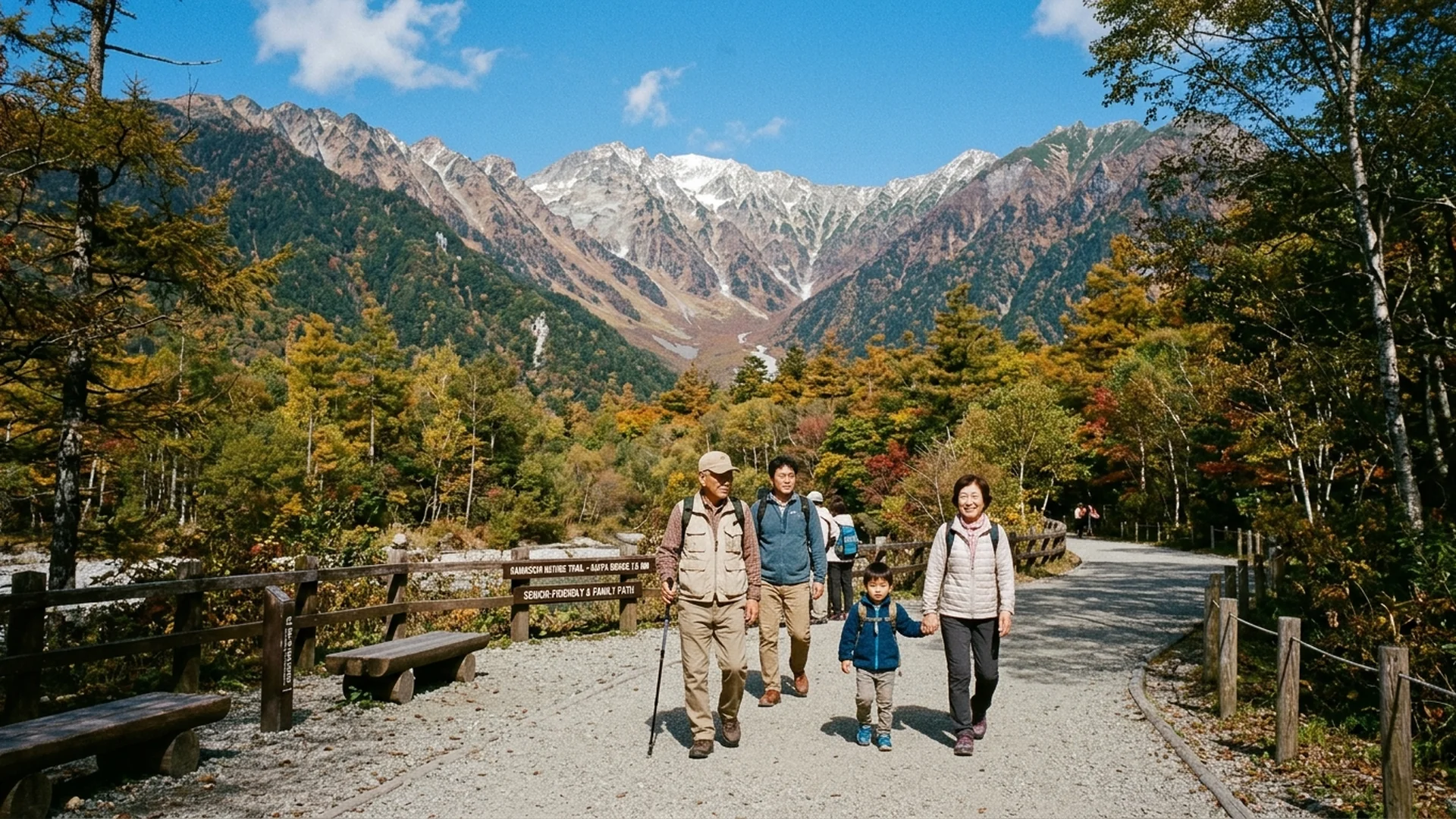
When morning mist lingers quietly over mirror-like waters reflecting the jagged grandeur of the Hotaka peaks, and the crisp murmur of the Azusa River awakens the senses, one might easily assume this emerald sanctuary belongs solely to seasoned mountaineers. Yet tucked deep within the sacred sanctuaries of the Northern Japan Alps lies a gentler revelation—a network of ancient wilderness trails designed to embrace travelers of every generation without the daunting vertical strain.
This is the art of slow travel in its purest expression, inviting seniors and families alike to breathe in the rarified mountain air and witness jaw-dropping alpine panoramas. Through the quiet magic of landscapes engineered for effortless movement, travelers can stroll effortlessly along boardwalks shaded by primeval larch forests in Kamikochi, or ascend effortlessly via mountain coach to high-altitude viewpoints where the roof of Japan awaits.
Kamikochi: A Tapestry of Emerald Rivers and Wooden Boardwalks
Kamikochi serves as the serene salon of Chubu Sangaku National Park, embraced entirely by the snow-dusted ridges of the Hotaka Mountain Range. The gentle hiking experience begins the moment one disembarks at Taisho Pond, a sweeping expanse of crystalline water born from the historic eruption of Mount Yakedake. Ghostly white skeletons of ancient larch trees still stand sentinel amid the shallows, mirroring cobalt skies and jade peaks in an interplay reminiscent of a classical oil painting.
From Taisho Pond, the trail transitions into a tranquil, level path of curated boardwalks and compressed forest earth running parallel to the Azusa River. The water flows with such startling clarity that schools of native trout are visible drifting lazily below the surface. The surrounding larch forests transform into glowing gold during autumn and flourish in lush, vibrant greens throughout summer. This sublime stretch requires roughly one to one-and-a-half hours of unhurried walking before culminating at Kappa Bridge, Kamikochi’s iconic wooden span, before continuing onward to Myojin Pond within the sacred precincts of Hotaka Shrine. Here, profound spiritual calm makes this the ultimate low-impact wilderness pilgrimage.
Conquering the Clouds at Norikura Tatami-daira: Three Thousand Meters Made Reachable
If valley floor strolls offer meditative tranquility, Mt. Norikura provides an exhilarating dimension that effortlessly stretches the imagination of the novice traveler. This dormant volcano delivers an experience unmatched anywhere else in Japan via the Norikura Tatami-daira route. Specially regulated mountain buses wind their way up the sweeping Norikura Echo Line, piercing dense cloud layers to deposit passengers directly at Tatami-daira station—the highest paved bus terminal in the country at an elevation of 2,700 meters.
With a single step from the coach, the landscape transforms instantly into a sprawling alpine plateau framed by rugged ridges stretching to the horizon. For seniors and families, a delightful network of wooden boardwalks encircles the Fuji-no-ike alpine flower ponds, offering effortless viewing of rare high-altitude flora. For those desiring a touch more adventure to claim a three-thousand-meter peak, the well-maintained gravel path leading to the summit of Mount Kenshigamine (3,026 meters) requires just an hour and a half of steady, non-technical walking, rendering the dream of standing atop the Japanese Alps an accessible reality for all.
Infrastructure and Accessibility: A Philosophy of Inclusive Wilderness
The cornerstone that elevates Kamikochi and Mt. Norikura into beloved sanctuaries for mature travelers and multi-generational families is an unwavering commitment to thoughtful infrastructure. Japan approaches natural preservation with profound respect for human accessibility, placing impeccably maintained, spotless restrooms at every key milestone—from Taisho Pond and Kappa Bridge to terminal waystations—alongside traditional mountain huts providing hot beverages, light sustenance, and safe haven against sudden alpine weather shifts.
Furthermore, strict private vehicle bans designed to safeguard the delicate ecosystem require all visitors to transition to electric-assisted or low-emission public shuttle buses and authorized taxis from main transport hubs such as Sawando or Hirayu Onsen. This policy not only protects the pristine mountain air from congestion and pollution but also instills an unhurried, deeply peaceful rhythm to the entire journey.