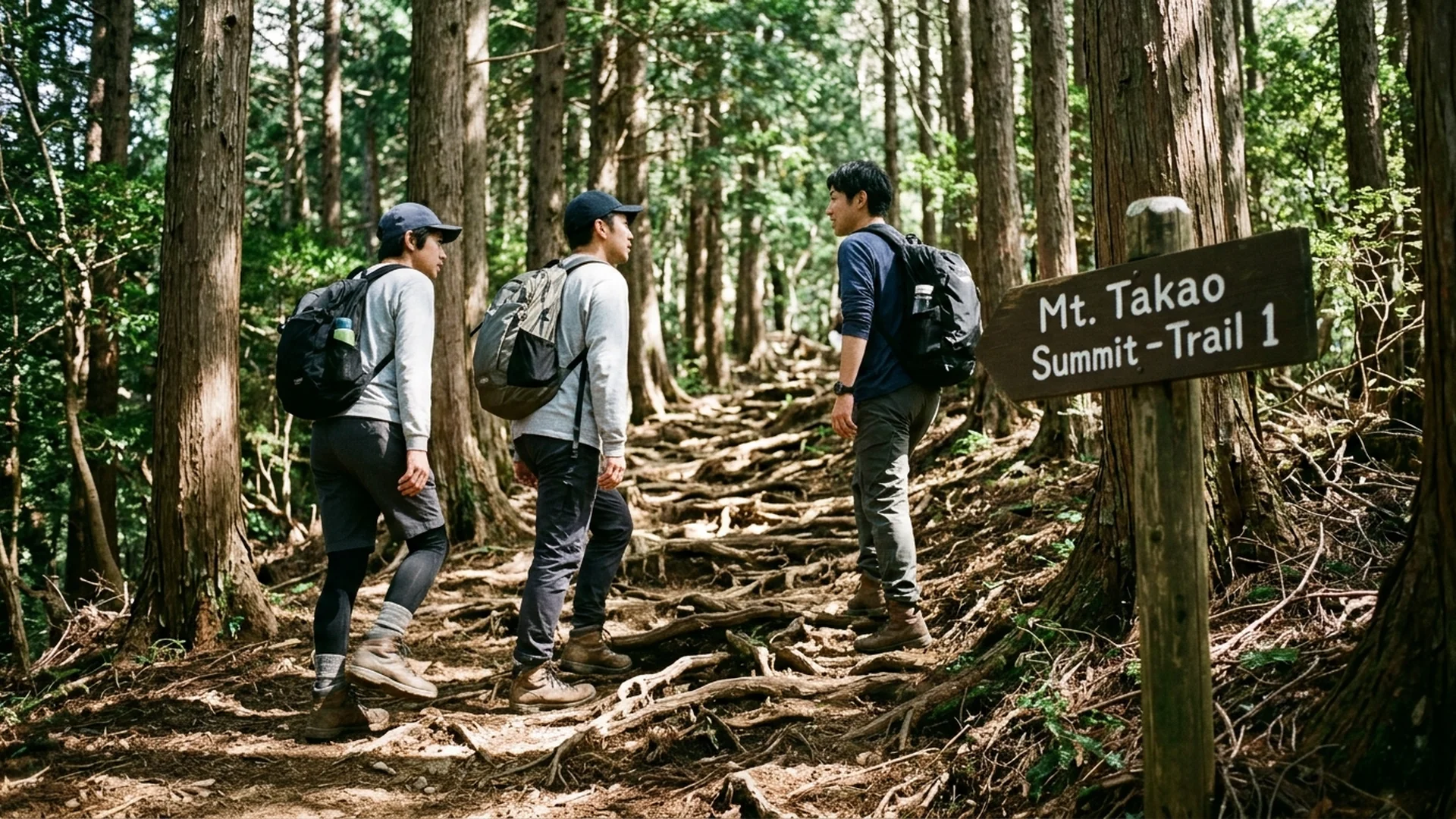
When the relentless hum of Tokyo begins to crowd the senses, the quiet sanctuary of the surrounding forests and distant ridgelines calls out with irresistible clarity. The art of the modern day hike has evolved into an essential ritual for discerning travelers in Japan—not merely a change of scenery, but an intimate pilgrimage into the living spirit of the mountains that cradle the metropolis on all sides.
Yet, each peak possesses its own distinct temperament, physical demands, and visual rewards. Selecting the wrong trail can easily transform a restorative excursion into an exercise in unrewarded exhaustion. This guide offers a deep, comparative analysis of four revered summits near Tokyo, designed to align your physical capabilities with the natural majesty of the region.
Mount Takao: The Gentle Genesis of Alpine Exploration
For those taking their first steps into the mountain culture surrounding Tokyo, Mount Takao is an initiation that never disappoints. Located in the western suburbs and reachable in a mere fifty minutes from Shinjuku Station via the Keio Line, Takao’s defining grace is its diversity. Six distinct trails wind their way upward, ranging from civilized paved walks passing the historic temple of Yakuoin to shaded earthen tracks beneath ancient canopies. For travelers seeking to conserve energy or simply savor the transition of landscape, the mountain boasts Japan’s steepest cable car and an open-air chairlift offering unhindered 180-degree vistas. The atmosphere is steeped in a harmonious synthesis of Shinto reverence and Buddhist quietude. On exceptionally clear days, the summit opens onto a breathtaking perspective of Mount Fuji, serving as an exquisite physical and spiritual warm-up for any exploration of the region’s highlands.
Mount Mitake and the Rock Garden: Sacred Valleys and Shimmering Waters
Ascending to a more contemplative cadence, Mount Mitake slumbers quietly within the Chichibu-Tama-Kai National Park. This sacred peak transcends mere altitude, offering a profound layering of cultural heritage and ethereal landscapes. The journey begins aboard the JR Ome Line, transitioning seamlessly to a local bus and cable car that scale the heights to an ancient mountaintop settlement. The crowning jewel for travelers is the famed Rock Garden—a pristine natural rockery enveloped in emerald moss, crystal-clear streams, and cascading waterfalls known as Ayahiro and Nanayo. The murmuring waters, accompanied by the occasional bronze chime from the Musashi Mitake Shrine, act as an instant balm against urban fatigue. Hiking here is far less about conquering a summit and far more about wandering through a living, breathing Zen garden sculpted entirely by nature.
Mount Jinba and Mount Tsukuba: Endurance, Granite, and Vast Horizons
For travelers drawn to more demanding physical tests, Mount Jinba and Mount Tsukuba present compelling rewards. Mount Jinba is renowned for its broad, grassy summit marked by a striking white horse monument, which commands a magnificent 360-degree panorama with Mount Fuji hovering distantly on the horizon. Conquering Jinba typically requires a continuous four-to-five-hour trek across undulating ridge lines, appealing directly to those with seasoned footing and a taste for endurance.
Simultaneously, Mount Tsukuba in Ibaraki Prefecture asserts its distinct identity through twin summits known as Nantai-san and Nyotai-san. Its geography is defined by whimsical granite outcroppings that necessitate tactile rock scrambling in the final ascent. This playful yet challenging climb delivers an entirely different register of excitement, ultimately rewarding the traveler with sweeping, unobstructed vistas of the vast Kanto Plain stretching out to the edges of the world on a clear day.