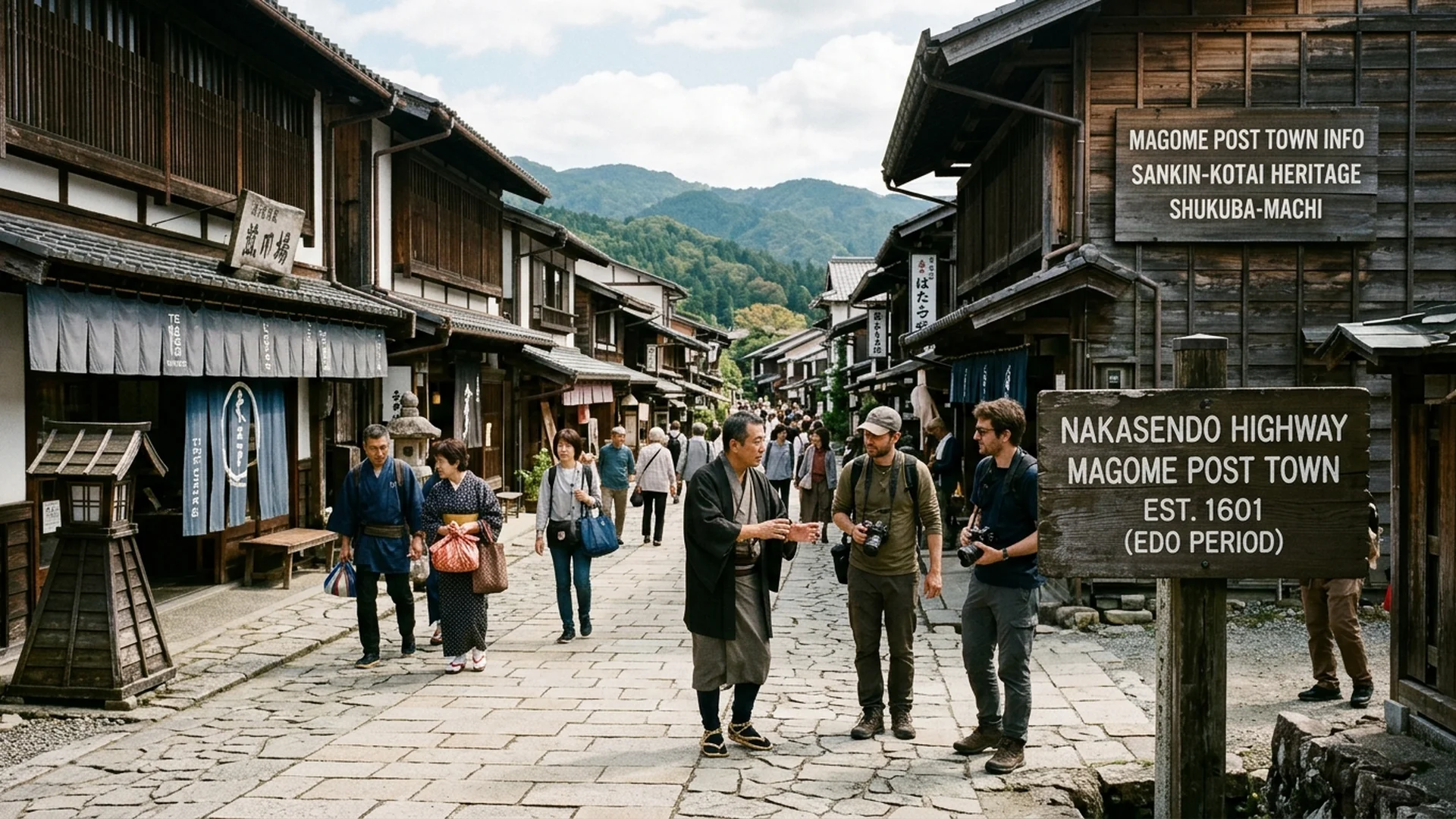
In the autumn of 1635, an elaborate procession of feudal lords, or daimyo, departed from distant domains bound for the bustling capital of Edo, now modern-day Tokyo. Hundreds of samurai, palanquin bearers, and armed guards marched in disciplined formation, escorting a caravan carrying imperial treasures and heavy administrative archives. This monumental movement was not a campaign of war, but a mandatory imperial decree known as Sankin-kotai, the system of alternate attendance instituted by Shogun Tokugawa Iemitsu. Its purpose was singular and calculated: to curb the rising influence of regional lords by compelling them to leave their families behind in Edo as political hostages while they shuttled back and forth to their home domains every other year.
Yet beneath this intricate political stratagem—designed intentionally to drain the coffers and deplete the military reserves of rival clans—lay the catalyst for the greatest infrastructure expansion in Japanese history. The shogunate commissioned the construction and meticulous maintenance of five primary highways, known as the Gokaido. This masterwork of civil engineering included the legendary Tokaido, hugging the breathtaking Pacific coastline, and the Nakasendo, an alpine mountain route winding deep through the rugged Kiso Valley. The daily migration of tens of thousands of travelers triggered an unprecedented grassroots economy along these transit arteries.
What began as an instrument of political subjugation and surveillance gradually evolved into a rich tapestry of social and urban culture. Post towns, or Jukuba-machi, flourished with refined daimyō lodging houses known as Honjin, strict security checkpoints, and vibrant supply networks that eventually welcomed commoners and religious pilgrims. Today, the enduring legacy of this era—from regional specialty souvenirs known as meibutsu to the art of the bento box and the deeply ingrained spirit of omotenashi—can be traced directly back to the resounding footsteps of samurai on the historic highways of Sankin-kotai more than four centuries ago.
Political Subjugation: Converting War Chests into Travel Budgets
During the Edo period spanning from 1603 to 1868, the Tokugawa shogunate urgently required a foolproof method to prevent the daimyo lords of more than two hundred distinct domains from accumulating military might or orchestrating uprisings. Formally codified in 1635, the Sankin-kotai system mandated that regional lords alternate their administrative duties between their home provinces and Edo on a strict biennial schedule, while their wives and eldest sons remained permanently in the capital as honorable hostages.
The economic ramifications of this mandate proved far more devastating to regional autonomy than direct taxation. A procession from a major domain, such as Kaga, often comprised two to four thousand retainers, samurai guards, and baggage handlers. The immense expenditures required to secure lodgings, provisions, formal attire, and river-crossing fees consumed between twenty-five and fifty percent of a domain’s annual budget. Wealth that might otherwise have been channeled into forging weaponry was instead diverted into subsidizing a sprawling travel economy all the way to Edo.
The Five Highways (Gokaido) and the Architecture of Post Towns
To accommodate the massive influx of samurai retinues and elite processions, the Edo administration centralized and upgraded a network of five main highways radiating outward from Nihonbashi Bridge in the heart of Edo. The crown jewel of this network was the Tokaido, a 530-kilometer coastal corridor to Kyoto featuring fifty-three designated post stations, alongside the Nakasendo, a sixty-nine-station mountain route traversing the central spine of Honshu, which offered a safer alternative during seasonal river floods.
Along these thoroughfares, thriving service hubs known as Jukuba-machi emerged. At the heart of each post town stood the Honjin and Waki-honjin—exquisite, multi-roomed timber estates reserved exclusively for daimyo and high-ranking nobility. Lower-ranking samurai and ordinary travelers found sanctuary in simpler inns called Hatago. Furthermore, the shogunate established strategic checkpoints called Sekisho, such as those at Hakone or Fukushima, to strictly monitor incoming weaponry and prevent the unauthorized departure of daimyō wives attempting to flee back to their home provinces.
From Samurai Processions to Commoner Pilgrimages: The Birth of Leisure Travel
As decades of enduring peace settled over the Edo period, these military supply routes naturally transformed into thoroughfares for the general populace. Although the shogunate officially restricted civilian movement, enterprising commoners frequently bypassed these restrictions by claiming religious pilgrimages to the sacred shrines of Ise, known as Ise-mairi, or seeking medical cures at mountain onsen hot springs. This loophole unlocked a golden era of domestic exploration.
Post towns competed fiercely for the patronage of these travelers by cultivating distinctive local specialties, giving rise to the cherished Japanese tradition of meibutsu souvenirs—ranging from specialized rice confectioneries to hand-carved woodwork and early iterations of bamboo-wrapped travel boxed lunches. Master printmakers like Utagawa Hiroshige immortalized the poetic landscape of these journeys in his iconic ukiyo-e series, The Fifty-three Stations of the Tokaido, cementing the wanderlust of the era deep within the cultural DNA of modern Japan.