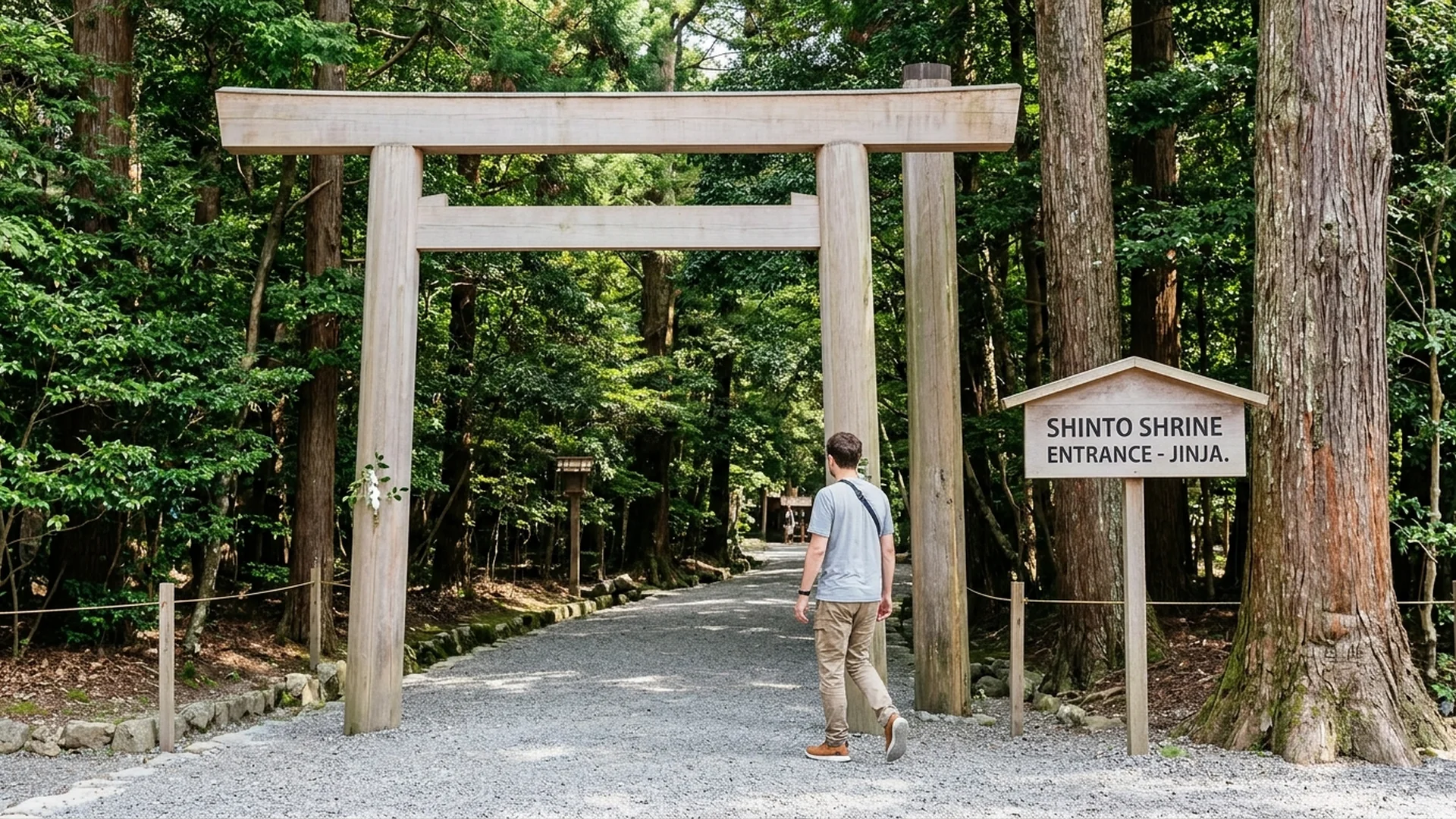
To the traveler wandering through the mist-shrouded landscapes of the Japanese archipelago, the striking vermilion gates emerging from ancient cedar forests and the soaring wooden porticos wreathed in the sweet, meditative curl of incense often appear as a singular, harmonious spiritual tapestry. Yet beneath this tranquil veneer lie two distinct sacred traditions: the Shinto shrine, a sanctuary honoring nature’s dwelling spirits, and the Buddhist temple, a domain dedicated to the pursuit of ultimate awakening and transcendent wisdom.
This duality rarely confuses travelers through negligence; rather, it is the legacy of a millennia-long syncretism known as Shinbutsu-shugo, before an imperial decree officially cleaved the traditions apart during the Meiji restoration. Comprehending these nuances not only ensures respectful observance but unlocks a deeper dimension of Japan’s architectural and metaphysical landscape.
This editorial transcreation journeys from physical iconography and hidden metaphysical philosophies to step-by-step liturgical protocols, ensuring your footsteps within these consecrated grounds reflect an enlightened and reverent engagement.
Architectural Iconography: Decoding the Visual Markers Before Crossing the Threshold
The most immediate signifier distinguishing a Shinto sanctuary from a Buddhist sanctuary lies in its threshold architecture and external components. For a Shinto shrine (Jinja, Taisha, or Jingu), the primary visual beacon is the torii gate, a sacred portal crafted from vermilion wood or natural timber that demarcates the transition from the secular realm to the dwelling place of the kami (spirits). Passing beneath a torii signifies entry into consecrated ground. Further indicators include the shimenawa, thick twisted rice-straw ropes draped over portals or around sacred trees, alongside stone guardian figures such as the komainu lion-dogs or fox statues at Inari shrines.
Conversely, a Buddhist temple (Otera, Tera, or Ji) announces its presence through a sanmon gate, a formidable two-story timber structure. Within the temple grounds, one encounters architectural expressions such as the pagoda housing relics or sacred scriptures, a large incense burner (jokoro) positioned before the main hall, and, most importantly, the venerated presence of statues of the Buddha (butsuzo) or bodhisattvas—figures entirely absent in Shinto shrines, as kami are understood to be formless, fluid spiritual essences.
Nature Spirits and Transcendent Wisdom: The Twin Pillars of Japanese Spirituality
Appreciating this dual landscape requires recognizing Shinto as Japan’s indigenous, grassroots animism—a tradition born without a singular founder or fixed scriptures. Rooted in polytheism and animism, Shinto holds that all phenomena in nature, from soaring peaks and meandering rivers to ancient trees and gentle breezes, harbor divine kami. The core philosophical imperative of Shinto is kegare (impurity) and the relentless pursuit of karei (purity). Consequently, Shinto prayers center upon earthly flourishing, bountiful harvests, harmonious unions, and daily protection.
In contrast, Buddhism arrived via China and Korea during the sixth century, introducing the Four Noble Truths, the law of karma, and the profound realization of impermanence (anicca). Japanese Buddhism emphasizes meditative discipline, the relinquishment of illusion, and solace regarding the afterlife. Thus, Japanese society weaves an exquisite dual rhythm through life: celebrating births and marriages within Shinto rites of vitality, while entrusting final farewells and ancestral remembrance to Buddhist ceremonies.
Shinbutsu-shugo: The Syncretic Heritage and Meiji Separation
Why do temples and shrines occasionally occupy overlapping terrain? The answer lies in Shinbutsu-shugo, the centuries-old blending of Shinto and Buddhist beliefs. Historically, Japanese cosmology interpreted local kami as native manifestations of universal Buddhas and bodhisattvas (honji suijaku). Consequently, numerous shrines housed Buddhist temples within their enclosures, and monks freely officiated liturgical rites on shrine grounds.
However, the dawning of the Meiji era in 1868 brought the Shinbutsu Bunri edict, which legally forced the separation of Shinto and Buddhism to establish State Shinto and elevate the Emperor. Numerous shrines were ordered to purge Buddhist icons and ritual objects. Despite this institutional decoupling, the psychological and cultural synthesis remains deeply embedded in the everyday spiritual rhythm of contemporary Japan.
The Liturgical Guide: From Chozu Purification to Sanctuary Rites
Navigating the altar space represents the most frequent point of hesitation for travelers. Observe the following protocols with mindful care:
1. The Purification Pavilion (Temizuya or Chozuya): Practiced identically at both sites.
- Ladle water with your right hand to cleanse your left.
- Switch the ladle to your left hand to cleanse your right.
- Pour water into your left palm to rinse your mouth gently (never touch the ladle directly to your lips).
- Tilt the ladle vertically so the remaining water cascades down the handle to cleanse it for the next visitor, then rest it face down.
2. Shinto Shrine Protocol (The Two Bows, Two Claps, One Bow Rule):
- Bow slightly before passing beneath the torii, walking along the outer edges of the path to leave the sacred center for the kami.
- Upon reaching the altar, toss a coin into the offering box (the five-yen coin is traditional).
- Ring the hanging bell (if present) to alert the deity.
- Bow deeply twice (at a roughly ninety-degree angle).
- Clap twice firmly, keeping your hands slightly offset, and offer your silent prayer.
- Bow deeply once more to conclude.
3. Buddhist Temple Protocol (Serene Silence—No Clapping!):
- Bow slightly before crossing the threshold of the sanmon gate (avoid stepping on the wooden threshold beam).
- If an incense burner is present, gently wave the rising smoke toward your body to invite blessings and purify ailments.
- Approaching the principal Buddha hall, quietly offer your coin into the box.
- Ring the resonant hanging bell if available.
- Bow slightly, bring your palms together in gassho at chest level, close your eyes, and offer a silent, contemplative prayer (never clap at a Buddhist temple).
- Conclude with a final gentle bow.