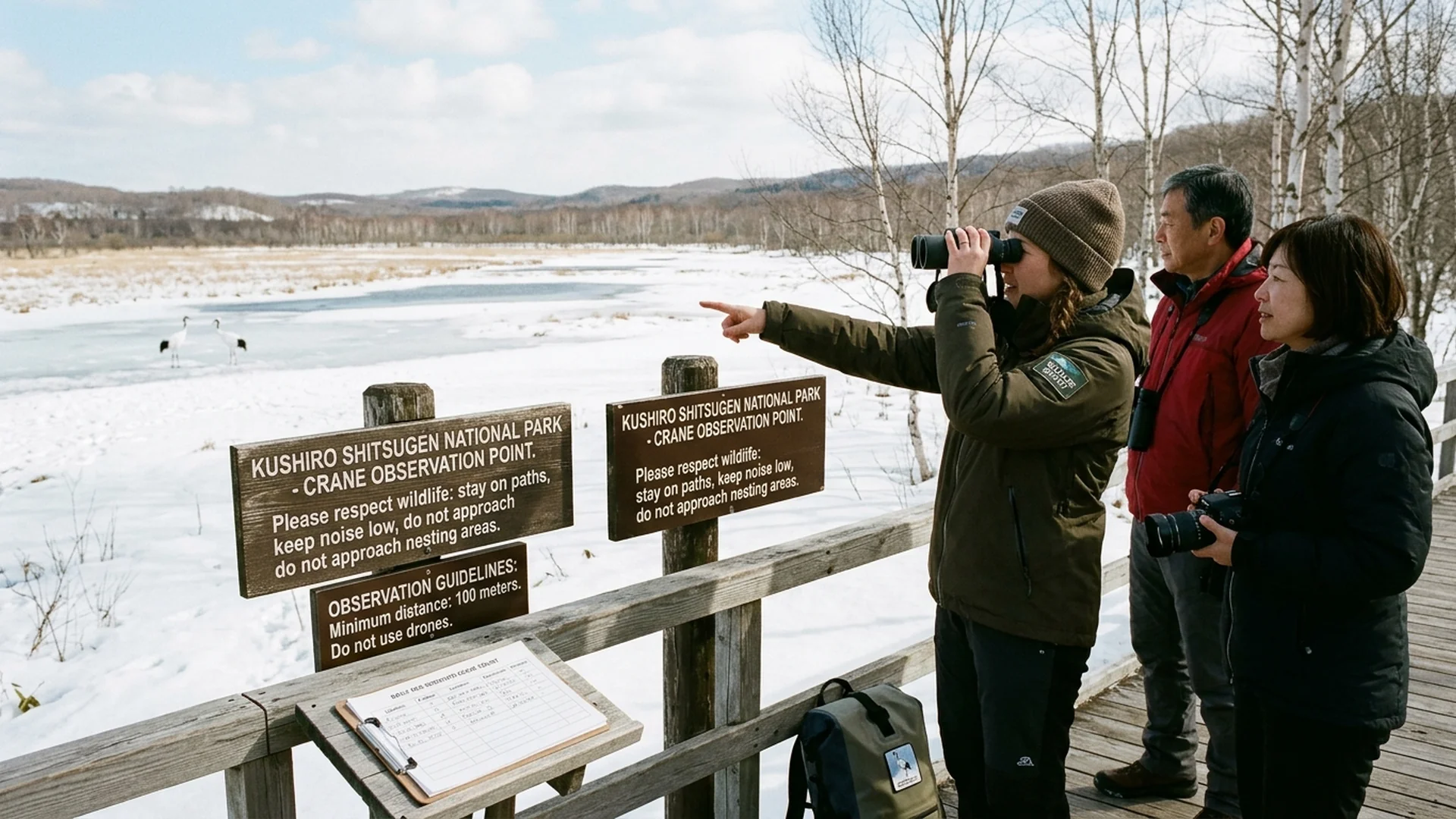
Across the varied topography of the Japanese archipelago—stretching from the frigid northern wetlands to the subtropical emerald havens of the south—an invaluable biological heritage thrives far beyond the clamor of modern metropolises. Here, specialized endemic species have evolved over millennia, serving as living jewels that eloquently narrate the resilience and intricate balance of Japan’s natural ecosystems.
To track these rare creatures is not merely an adventure, but a meditative pilgrimage into fragility and quietude. From the stately avian guardians of frozen marshes to elusive nocturnal felines in humid jungles, every moment of observation demands absolute patience and profound deference to natural laws. This harmonious encounter ensures that the delicate boundary between humanity and wild nature remains unbroken.
1. The Red-Crowned Crane (Tancho) of Kushiro Marshland: Deities of the Frozen Realm
In the glacial expanses of Hokkaido, the Kushiro Marshland serves as the sanctuary for the Red-Crowned Crane—known locally by the indigenous Ainu people as Sarurun Kamuy, or the Gods of the Marsh. Standing in statuesque elegance with plumage as white as fresh snow and crowned with a striking splash of crimson, these magnificent birds miraculously rebounded from the brink of extinction during the early 20th century. Their lifelong monogamous bonds and the mesmerizing courtship dances performed across pristine frost in the early morning light have transformed them into timeless emblems of devotion, perseverance, and successful conservation.
2. The Iriomote Wildcat and Yanbaru Kuina: Secrets of the Subtropical Forests
Far to the southern frontier on Iriomote Island in Okinawa Prefecture, dense subtropical rainforests conceal the Iriomote Wildcat (Prionailurus bengalensis iriomotensis), a house cat-sized feline bearing ancient lineages with a wild population numbering only around one hundred individuals. Classified as critically endangered, these stealthy hunters stalk mangrove fringes and crystal streams much like the Yanbaru Kuina, an endemic flightless rail boasting vibrant crimson legs. Both species underscore the inherent vulnerability of isolated island ecosystems, where human encroachment can inflict profound scars upon irreplaceable biodiversity.
3. The Japanese Serow (Kamoshika) and Giant Salamander: Living Legacies of the High Mountains
Along precipitous mountain ranges and dense upland forests across Honshu, the Japanese Serow (Capricornis crispus) stands as a silent guardian of the crags. Characterized by its shaggy coat, goat-like silhouette, and short backward-curving horns, this steadfast ruminant was designated a Special Natural Monument in the mid-20th century. Often spotted standing motionless on sheer cliff faces surveying its rugged domain, it shares its pristine watershed realms with the ancient Japanese Giant Salamander dwelling in crystal-clear alpine streams. Together, they bear living testimony to the immaculate purity of Japan’s highland headwaters.