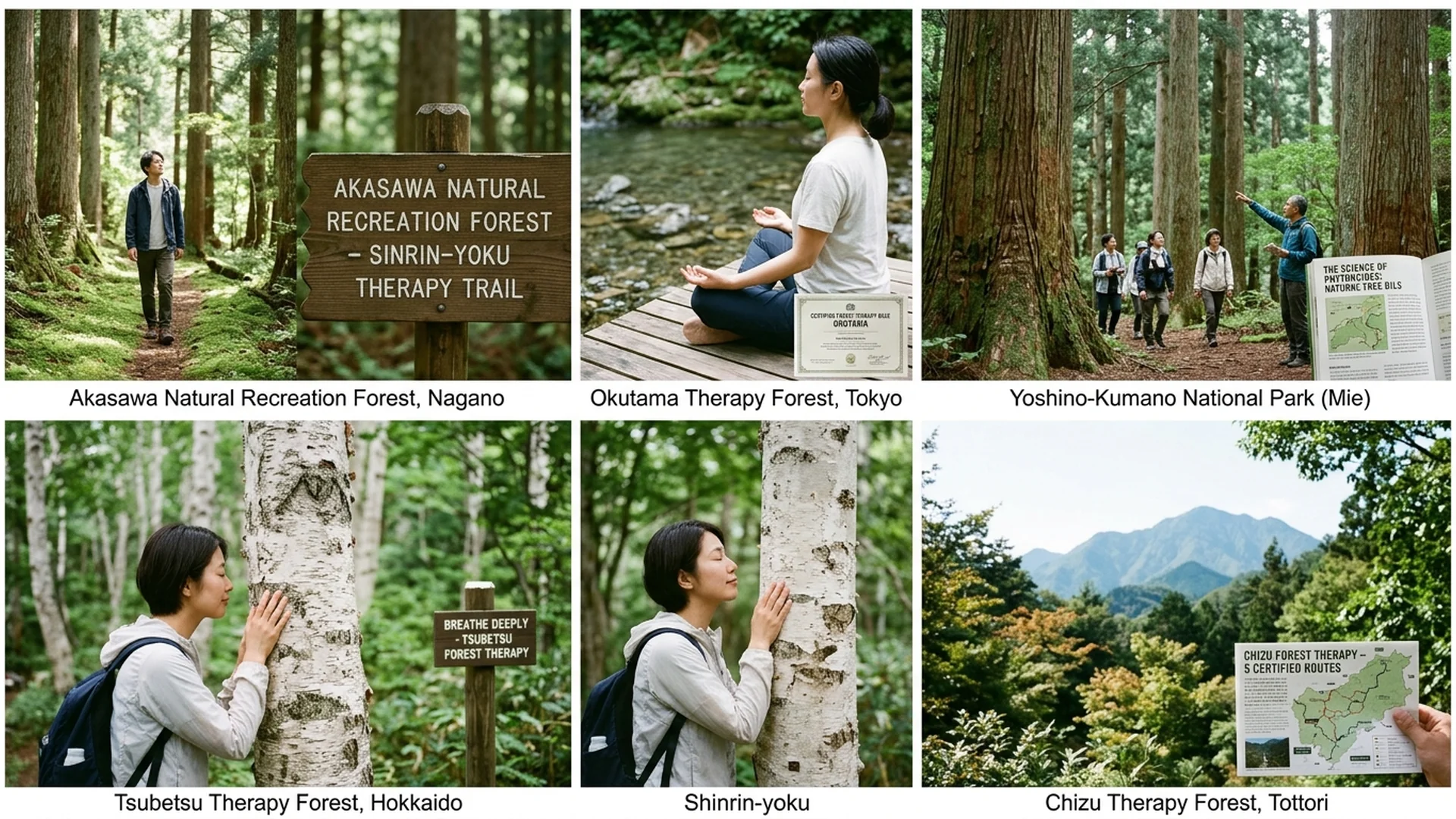
When the relentless velocity of modern life leaves our breath shallow and our nervous systems perpetually hyper-aroused, humanity naturally yearns for a sanctuary far deeper than ordinary relaxation. Within the serene, mist-shrouded woodlands of Japan lies an ancient discipline validated by modern neuroscience and botanical science: Shinrin-yoku, or literal ‘forest bathing.’ This is neither a grueling alpine ascent nor a cardiovascular exertion designed to spike the pulse. Rather, it is the art of surrendering one’s five senses to the quiet majesty of the arboreal atmosphere, absorbing an unbroken frequency of tranquility cultivated over centuries.
From the perspective of neurology and plant physiology, Japanese forest bathing stands in stark contrast to conventional hiking. While a hike prioritizes geographical summits and physical metrics, Shinrin-yoku deliberately slows the stride, reuniting humankind with the natural world through inhalation, tactile touch, acoustic resonance, and quiet contemplation. These sensory inputs offer far more than mere aesthetic pleasure; they trigger profound biochemical shifts within the human organism, ranging from the immediate dissipation of stress hormones to the deep-seated invigoration of the immune system.
The Chemistry of Quietude: How Phytoncides Heal at the Cellular Level
Beneath the immediate sense of serenity one feels upon stepping beneath a dense forest canopy lies a rigorous biochemical reality. Woodland flora, particularly conifers and cedars such as the revered Hinoki cypress and Japanese cedar, emit volatile organic compounds known as phytoncides to protect themselves against insects and fungal decay. When inhaled by humans, these airborne compounds stimulate the activity of Natural Killer cells, white blood cells that play a pivotal role in eradicating aberrant cells and fortifying the immune architecture. Neuroscientific research confirms that spending time in environments saturated with phytoncides noticeably reduces serum cortisol levels, lowers systolic and diastolic blood pressure, and restores autonomic nervous equilibrium, offering a potent physiological tonic devoid of pharmacological side effects.
The Art of Stillness: Contrasting Hiking with Forest Bathing
A common misconception assumes that any venture into the woods yields identical benefits. In truth, Shinrin-yoku demands a specific, mindful receptivity. Traditional hiking typically engages the sympathetic nervous system through exertion, elevation calculations, and distance tracking. Conversely, Shinrin-yoku is deliberately engineered to stimulate the parasympathetic nervous system, which governs rest, digestion, and cellular repair. Practitioners are guided to walk at a meditative pace, graze their palms against rough bark textures, listen to the whispering wind through the upper canopy, and inhale the rich scent of damp earth following a passing rain. Leaving electronic devices behind serves as the critical catalyst, severing the relentless loop of digital static and granting the prefrontal cortex the profound silence it requires to heal.
Mapping Five Certified Therapy Forests Across the Japanese Archipelago
Guided by the Society of Forest Medicine, the Japanese government has methodically researched and certified select woodlands as official Therapy Forests based on phytoncide concentration, atmospheric purity, and topographical safety. The journey begins at the Akasawa Natural Recreation Forest in Nagano Prefecture, widely celebrated as the birthplace of the global forest bathing movement, where centuries-old Hinoki cypress stands tower overhead. Nearby, the Karuizawamachi Nagakura Forest offers crisp alpine air and gentle, level trails ideal for deep psychological introspection. The Shinano Forest Therapy Road showcases ergonomically planned routes designed for therapeutic ease, while the primeval Yakushima Forest on the southern island shelters millennial-aged Sugi cedars. Finally, the Iiyama Forest Therapy Base transitions seamlessly through pristine winter snowscapes and vibrant autumn foliage, offering distinct psychological restorative properties across the changing seasons.