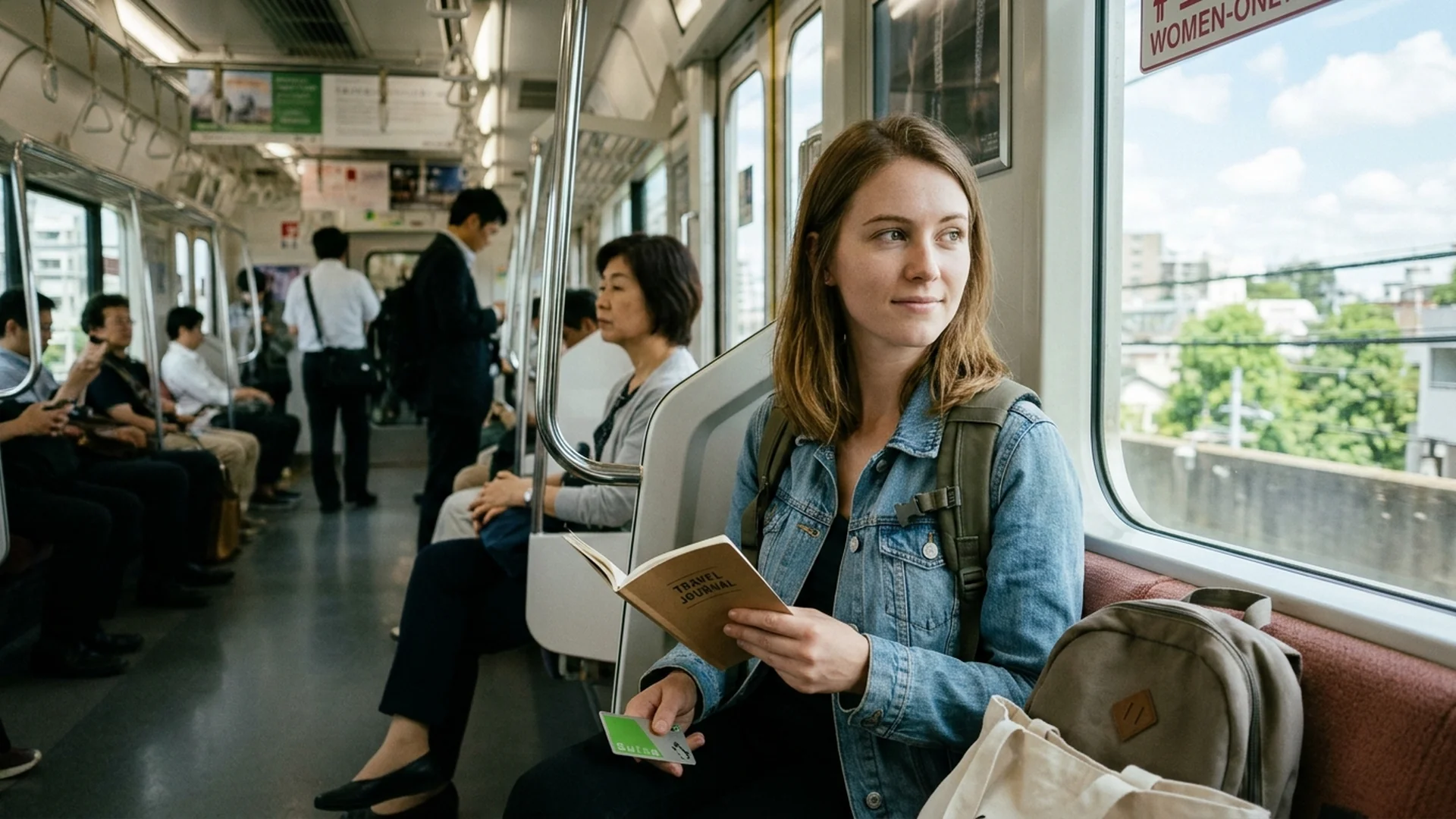
When contemplating Japan, the prevailing narrative of exceptional safety often encourages a sense of carefree wandering beneath glowing neon lights long after dusk. Yet beneath this remarkable social order and low crime rate, a quieter reality lingers in the shadows of bustling metropolises and crowded train carriages. Incidents of public harassment or illicit photography remain an uncomfortable truth that discerning female travelers must occasionally navigate.
Embarking on a journey across Japan independently requires far more than mere courage; it demands a sharpened intuition and deep situational awareness. By thoroughly understanding the nuances of Japan’s safety architecture, travelers can transform any lingering apprehension into quiet confidence, unlocking an exceptionally seamless and enriching cultural immersion.
Navigating Rush Hour Transit: Demystifying Women-Only Rail Cars
Japan’s immaculate rail network functions as the arterial lifeline of its sprawling metropolises, yet peak rush hours introduce extraordinary passenger density that can occasionally compromise personal space. The phenomenon known locally as Chikan, or unwanted physical contact on crowded trains, is an issue that railway operators and authorities address with rigorous enforcement. Understanding the implementation of Josei Sen’yo Sharyo (Women-Only Cars) serves as an invaluable primary layer of transit protection.
These designated carriages typically operate during weekday morning and evening commute windows, clearly demarcated by bright pink signage along the platform edge. Stepping into these carriages not only mitigates the physical discomfort of crushing crowds but also cultivates a psychological sanctuary where solo travelers can rest, read, or review itineraries in complete tranquility. Travelers should always verify operating schedules posted at station platforms, as these restrictions generally lift during off-peak hours and weekends.
Sanctuaries of Rest: Securing Accommodations with Seamless Safety
Choosing where to rest in Japan as an independent woman extends far beyond standard considerations of location and cleanliness; it requires curating a private enclave anchored by robust security infrastructure. Leading luxury hotels, design-forward properties, and boutique stays across Tokyo, Kyoto, and Osaka increasingly feature dedicated female-only floors. These exclusive levels typically incorporate encrypted keycard access, elevators programmed to restrict unauthorized floor traversal, and discreetly positioned surveillance.
For travelers drawn to sophisticated capsule concepts or minimalist urban dwellings, modern properties now maintain strictly segregated women-only wings, completely partitioned from male guest areas from entryways and elevators to bathing suites. Choosing these thoughtfully engineered spaces removes lingering privacy concerns while ensuring round-the-clock front desk oversight.
Digital Armor: Essential Tools and Evening Situational Awareness
In an era of hyper-connectivity, the smartphone within your palm functions as a formidable personal safety instrument. The Tokyo Metropolitan Police Department developed the official Digi Police application with international visitors in mind. Featuring an interactive crime-mapping interface, real-time alerts regarding urban safety incidents, and a vital anti-chikan emergency sound function, the app instantly displays prominent Japanese text requesting assistance while sounding an authoritative alarm to deter unwanted attention.
Beyond digital applications, intuitive behavioral practices within vibrant nightlife districts—such as Tokyo’s Kabukicho or Osaka’s Dotonbori—remain indispensable. Should you ever sense trailing footsteps or feel uneasy, immediately stepping inside a brightly lit convenience store (Konbini), a neighborhood police box (Koban), or a reputable full-service hotel lobby offers the most effective method to vanish from unwanted attention, rather than venturing down darkened, unfamiliar side streets.