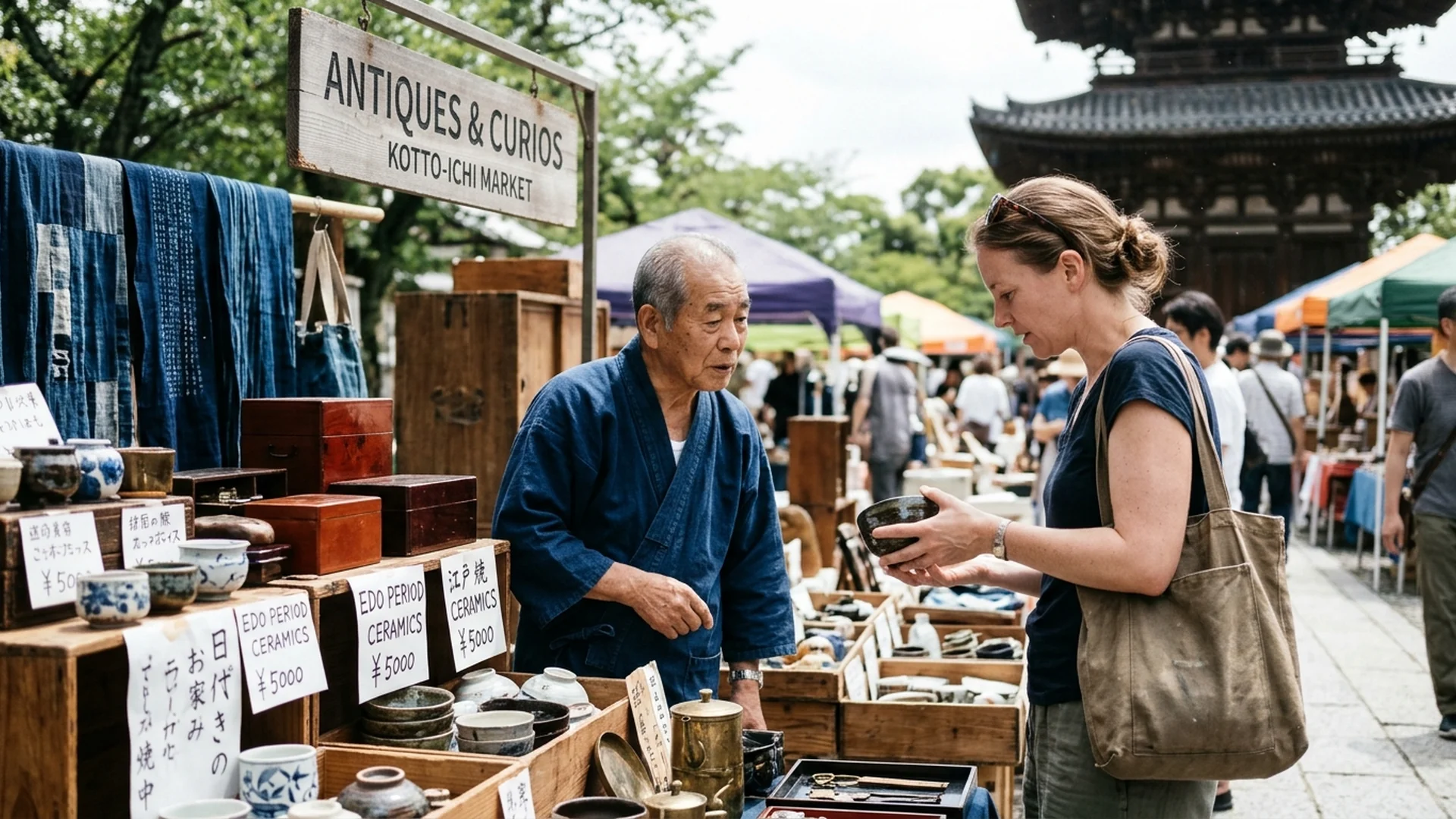
Amidst the morning mists cloaking the Japanese landscape, the quiet footsteps upon the gravel paths of ancient temples and sacred shrines reveal more than sanctuaries of faith; they unveil the open-air theaters of Kotto-ichi, the traditional flea markets where the currents of time whisper softly. Here is a realm where Edo-period ceramic tea bowls, hand-woven vintage silk kimonos, and weathered lacquerware coexist with the echoes of bygone eras, beckoning discerning collectors and travelers across oceans to experience the profound pleasure of unearthing living artifacts.
Yet, this pursuit of high-end vintage treasures within the Land of the Rising Sun involves more than the thrill of negotiation and discovery. Encircling this romantic endeavor lies the stringent regulatory framework established by the Japanese government to safeguard its irreplaceable cultural heritage. Discerning the delicate boundary between general collectibles and protected antiquities under the Law for the Protection of Cultural Properties remains the foundational prerequisite for any refined collector before carrying these fragments of history across international borders in an elegant and lawful manner.
Four Legendary Kotto-ichi Markets: From Tokyo to Kyoto
The pursuit of Japanese antiques begins as the first morning light illuminates hundreds of bustling stalls at open-air markets operating according to lunar cycles and religious calendars. In Kyoto, the ancient capital steeped in historic atmosphere, the Kobo-san market held at Toji Temple on the 21st of every day is an absolute sanctuary for collectors. Surrounding its five-story pagoda, over a thousand stalls display antique ceramics, ancient Chinese and Japanese calligraphy scrolls, and vintage kimonos. A short journey away, Kitano Tenmangu Shrine hosts the Tenjin-san market on the 25th of the month, celebrated for antique samurai swords, traditional artisan tools, and premium tea ceremony implements.
In the sprawling metropolis of Tokyo, the Oedo Kotto Ichi stands as the largest and most accessible open-air antique market for international visitors. Situated in the park grounds near Tokyo Station, it gathers specialist merchants dealing in ceramics, bronzeware, and Showa-era vintage toys. For those venturing into the surrounding prefectures, the Yamato Kotto-ichi and the seasonal Setagaya Boro-ichi markets often conceal rare masterworks culled from the private collections of seasoned Japanese connoisseurs.
Decoding Japan’s Cultural Heritage Protection Law
Beneath the apparent freedom of vintage trading at flea markets, the Japanese government—through the Agency for Cultural Affairs under the Law for the Protection of Cultural Properties—enforces rigorous safeguards against the outflow of national heritage. Antiquities and artworks of paramount national historic importance are designated as National Treasures or Important Cultural Properties, status categories that strictly prohibit export beyond the national borders.
For the general collector, items legally available for acquisition and international transport are typically classified as general antiques and fine arts—pieces possessing considerable age yet lacking national heritage registration. Nevertheless, to preclude administrative oversights and facilitate smooth customs clearance, the government mandates a formal inspection and certification procedure to verify that specific items do not constitute illicitly exported national assets.
Inspection Protocols and Export Licensing for Antiquities
When a collector discovers an exceptional work of art or antique intended for return home, the primary imperative is engaging with licensed antique dealers (Kobutsu-sho) to secure itemized receipts and provenance documentation. If the piece in question qualifies as an antique artwork of heightened historical significance, it may require formal examination by expert panels from the Agency for Cultural Affairs to secure a Kobijutsuhin Yushutsu Kansa Shomei, officially known as the Antique Art Export Inspection Certificate.
This document functions akin to a passport for the artifact, requiring presentation to Japanese customs officials at airports or maritime ports prior to departure. Securing these clearances ensures seamless passage through international borders while honoring the legislative framework of the host nation.