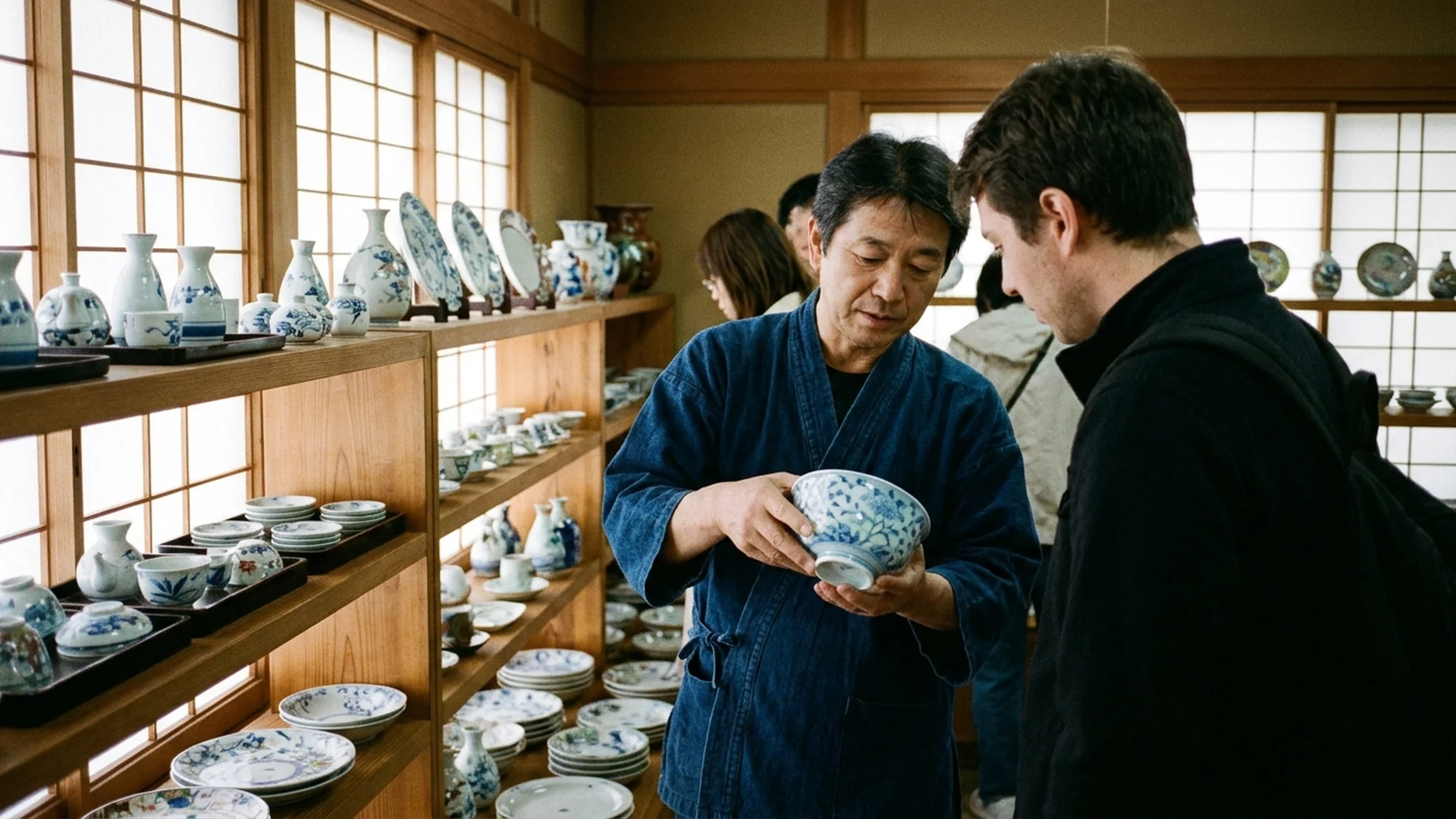
The gentle strike against fine ceramic yields a clear, resonant tone—a quiet whisper of the ancient forests and rushing streams of the Land of the Rising Sun. Japanese pottery is far more than mere utilitarian vessel; it is tangible history, fired by the unwavering spirit of the shokunin artisan who dedicates a lifetime to transforming earth and flame into enduring art.
For the discerning traveler drawn to the wabi-sabi philosophy of graceful imperfection, wandering through historic kiln towns, rural studios, and venerable merchant galleries is a profound journey of self-discovery through tactile earth, flame, and glaze. This editorial guide illuminates five celebrated cradles of Japanese ceramics, decoding the artistry hidden within each piece and offering sophisticated strategies for carrying these delicate treasures safely across oceans.
1. Dialogues of Earth and Flame: Decoding Japan’s Five Legendary Ceramic Traditions
The cornerstone of acquiring Japanese ceramics lies in understanding the geographic and geological roots of each kiln. Every region harnesses distinct earth, water, and fuel, forging an unmistakable identity. Arita-yaki, originating in Saga Prefecture, represents the birthplace of Japanese porcelain, distinguished by its pristine white body, crystalline ring, and cobalt-blue hand-painted motifs influenced by Chinese and Korean aesthetics yet elevated by uncompromising Japanese refinement. In contrast, Bizen-yaki from Okayama Prefecture boldly forsakes all glaze entirely. Bizen’s rustic beauty emerges from weeks of firing in traditional wood-burning climbing kilns, where drifting ash and licking flames leave unpredictable natural markings that ensure no two vessels in existence are alike.
For those drawn to grounded, tactile simplicity, Mashiko-yaki in Tochigi Prefecture offers coarse, substantial stoneware imbued with the rustic warmth of agrarian life. Meanwhile, Mino-yaki in Gifu Prefecture stands as a vast empire of glazing diversity—encompassing thick, milky Shino glazes and vibrant emerald Oribe—which quietly anchors the majority of everyday tableware produced in Japan today. Finally, Kutani-yaki from Ishikawa Prefecture dazzles with its exuberant five-color palette (gosai), vividly depicting natural landscapes and literary narratives with breathtaking intricacy.
2. The Art of Selection: Navigating Mass Production, Studio Craft, and Masterworks
Curating Japanese pottery of true emotional resonance and enduring investment value requires discerning the distinct tiers of craftsmanship. Commercial tableware found in general markets is typically mass-produced or slip-cast, offering high durability, uniform perfection, and accessible pricing well-suited for everyday dining without the anxiety of accidental breakage.
Ascending to the next tier reveals contemporary studio pottery (studio craft), shaped individually by hand upon the potter’s wheel (rokuro). These pieces marry traditional silhouettes with modern interior sensibilities. At the pinnacle reside the masterworks of designated Living National Treasures and celebrated contemporary ceramic artists. Such creations frequently bear an artist’s personal seal (kaō or signature) at the base, carrying deep provenance and appreciating in value over time—ideal heirlooms destined to anchor family legacies.
3. Tabletop Philosophy: Selecting Chawan Tea Bowls and Everyday Vessels
Selecting Japanese tableware for daily domestic use demands criteria far more nuanced than visual allure alone. When acquiring a traditional tea bowl (chawan), one should cradle the vessel to evaluate the rim’s thickness (kuchiberi) and ensure a harmonious interface with the lips, while the overall weight must feel intuitively balanced within a single hand. When choosing plates and bowls for culinary presentation, consider surface texture and tonal palette to elevate the dining experience. Rich, oil-rich dishes pair magnificently with high-gloss glazed ceramics, whereas dry or traditional Japanese preparations gain remarkable dimension when served upon unglazed, coarse-earth stoneware.