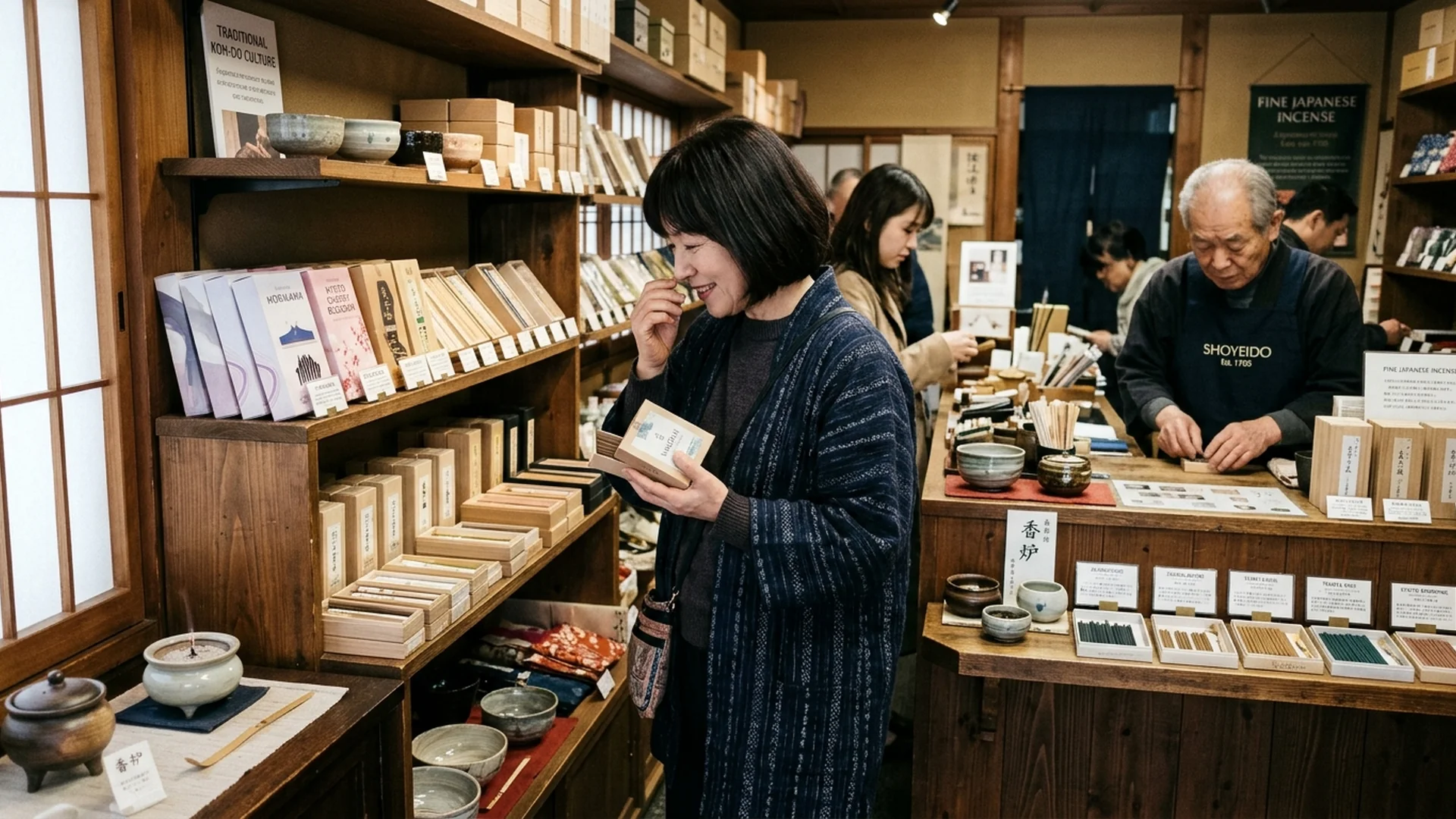
True tranquility is rarely found in absolute silence; rather, it is often cradled by the delicate ribbons of smoke drifting quietly within ancient wooden halls. Amidst the morning mist settling over Kyoto, traditional incense—known to the Japanese as koh—serves far more than an olfactory pleasure. It is an ancient, wordless language connecting the human spirit to nature and centuries of contemplative heritage.
Journeying into the realm of Japanese aromatics is an invitation to enter the rarefied dimension of Koh-do, the classical Way of Incense. Alongside the tea ceremony, Chado, and flower arrangement, Kado, Koh-do stands as one of Japan’s supreme classical arts. Here, every molecule of fragrant smoke whispers tales of rare woods, generational mastery, and profound Zen philosophy waiting to be absorbed with a quiet heart.
The Philosophy of Koh-do: When the Nose Learns to ‘Listen’
In Western traditions, scent is often received as a fleeting sensory impression. In Japanese philosophy, however, high aromatic arts demand deep, meditative concentration. The discipline of ‘listening to incense,’ or Koh-do, blossomed during the Ashikaga era among nobility and elite samurai. Connoisseurs would gather in hushed chambers to warm rare aromatic woods via subtle heat radiating from a charcoal burner beneath a mica plate, entirely avoiding open flame. The resulting vapor did not merely offer sweetness; it evoked the fleeting decay of autumn, the damp stillness of deep primeval forests, and the unhurried equanimity of the artisan. Practitioners use the verb ‘to listen’ (Kiku) rather than ‘to smell,’ acknowledging that superior fragrance awakens dormant memories and inner awareness.
Decoding High-Grade Materials: Kyara, Jinko, and Byakudan
At the heart of heritage incense making lies an uncompromising devotion to rare natural ingredients. Collectors worldwide covet these materials, beginning with Byakudan (sandalwood), which imparts a warm, velvety, and grounding presence frequently utilized in temple offerings. Moving upward in rarity is Jinko (agarwood), formed over decades as trees secrete resin to heal from natural fungal inoculations, producing dense, deeply aromatic heartwood. At the absolute apex of the aromatic universe is Kyara, the supreme grade of agarwood. Extremely scarce in nature, Kyara commands astronomical valuations due to its mystical profile, which simultaneously weaves spicy, cooling, sweet, and resinous notes into a single strand of smoke. Acquiring such materials requires discerning expertise, profound provenance, and refined olfactory discernment.
Historic Sanctuaries: Tracing Centuries-Old Incense Houses in Kyoto
To truly comprehend the lineage of Japanese aromatics, one must journey to Kyoto. Here, storied houses established during the Edo period or earlier—such as Shoyeido, founded in 1705—continue to supply esteemed sanctuaries like Kinkaku-ji and Kiyomizu-dera. Stepping inside these historic salons is an immersive encounter with living history, where quiet galleries invite travelers to sample expansive series of incense, from everyday morning sticks to pure powdered resins for traditional ceremonies. Alongside legendary names like Baieido and Nippon Kodo, these houses guard jealously preserved blending techniques combining herbs, spices, and rare woods. Browsing their collections feels akin to wandering through a private museum where centuries of refined craftsmanship rest securely within paulownia wood boxes and handmade washi paper.