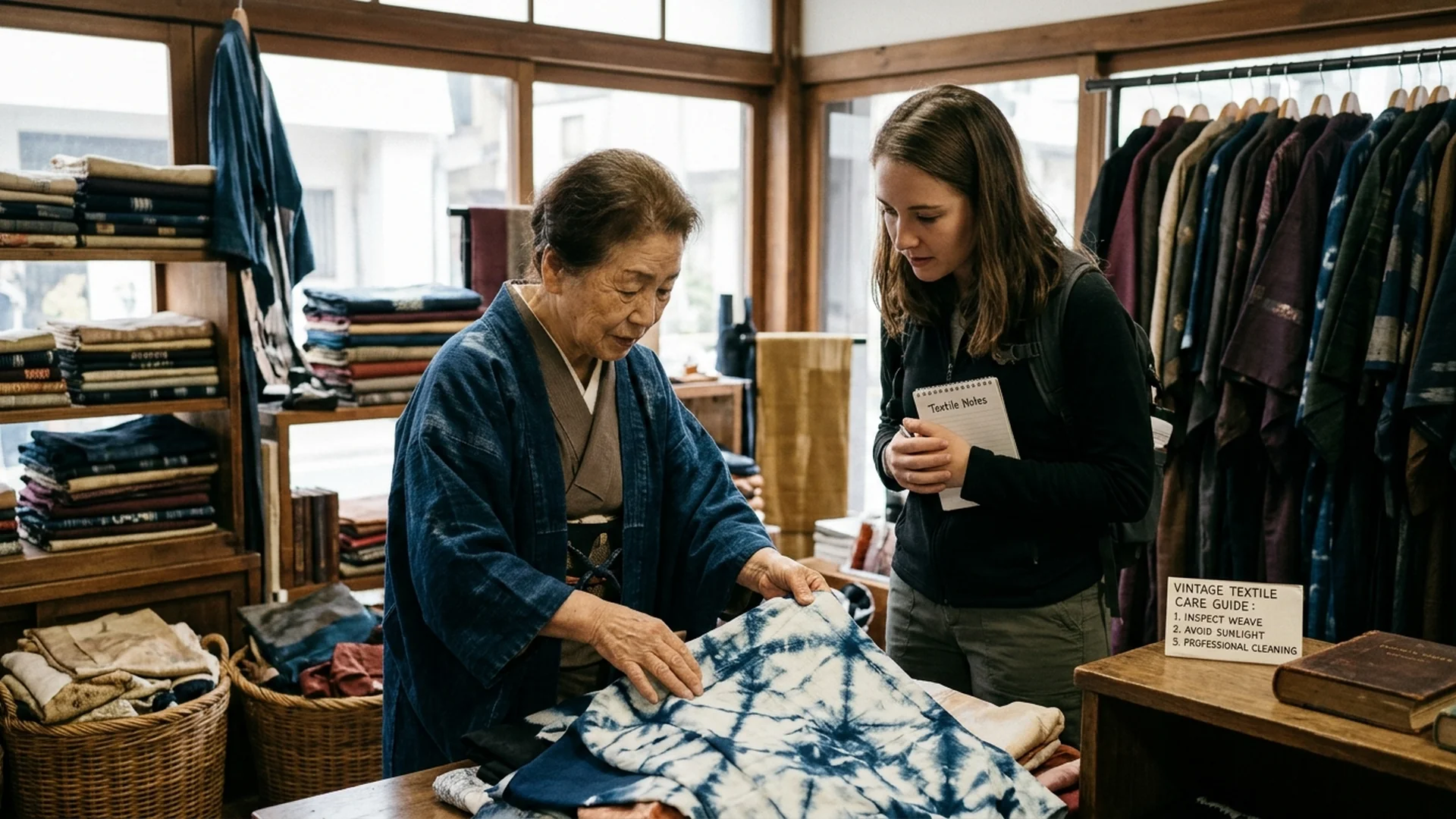
Amidst the tranquil, timeworn alleys of historic Kyoto and the avant-garde vintage enclaves of Tokyo’s Shimokitazawa, a profound chronicle of artistry hides behind cascading lengths of silk known as furu-gi, or secondhand kimono. Each garment transcends mere national attire; it serves as a wearable canvas recording intricate textile engineering, meticulous hand-painting, and shimmering gold-thread embroidery through successive generational epochs.
For the discerning traveler captivated by antiquarian textiles, encountering authentic silk and rare historical motifs offers an intellectual and aesthetic journey of the highest order. Entering the realm of vintage kimono is not merely an exercise in retail acquisition, but an act of cultural stewardship—rescuing centuries of heritage and allowing master craftsmanship to breathe anew within contemporary sartorial landscapes.
The Aesthetics of Textile Mastery: Tracing Nishijin-ori and Yuki-tsumugi
The true valuation of Japanese textiles lies far beneath surface luxury, anchored instead in arduous production techniques preserved across centuries. Nishijin-ori from Kyoto exemplifies the pinnacle of yarn-dyed complexity, where silk threads are dyed prior to weaving into dazzling, multi-layered geometric or pictorial motifs. Often enriched with genuine gold and silver leaf threads, these sumptuous fabrics create an astonishing interplay of light and shadow, traditionally reserved for high-ceremonial garments.
Conversely, journeying north to Ibaraki Prefecture reveals the understated majesty of Yuki-tsumugi, a hand-spun and hand-woven silk renowned for its gossamer lightness, exceptional durability, and the remarkable property of softening with age. Understanding these distinct regional lineages—alongside Honba Oshima Tsumugi from Kagoshima—allows collectors to accurately appraise both the market value and intrinsic cultural weight of individual kimono.
The Connoisseur’s Inspection: Methods for Assessing Vintage Furu-gi
Securing a furu-gi kimono in pristine or near-mint condition demands disciplined tactile and visual inspection. Begin with olfactory evaluation: screen for lingering dampness or harsh chemical preservatives from vintage storage. Next, examine the hakkake—the inner hem lining—which frequently reveals the earliest indicators of wear, friction, and moisture exposure.
Furthermore, inspect the seams for faint perspiration rings or discoloration, and evaluate the textile through touch. Authentic vintage silk yields a distinct warmth against the skin and emits a subtle, dry rustling sound reminiscent of autumn leaves. Sizing requires careful calculation as well (mitake, or total garment length); historical Japanese statures were notably more compact, requiring collectors to assess potential draping allowances if intended for actual wear rather than display.
Sanctuaries of the Past: From Temple Flea Markets to Tokyo Boutiques
The pursuit of vintage kimono in Japan offers a fascinating dichotomy between the ancient capitals. In Kyoto, open-air temple gatherings such as the Kōjin-ji Temple Flea Market—held on the twenty-first of each month—act as a haven for collectors seeking authentic silk pieces alongside specialized boutiques in the historic Gion district offering guaranteed condition and provenance.
In Tokyo, neighborhoods like Shimokitazawa and Asakusa present a contemporary reinterpretation of furu-gi culture. Curated ateliers frequently repurpose vintage garments, transforming timeworn textiles into cropped haori jackets designed to layer effortlessly over modern streetwear. This dynamic intersection caters equally to purist collectors and eco-conscious modern stylists seeking singular aesthetic statements.
A New Life for Ancient Threads: Preservation and Modern Upcycling
Acquiring an exquisite kimono initiates a parallel commitment to preservation and thoughtful stewardship. Natural silk fibers are exceptionally sensitive to ultraviolet light and ambient humidity. Storage demands precise folding along original creases, wrapping in acid-free archival paper, and periodic airings in shaded, well-ventilated spaces.
For those who prefer not to wear the garments in their traditional configuration, contemporary artisans increasingly champion the practice of upcycling. Rare antique silks are thoughtfully refashioned into modern kimono-cut jackets, statement handbags, decorative pillow covers, or framed wall art, ensuring that these invaluable motifs continue to narrate their historic stories within contemporary interior and fashion spaces.