When the neon horizon of the metropolis finally fades, giving way to primordial forests, crystalline lakes, and mist-shrouded mountain valleys, the independent traveler often encounters a subtle frontier that even Japan’s legendary rail network cannot cross. The quiet friction of navigating countryside bus routes with only a handful of daily departures, or deciphering all-Japanese signage amid rolling mountain fog, marks the pivotal moment when the decision to enlist a curated day tour becomes the cornerstone of elegant itinerary planning.
Traveling independently—what connoisseurs call the FIT (Free Independent Traveler) style—grants absolute sovereignty within urban labyrinths. Yet that definition of wanderlust can easily dissolve into logistical fatigue when venturing into topographically complex sanctuaries like the foothills of Mount Fuji or the historical corridors of the Tohoku region. Discriminating travelers recognize that knowing precisely when to entrust one’s journey to a specialist, and when to chart the course alone, is an evolving art form dedicated to preserving the purity of time.
The Geography of Convenience: When a Day Tour Surpasses Independent Travel
Japan’s railway infrastructure is widely celebrated as an apex of global engineering, yet trains do not reach every square inch of natural splendor. Consider the pristine expanses of the Fuji Five Lakes or secluded alpine hamlets tucked away in rugged ravines. Connecting trains with infrequent local buses can consume half a day, prematurely curtailing precious hours meant for contemplation. Utilizing a curated day excursion acts as an architectural shortcut, seamlessly weaving together disparate scenic highlights into a refined schedule. It safeguards physical energy and allows the traveler’s gaze to absorb sweeping panoramas without the lingering anxiety of missing the final return departure.
The Aesthetic of Knowledge: The Power of the Local Guide
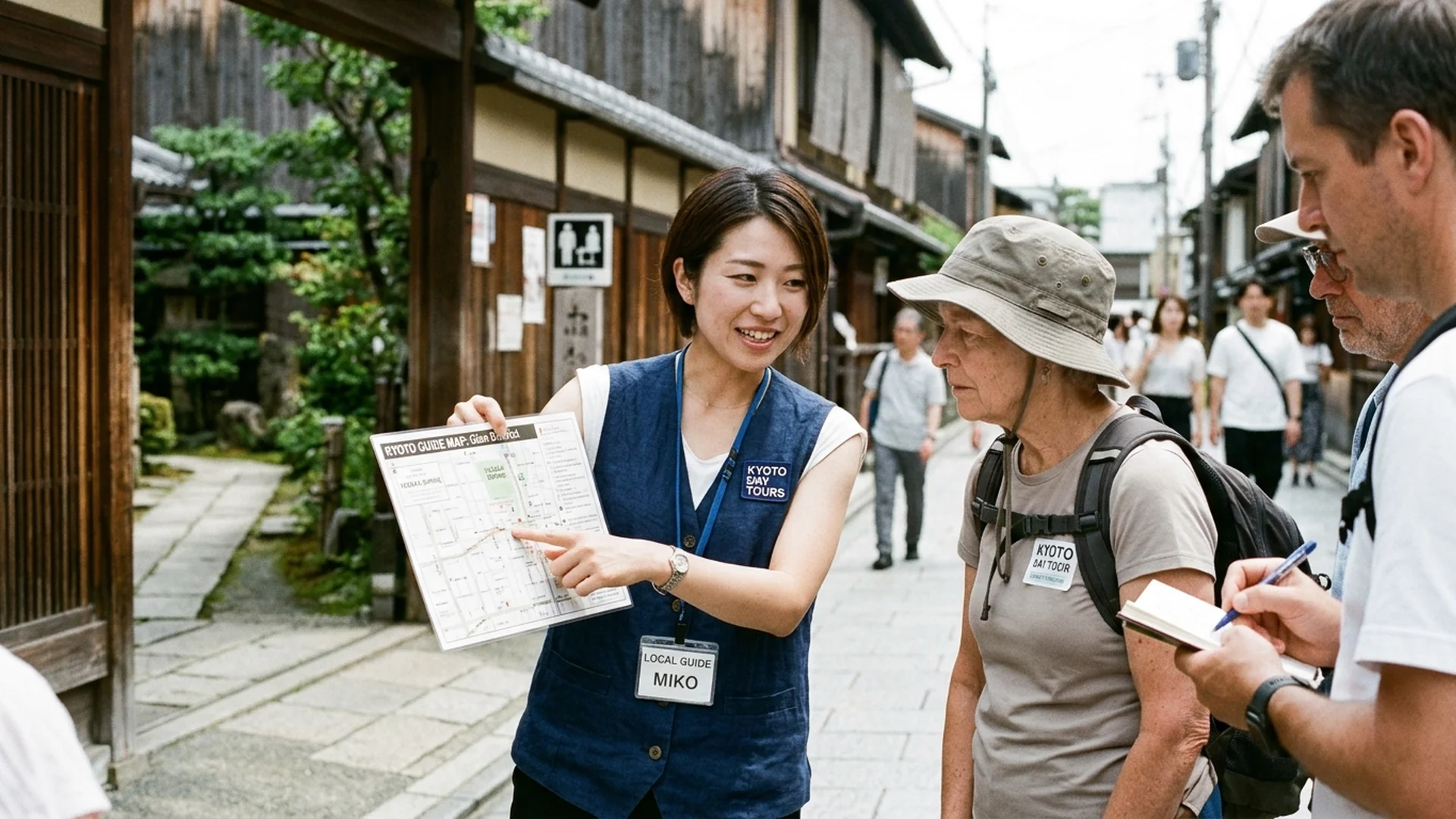
Witnessing a landscape with the naked eye differs entirely from understanding its invisible roots. Journeying alongside a knowledgeable local guide resembles reading a living manuscript. Rather than merely reciting timetables, these custodians of place articulate the folklore, ancestral craftsmanship, and nuanced lifeways concealed behind weathered torii gates or terraced paddies. They offer invaluable narratives unattainable in standard guidebooks while serving as a cultural bridge, ensuring authentic and harmonious encounters with rural villagers.
Decodifying Tour Formats: Aligning Group Dynamics with Personal Rhythm
The contemporary landscape of day excursions offers diverse formats tailored to distinct traveling styles. Excursions conducted in Thai foster an intimate, intuitive atmosphere ideal for effortless comprehension. Conversely, English-language tours invite a cosmopolitan exchange among international peers, blending global perspectives. Programs operated purely in Japanese emphasize quietude, punctuality, and an unvarnished immersion into domestic travel traditions. Selecting the framework that harmonizes with one’s personal tempo ensures the journey flows without dissonance.