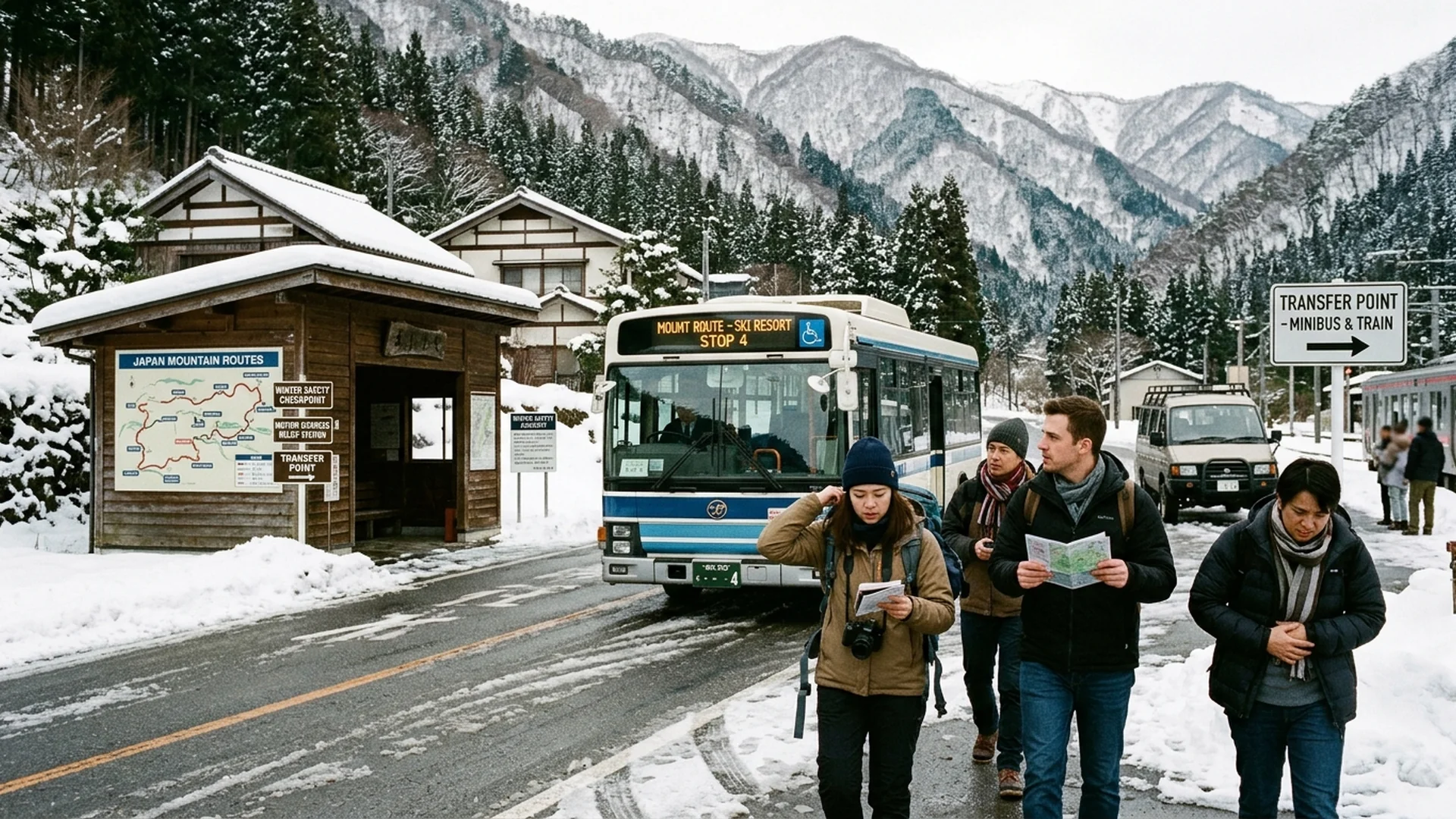
When the distant horizon dissolves into sheer rock faces and the verdant forests below recede into miniature tapestries of green and white, your ascent into Japan’s sacred highlands truly begins. Along these dramatic topographies—where nature weaves breathtaking majesty with formidable engineering challenges—driving or riding through the winding mountain passes is far more than a mere transit from point A to point B. It is a profound sensory test requiring deep situational awareness and an abiding reverence for the elements.
Amidst mists that gently caress pine-clad ridges and the season’s inaugural snowfall, these high-altitude arteries demand meticulous preparation. From mandatory winter tire laws and the hypnotic rhythm of dizzying hairpin turns to sophisticated public transit systems that effortlessly lift travelers into the clouds, this journal explores every dimension of navigating the grand natural balconies of the Rising Sun with absolute safety and grace.
The Art of the Switchback: Decoding Historical Passes and Volcanic Peaks
When discussing Japanese mountain routes defined by geographical and historical consequence, none rival the legendary Irohazaka in Tochigi Prefecture. Comprising forty-eight distinct hairpin turns—each historically assigned a successive syllable of the ancient Japanese alphabet—navigating this winding marvel feels akin to journeying through time along the folds of the earth. Meanwhile, the Japanese Alps and Mount Aso in Kyushu offer entirely distinct landscapes, presenting sweeping highland plateaus and brooding volcanic craters.
The challenge inherent in these routes transcends mere elevation; it lies in the rhythmic lateral G-forces encountered at each successive switchback. For passengers aboard local transit, this centrifugal motion can readily induce vestibular fatigue. Securing a forward-facing seat, maintaining a steady gaze upon the distant horizon, and utilizing mild preventative remedies are indispensable protocols. For motorists, employing engine braking to manage descent velocity rather than riding the brake pads is essential to prevent thermal glazing and loss of vehicular control.
Winter Mandates: Studless Tires and Ice-Bound Mountain Passes
With the arrival of winter, Japan’s alpine heights transform into undisturbed expanses of crystalline white. Yet this picturesque beauty demands uncompromising vehicular discipline. Municipal authorities and prefectural police strictly enforce comprehensive seasonal tire regulations. From the twilight of autumn well into spring, any vehicle entering controlled mountain zones must be fitted with certified studless winter tires or carry emergency tire chains.
Checkpoints are frequently established at the foothills before the inner sanctuaries of the ranges. Should inspectors discover conventional summer tires upon a vehicle—regardless of whether the tarmac appears temporarily clear—entry is definitively denied due to the volatile nature of mountain weather, where sudden squalls can glaze roads in minutes. International travelers engaging in car rentals must confirm well in advance that winter tire provisions are explicitly secured within their rental agreements.
Seamless Metamorphosis: Eco-Tourism Through Multi-Modal Transits
Many of Japan’s most sublime high-altitude viewing platforms, such as the iconic Tateyama Kurobe Alpine Route, were deliberately engineered to safeguard fragile ecosystems by strictly restricting private automobiles in favor of low-emission public transport.
Along this remarkable corridor, travelers engage in a fascinating choreography of modal shifts. The journey unfolds through zero-emission tunnel buses, robust incline cable cars, historic trolleybuses, and aerial ropeways gliding silently above evergreen canopies. Orchestrated with characteristic Japanese punctuality, these connections link seamlessly, transforming the crossing of a thousand-meter mountain chain into a remarkably fluid experience. Should capricious weather necessitate schedule adjustments for safety, local station announcements provide timely clarity.