As the morning mist drapes over the crest of Mount Fuji and the breathtaking scenery outside a Shinkansen window blurs past, discerning travelers quickly realize that much of Japan’s magic lies in the journey itself. Yet, for families traversing generations—from elders requiring absolute comfort to little ones with an abundance of luggage—navigating bustling station platforms can easily transform effortless elegance into sheer exhaustion. Opting for a private charter van with a professional driver guide emerges as the strategic paradigm shift that delivers both supreme privacy and uncompromising flexibility.
Yet, beneath the plush leather seating and seamless transit across the Land of the Rising Sun lies a rigorous legal framework and a sophisticated transportation culture that premium travelers must deeply understand. Selecting a fully compliant provider not only guarantees utter peace of mind along every scenic byway but also shields you from unexpected legal and safety liabilities.
Decoding the Green Plate: The Traveler’s Legal Armor
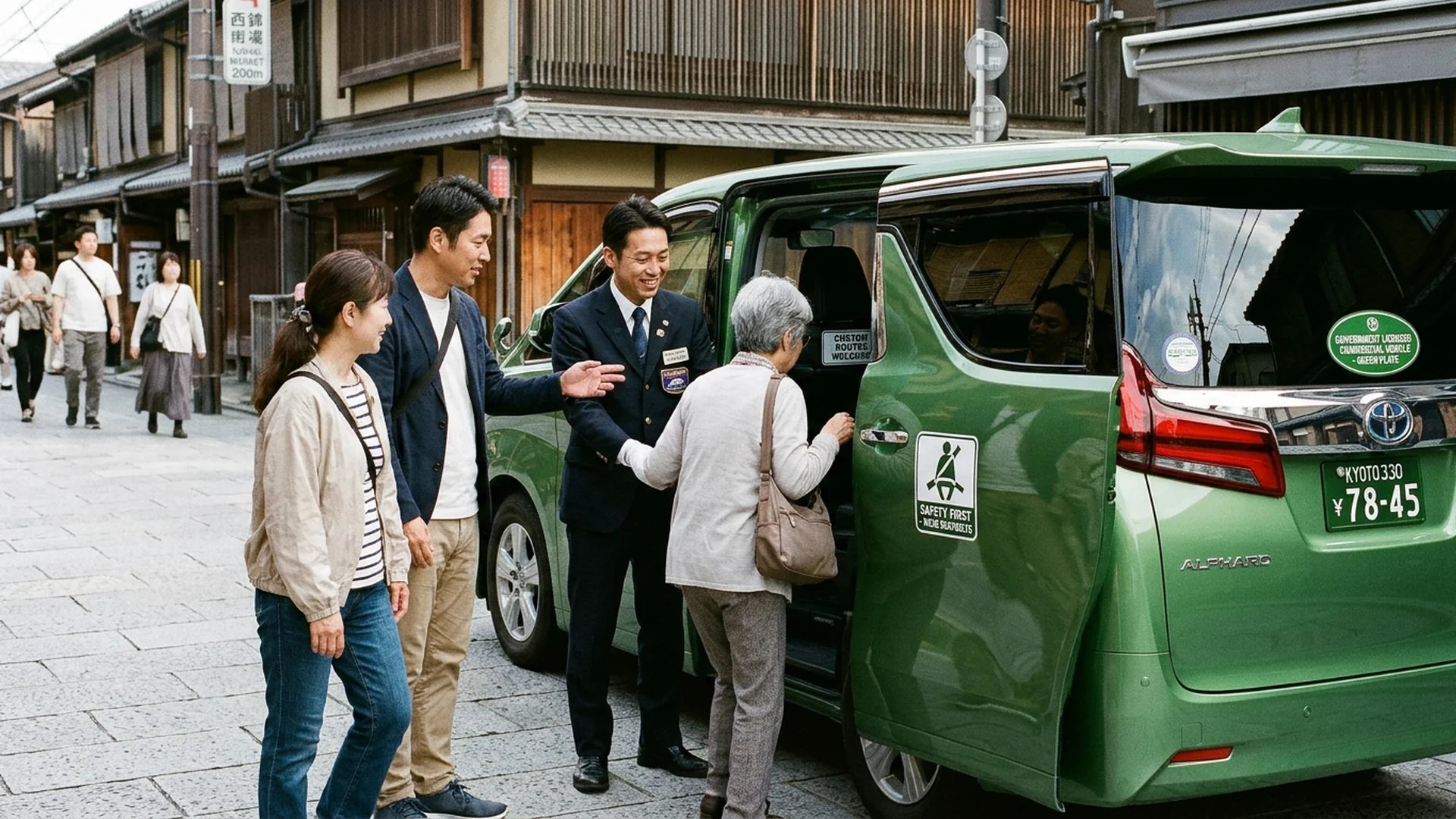
In Japan’s meticulous transportation ecosystem, the dividing line between legitimate commercial operation and unlawful transport is clearly delineated by the color of a vehicle’s license plate. Standard private automobiles—whether large family vehicles or luxury imports—bear white plates with green lettering, or yellow plates for kei cars. However, when engaging a chauffeured vehicle for commercial tourism, Japanese transport law mandates that the vehicle must be formally registered as a public passenger transport carrier, recognizable by its distinctive green plate with white characters, locally known as Midori-nanba.
Utilizing a white-plated vehicle for commercial sightseeing—often referred to in underground circles as unauthorized white-plate transport—violates national transport laws. Should an accident occur, mandatory and passenger liability insurances will fail to cover damages, exposing travelers to severe legal and physical risks. Consequently, verifying license plate status is not merely a bureaucratic formality, but the foundational first tier of ensuring professional security and operational integrity.
Travel Discipline and the Ironclad Rules of Driver Work Hours
Road safety in Japan is sustained not solely by immaculate vehicle maintenance, but by a deeply ingrained societal discipline. Japanese labor laws and Ministry of Land, Infrastructure, Transport and Tourism regulations strictly govern professional driving hours. Generally, a single driver is restricted to a maximum of nine to ten operational hours per day, complemented by mandatory rest intervals and electronically monitored expressway speed limits.
Cross-country journeys—such as traversing from Tokyo to Kawaguchiko or Kyoto to Osaka—therefore demand realistic, measured time management. If an itinerary is excessively packed and breaches statutory driving hours, the driver holds the legal right to decline the route on safety grounds. Designing a sophisticated itinerary means embedding spacious intervals for tea, contemplation, and unhurried landscape appreciation rather than rushing frantically between landmarks.
Strategic Value: Private Chauffeured Vans Versus High-Speed Rail
When traveling in a party of six to ten, comparing the expenditure of purchasing Shinkansen tickets alongside localized train and taxi fares against hiring a private van reveals a compelling economic threshold. While high-speed rail tickets for a large entourage can rival or exceed van charter rates, factoring in hidden costs—such as hauling oversized luggage across expansive stations, hiring multiple taxis, and navigating endless flights of stairs—sways the balance entirely in favor of private road transit.
Furthermore, luxury people-movers such as the Toyota Alphard, Vellfire, or Toyota HiAce Grand Cabin offer incomparable privacy. Families or executive boards can converse, strategize, or rest without prying eyes, while retaining the freedom to pause at secluded viewpoints inaccessible to the railway network.