Navigating the landscapes of Japan from behind the steering wheel unlocks an undiscovered dimension—vistas that high-speed rail networks and steel corridors simply cannot reach. Whether drifting past the boundless lavender horizons of Hokkaido, winding along the volcanic contours of Kyushu, or discovering mist-veiled historic villages nestled deep within the Chubu mountains, independent motoring offers absolute freedom to linger in moments of serendipity. Yet, this liberty rests upon a sophisticated transport infrastructure and exacting regulatory standards. Seamless preparation remains the definitive key to ensuring your journey unfolds with flawless grace from the very moment you receive the keys.
The Rule of Law: Strict Regulations of International Permits and Japanese Traffic Etiquette
The opening chapter of any road journey begins with foundational paperwork. For Japan, regulations explicitly state that the nation honors solely the International Driving Permit issued under the 1949 Geneva Convention on Road Traffic, bearing a one-year validity. (Three-year permits under the 1968 Vienna Convention are rejected outright.) Travelers must present this alongside their domestic driver’s license in its original physical form.
Once upon the tarmac of the Rising Sun, mastering local driving culture is paramount. Japan drives on the left, much like the United Kingdom or Australia, yet adherence to traffic discipline reaches the highest standards. Coming to an absolute, complete halt at Stop Signs or railway crossings is an unyielding rule. Speed limits are enforced with meticulous precision, and the cultural reverence for pedestrian crossings without traffic lights demands that drivers yield instantly without exception.
Decoding the Expressway Network: ETC Cards and the KEP, HEP Savings
Japan’s expressway grid is remarkably efficient yet famously costly. Traversing cities and regions without strategic planning can cause travel budgets to spiral unexpectedly. The intelligent solution is utilizing the Electronic Toll Collection (ETC) system via an ETC card rented directly from your vehicle provider, allowing cars to glide effortlessly through blue ETC lanes without handling cash at every barrier.
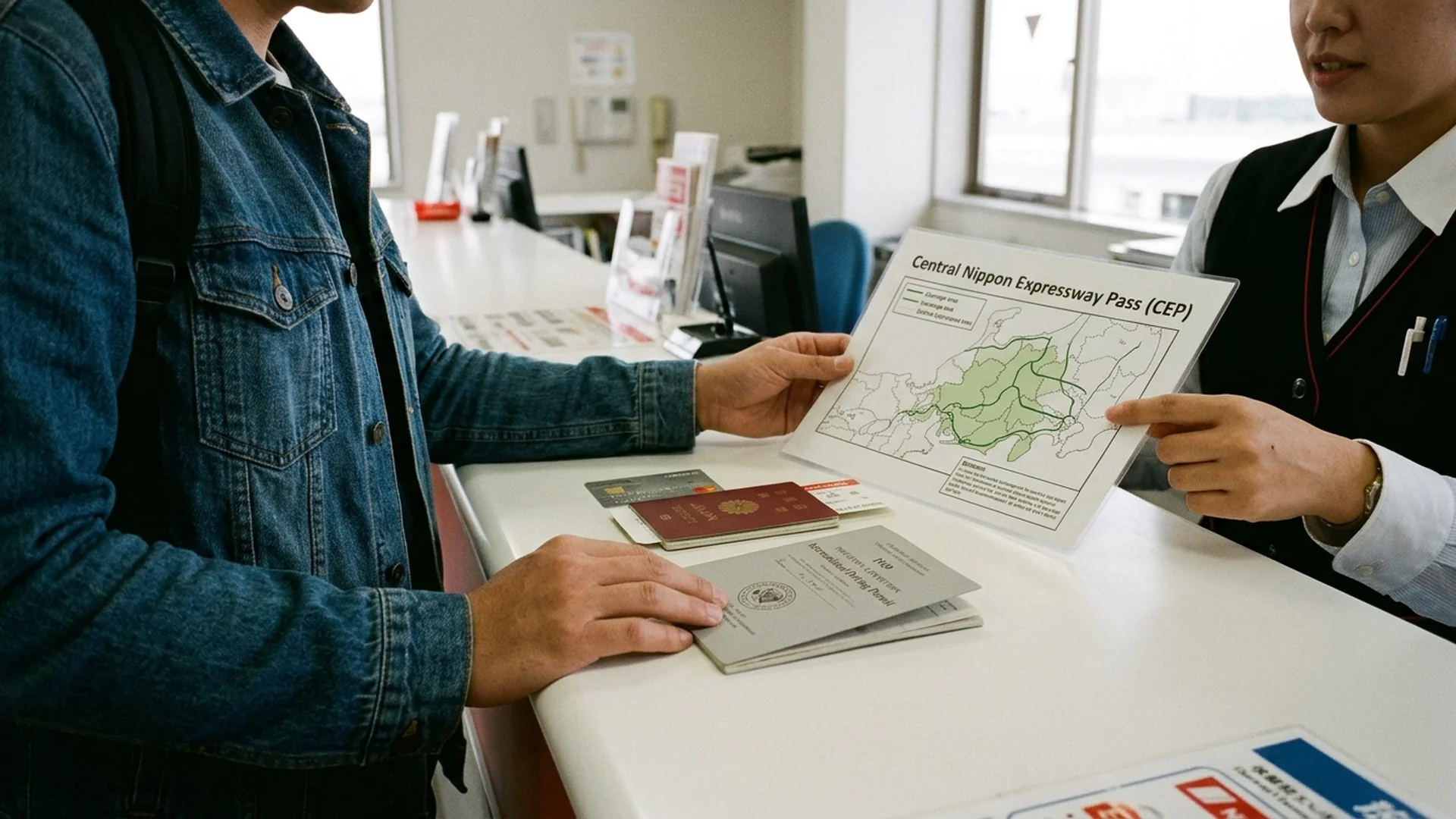
Furthermore, for international travelers, acquiring regional Expressway Passes represents the single most effective fiscal strategy. Notable passes include:
- HEP (Hokkaido Expressway Pass): Encompassing all expressways across Hokkaido, ideal for wandering pastoral landscapes and flower farms.
- KEP (Kyushu Expressway Pass): Spanning all seven prefectures of Kyushu, granting seamless connectivity between volcanic peaks and restorative hot springs. Travelers must map their routes carefully, as certain urban expressways remain excluded from flat-rate passes, and ETC cards should always be reserved well in advance.
The Art of Vehicle Selection, Insurance Coverage, and Seasonal Readiness
Selecting a rental automobile suited precisely to your party size and luggage capacity reflects true travel mindfulness. For parties of two or three with voluminous baggage, compact cars or Kei cars may suffice. However, for families, a mid-sized minivan with flexible rear configuration alleviates the fatigue of long-distance transit.
Equally vital is comprehending car rental insurance structures. While standard protection is typical, basic tiers frequently omit the Non-Operation Charge (NOC), which penalizes the renter when a damaged vehicle requires repair downtime. Securing comprehensive packages encompassing both CDW and NOC, alongside equipping vehicles with studless snow tires and 4WD systems during winter months, is essential for safety.