As the sprawling skyline of Tokyo materializes through the cabin window, the quiet anticipation of arrival is invariably accompanied by a fleeting question: will there be sufficient time to make the domestic connection? Journeying onward to tranquil regional destinations, whether the crisp, snow-draped valleys of Hokkaido or the cobalt shores of Okinawa, demands a transit choreography as precise as Japanese horology.
Navigating domestic transits within Japan, particularly when transitioning from international arrivals to domestic sectors or executing cross-city transfers between the massive gateways of Narita and Haneda, serves as the ultimate litmus test for the discerning traveler. Cultivating a profound understanding of foundational infrastructure, temporal logistics, and procedural protocol is the singular key to transmuting transit anxiety into effortless elegance.
Decoding Chronometry: Calculating Minimum Connecting Time (MCT) for Stress-Free Transitions
The cornerstone of successful domestic transit in Japan lies in comprehending the concept of Minimum Connecting Time—the threshold established by aviation authorities to ensure secure passenger transfer between flights. When landing at the same aviation hub, such as Haneda or Narita, and connecting to a domestic sector under a single through-checked ticket alliance, the process flows systematically, typically requiring a minimum window of 90 minutes to two hours. Nevertheless, as a prudent global traveler, padding this transition to a robust three-hour buffer remains the ultimate safeguard against shifting jetstreams or congested immigration queues during peak arrival hours.
The Grand Cross-Town Traverse: Seamlessly Bridging Narita and Haneda
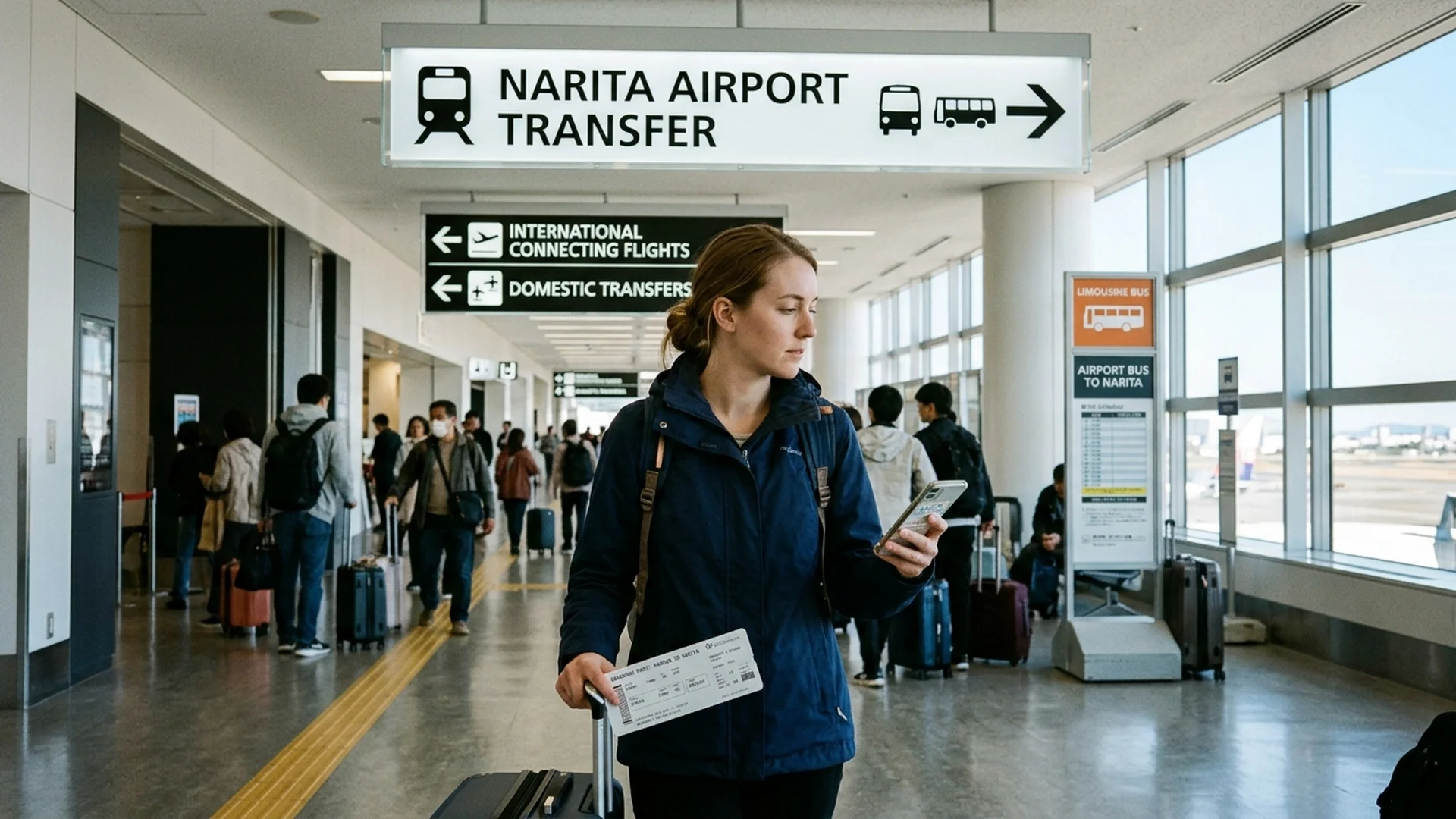
When ticketing itineraries necessitate landing at Narita International Airport while departing onward from Haneda, travelers face a masterclass in logistical navigation, given that the two mega-airports sit at opposing flanks of the Tokyo metropolis. The most civilized and fatigue-reducing alternative is the Airport Limousine Bus, which offers direct transit between the terminals, sparing travelers the ordeal of navigating station staircases with heavy luggage. While travel times range from 75 to 125 minutes depending on expressway traffic, those requiring absolute temporal precision may opt for the Keisei Access Express seamlessly linking to the Keikyu line, though this demands changing trains and maneuvering through crowded central stations.
The Terminal Ritual: Customs, Baggage Retrieval, and Domestic Luggage Protocols
A pervasive misconception among international visitors is the assumption that checked luggage transfers automatically to regional final destinations. In reality, when securing international and domestic segments via separate bookings, arrivals must clear immigration, retrieve large luggage pieces from the carousel, pass through customs, and re-check bags at the domestic carrier counter. Furthermore, cabin baggage limits on domestic Japanese carriers are rigorously enforced, frequently capping carry-on weight at seven or ten kilograms—standards that often diverge from generous international allowances.