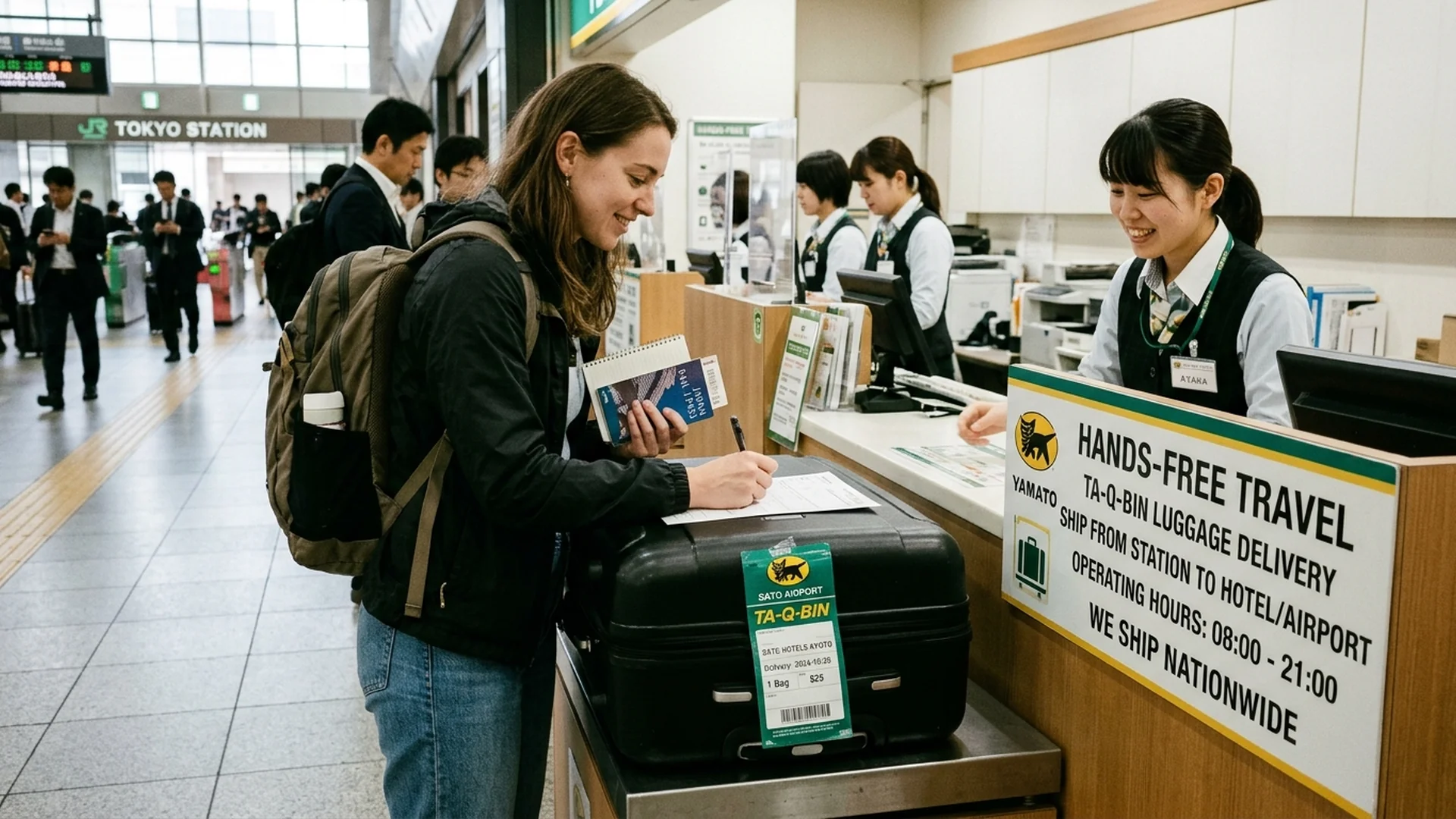
The sublime pleasure of traversing the Japanese archipelago is occasionally tempered by a familiar choreography: the hollow clatter of rolling suitcases echoing through bustling terminal concourses, the careful negotiation of steep stairwells amid dense commuter tides, and the quiet anxiety of securing precious square footage on sleek high-speed rail networks. Dragging oversized luggage across prefectural borders can swiftly transform the poetry of discovery into physical fatigue.
Yet for the discerning traveler, Japan offers one of the most sophisticated baggage management ecosystems in the world. By embracing the art of hands-free travel—utilizing legendary luggage forwarding networks and understanding the nuanced seating protocols aboard the Shinkansen—discerning visitors can unlock a mode of exploration that is entirely unhindered, elegantly choreographed, and profoundly restorative.
The Elegance of Consigning Luggage: An Insider’s Look at Takuhaibin and Takkyubin
The cornerstone of unburdened exploration in Japan is its peerless parcel and luggage forwarding infrastructure, universally known as Takkyubin (exemplified by Yamato Transport’s beloved black cat carrying its kitten). This system transcends mere delivery; it is a meticulously engineered convenience mechanism designed specifically to liberate the traveler.
The ritual of dispatching a bag is remarkably streamlined. Luggage can be handed over directly at hotel concierge desks, international airport arrival counters, or even neighborhood convenience stores across the country. By completing a simple waybill detailing the destination property and desired delivery date, your belongings traverse the regions autonomously, awaiting your arrival at the next sanctuary. Typically requiring just twenty-four hours to bridge major destinations, this service allows you to board express trains with nothing more than a leather tote, unencumbered by the labyrinthine staircases of metropolitan subway interchanges. Fees scale according to dimensions and distance—standard 28-inch cases generally range between 2,500 and 3,200 yen—offering extraordinary value in exchange for physical serenity.
Shinkansen Protocol: Navigating Oversized Baggage on High-Speed Rail
Should your itinerary require bringing larger bags aboard principal bullet train arteries—such as the Tokaido, Sanyo, Kyushu, or Nishi-Kyushu Shinkansen lines connecting Tokyo, Kyoto, Osaka, and Fukuoka—strict regulatory frameworks regarding onboard luggage must be observed with precision.
Regulations dictate that any suitcase whose combined dimensions (width plus length plus height) measure between 161 and 250 centimeters is classified as oversized baggage. Passengers traveling with such pieces must secure ‘Seats with an Oversized Baggage Area’ situated in the final row of the carriage. This reservation incurs no surcharge beyond the standard fare, provided it is booked in advance. Boarding without a reservation results in a 1,000 yen fee and potential relocation of the bag to a crew-managed compartment. Pieces exceeding 250 centimeters are strictly prohibited on board, while bags under 160 centimeters stow effortlessly in overhead racks or the generous alcoves beneath your seat.
Strategic Packing and Temporary Storage Solutions
Achieving absolute fluency in hands-free travel relies upon the ‘Overnight Bag Strategy’—the practice of packing a refined weekend valise or structured cabin case with necessities for a one- or two-night interlude, while your primary wardrobe journeys ahead independently. This tactical separation grants the freedom to pivot into remote valleys or boutique ryokans on a whim without logistical friction.
Furthermore, for moments when arrival at a destination precedes hotel check-in hours, major rail hubs offer sophisticated temporary sanctuary. Digital coin lockers accept IC cards such as Suica and Pasmo, while online concierge platforms like Ecbo Cloak permit the advance reservation of storage spaces within neighborhood cafes, artisan boutiques, and partner hotels, entirely mitigating the distress of full locker banks.