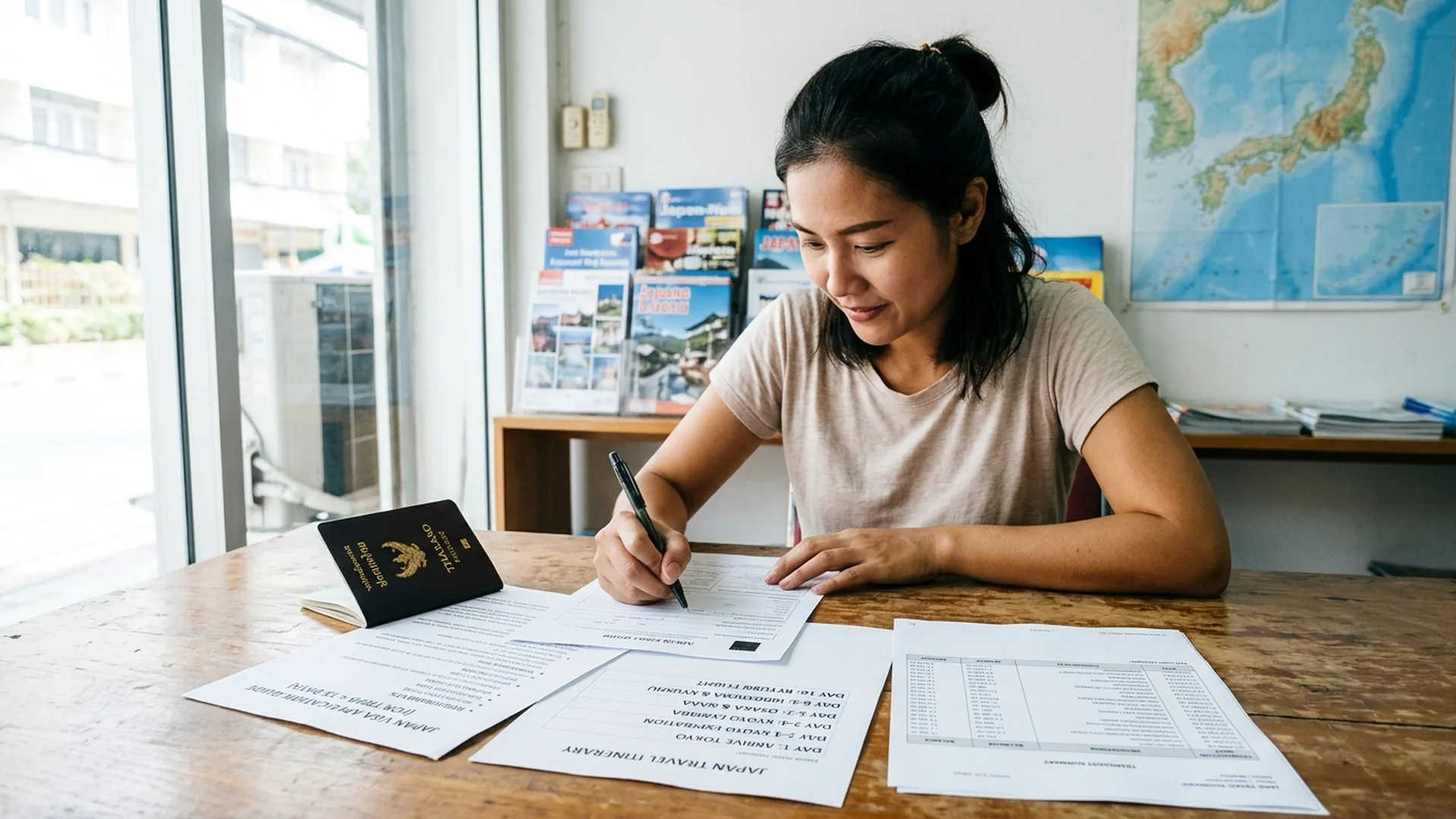
When the fleeting horizon of a standard journey is no longer enough, slow travel lasting a month or more becomes the ultimate aspiration for the discerning explorer. While many are accustomed to the swift fifteen-day visa waiver, pursuing the shifting cherry blossoms of spring or retreating to a quiet centuries-old ryokan in Kyoto for thirty or ninety days requires a deliberate transition. This extended passage opens through a single key: the formal temporary visitor visa.
Stepping beyond the standard fifteen-day threshold demands more than just patience; it requires meticulous preparation from the very first line of your itinerary to the unimpeachable integrity of your financial records. The Embassy and Consulates of Japan place profound importance on the authenticity of your intentions and your capacity for self-reliance. This essay decodes every vital phase to ensure your long-form Japanese sojourn begins with absolute confidence.
Decoding the Distinction: Why a Visa is Mandatory Beyond Fifteen Days and Selecting Entry Types
Thai passports enjoy exceptional mobility for short-term visits to Japan without prior authorization. However, when your heart yearns for deeper exploration—such as tracing the Tohoku region from brilliant autumn foliage through the first winter snows, or savoring regional gastronomy across Kyushu for an entire month—immigration statutes dictate that you secure a Temporary Visitor Visa prior to departure.
Once you commit to the visa process, the immediate consideration is choosing between a Single Entry and a Multiple Entry visa. For first-time long-duration travelers, a Single Entry aligned precisely with your itinerary offers a straightforward and highly flexible approach. Conversely, Multiple Entry visas are designed for those with an established history of consistent travel to Japan or other developed nations, backed by unquestionable financial stability. Selecting the category that mirrors your actual travel pedigree forms the bedrock of your application’s credibility.
The Architecture of Documentation: Crafting Itineraries and Financial Proofs the Embassy Seeks
The subtlety of your paperwork is an art form that convinces consular officers of your standing as a quality traveler. Your foremost priority is a meticulous daily itinerary. For a journey spanning fifteen to ninety days, your plan must be neither vague nor generic; it should logically outline daily destinations, evening accommodations, and rail transit routes, proving a genuine intent to explore rather than a superficial paperwork exercise.
Regarding financial documentation, extended durations demand savings account balances that effortlessly absorb all projected expenses without sudden, unexplained large deposits immediately prior to submission. If utilizing a guarantor, a formal Letter of Guarantee must accompany transparent records of their relationship and income. Furthermore, official employment certificates or business registration papers must precisely corroborate your approved leave period.
Navigating VFS Global and Essential Precautions for a Seamless Application
The current pathway for Japanese visa applications runs through VFS Global, offering a structured, verifiable framework. Success relies on presenting complete original documents alongside photocopies matching the official checklist, accompanied by a completed application form and standardized photographs.
A frequent surprise for travelers involves passport validity, which must exceed six months with ample blank pages for stamps. Additionally, the validity window of a Single Entry visa is strictly anchored to your confirmed travel dates and flight bookings. Consequently, confirmed flight reservations or verifiable itineraries are non-negotiable prerequisites. Never overlook these minute details; refinement is the essence of success.