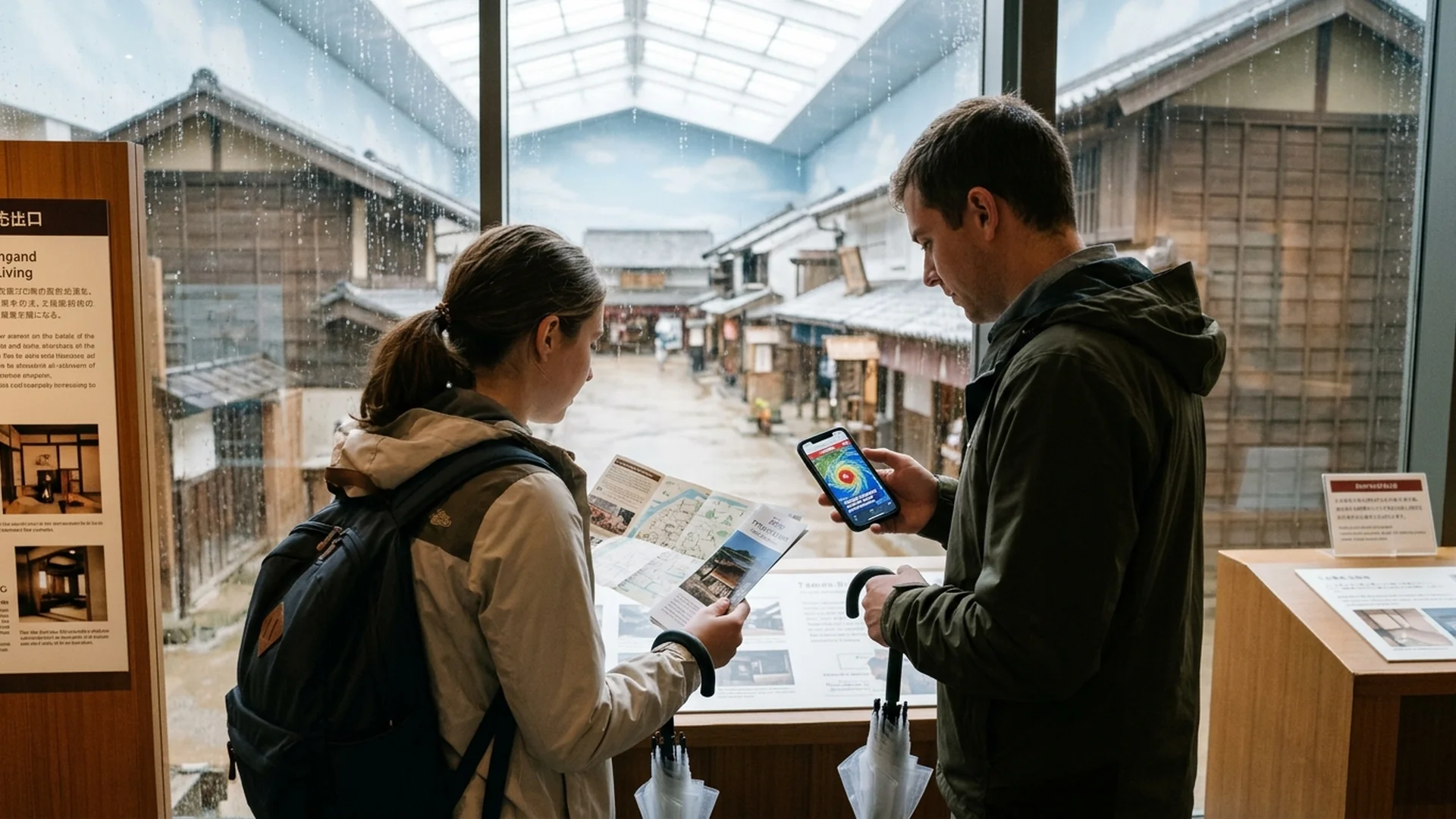
When rain falls upon the Japanese landscape, the frantic pulse of the metropolis seems to slow down, washed into a state of serene contemplation. Azure skies give way to delicate veils of mist drifting over ancient pine groves and centuries-old sanctuaries. Spanning from June through October—encompassing both the rainy season, known as Tsuyu, and the subsequent typhoon months—this period is frequently met with hesitation by travelers. Yet, to the discerning wanderer, it reveals a deeply poetic facet of the nation: hydrangeas blooming defiantly against the drizzle, moss gardens glowing with an otherworldly emerald brilliance, and a profound tranquility untouched by peak-season crowds.
The essence of traveling through seasonal rains and storms does not lie in wishful thinking for clear skies, but in attuning oneself to nature’s rhythms with sophisticated preparation. Backed by world-class meteorological forecasting systems, precipitation ceases to be an itinerary-shattering disruption and instead transforms into a manageable, highly atmospheric dimension of an unforgettable journey.
Decoding Tsuyu and Typhoons: The Geography and Timing Every Traveler Must Know
The phenomenon of ‘Tsuyu’—Japan’s seasonal rainy period—is born from the collision of cool northern air masses and warm, moisture-laden southern fronts, creating a stationary rain belt across the archipelago. Generally, it unfurls from the southern islands of Okinawa in early May, creeping upward to envelop Tokyo, Kyoto, and Osaka by early June, and persisting through mid-to-late July. Rainfall during this season is rarely an unyielding downpour; instead, it unfolds in poetic cadences of lingering drizzles, overcast lulls, and occasional bursts of unexpected sunlight.
From August through October, the archipelago enters the domain of typhoons, which typically form over the Pacific Ocean and sweep toward the mainland. While these storms bring strong winds and significant precipitation, advancements in meteorological science allow for multi-day anticipation. For travelers seeking an absolute refuge from these seasonal patterns, the northern frontier of Hokkaido remains a compelling exception, largely bypassing the heavy impact of Tsuyu.
The Armor of Precision: Real-Time Weather and Storm Tracking via the JMA
Much of the anxiety surrounding foreign weather stems simply from the unknown. In Japan, however, meteorological information is exceptionally accessible and rigorous. The primary authority for every traveler is the Japan Meteorological Agency (JMA), which provides comprehensive English-language reporting.
Among the most potent tools on the JMA platform is the Tropical Cyclone Information system, charting storm trajectories, probability circles of cyclone centers, and intensity grades updated every three hours—or hourly as a storm approaches critical proximity. Complementing this is the High-resolution Precipitation Nowcasts radar, offering real-time, square-kilometer precision for impending rainfall up to an hour in advance. Monitoring official weather warnings, advisories, and real-time landslide risk maps empowers travelers to adjust itineraries and bypass vulnerable zones long before inclement weather arrives.
The Art of the Pivot: Elevating Rainy Days into Refined Indoor Pleasures
When the elements demand flexibility, clinging rigidly to outdoor agendas can diminish the joy of exploration. The art of traveling through Japan’s rainy season lies in crafting a Plan B that rivals the primary itinerary. Major hubs like Tokyo and Osaka boast monumental subterranean infrastructures that remain entirely sheltered from the heaviest deluges, such as the sprawling shopping labyrinths beneath Tokyo Station or the vibrant Umeda district in Osaka, brimming with premier boutiques, galleries, and quiet cafes.
Exchange garden strolls for immersive interior art at world-class venues like teamLab Planets, or seek out textile museums and contemporary sanctuaries. Alternatively, board a romantic scenic railway to watch mist-shrouded landscapes glide past fogged glass, culminating in an outdoor hot spring immersion where hot mineral waters meet falling raindrops—arguably the ultimate aesthetic expression of a journey untouched by hurried tourism.