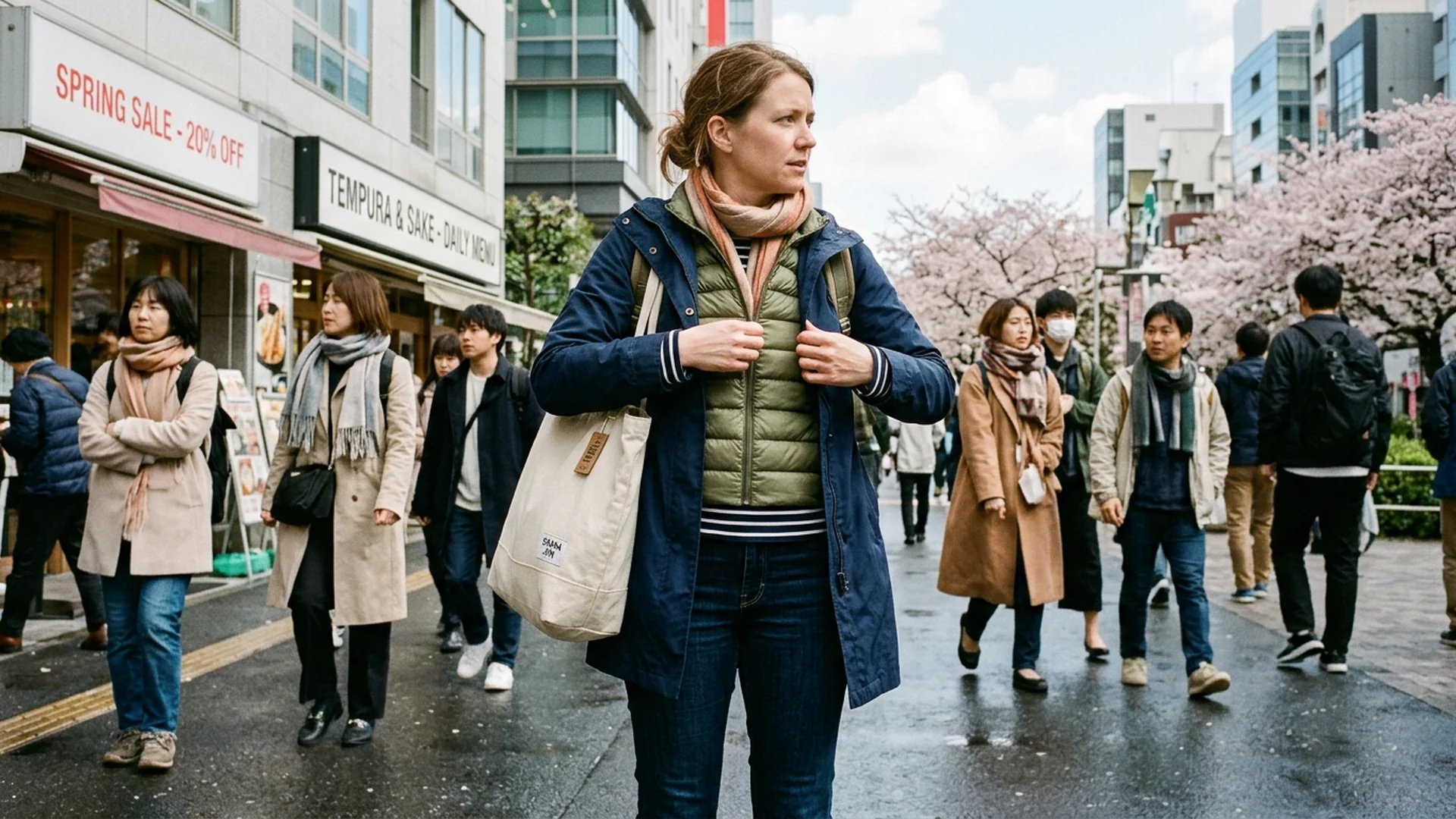
Upon stepping onto the tarmac in the Land of the Rising Sun, discerning travelers are rarely greeted merely by the tranquil poetry of the landscape; instead, they face a bewildering micro-climatic overture. While the season’s opening gale carries pristine snow blankets across Hokkaido’s wilderness, stepping inside a sleek Shinkansen carriage or modern architectural sanctuary reveals an interior warmth so balmy it feels like an entirely separate hemisphere. Navigating this juxtaposition requires far more than casual wardrobe selection—it demands an exquisite mastery of survival, comfort, and sartorial grace.
To travel across Japan’s diverse archipelagos and shifting seasons is to honor a complex geography of extremes. From the subtropical coastal humidity of Okinawa and the sub-zero frost of the northern wilderness to the fiery maples of Kyoto in autumn, intelligent preparation begins long before departure. It is anchored in an unhurried, highly efficient approach to luggage weight, relying on the time-honored philosophy of the multi-tiered layering system rather than cumbersome excess.
The Architecture of Warmth: Decodifying the Three-Tier Layering System
The cornerstone of enduring sub-zero comfort lies in abandoning the archaic notion that a singular, heavy garment equals superior warmth. In truth, human thermoregulation relies on the micro-pockets of air trapped delicately between fabrics. Revered by seasoned global explorers, the three-tier layering system orchestrates independent garments into a symphony of thermal protection.
The initial foundation—the Base Layer—comprises high-performance thermal undergarments resting directly against the dermis. Their primary mission is moisture management, quietly wicking perspiration away from the body to prevent dampness from chilling the skin. The secondary tier, or Middle Layer, acts as a thermal insulator, utilizing fine merino wool, plush fleece, or sumptuous cashmere cardigans to secure core warmth. The concluding Outer Layer serves as an environmental shield against wind and precipitation, often embodied by high fill-power down down jackets designed to arrest frigid gusts.
The genius of this methodology lies in its supreme adaptability. Emerging from a train station into a swirling snow flurry, you remain shielded by all three layers. Yet upon crossing the threshold into a department store or railway carriage superheated by robust heating systems, simply shedding the outer shell prevents thermal shock and uncomfortably clammy perspiration.
Topography and Temporality: From Powder Snow to Sunlit Coasts
Japan’s archipelago curves gracefully from north to south, creating a mesmerizing geography where one might encounter waist-deep powder snow in Hokkaido while Kyoto glows in autumn amber and Okinawa invites barefoot strolls along gentle shores. Consequently, packing lists must be meticulously calibrated to specific coordinates.
During the winter months spanning December through February, the northern realms of Hokkaido and the Tohoku region demand full alpine preparation. Waterproof boots featuring aggressive rubber tread patterns are indispensable for navigating treacherous sheets of hidden ice. Conversely, while Tokyo rarely accumulates heavy snow, biting winds sweeping inland from the bay pierce with surprising intensity, making windproof accessories like cashmere scarves, tactile gloves, and fleece-lined ear warmers exceptionally valuable.
In the shoulder seasons of spring and autumn, daytime temperatures fluctuate dramatically. Crisp mornings and evenings command robust overcoats, while sunlit afternoons warm enough to prompt a transition to light sweaters or cardigans. Modular layering reigns supreme during these ephemeral months, allowing travelers to mirror the mercurial moods of nature with effortless elegance.
Beyond the Wardrobe: The Fine Details That Dictate Voyage Success
A well-curated Japanese itinerary extends far beyond apparel alone. Health, wellness, and thoughtful personal accessories ensure frictionless days of discovery. Foremost among these is footwear; with daily explorations routinely demanding fifteen to twenty thousand steps, broken-in lifestyle sneakers or light-trekking boots are your most faithful companions. Never introduce pristine, brand-new shoes to a Japanese expedition, lest friction-induced blisters disrupt the quiet joy of wandering historic alleyways.
Within the realm of wellness, Japan’s crisp, dry winter air makes hydrating skincare, rich hand lotions, and soothing thermal patches indispensable additions to your day bag. Voltage considerations are equally vital: Japan operates on a 100-volt standard utilizing ungrounded two-prong Type A plugs. Bringing a reliable universal adapter and verifying your electronics’ dual-voltage compatibility prevents operational friction.
Sartorial Etiquette: Harmonizing with Local Tradition
Respect for sacred spaces and timeless customs is gracefully expressed through thoughtful attire. When visiting Buddhist temples or Shinto shrines, dressing modestly with shoulders and knees respectfully covered honors the sanctity of the grounds. Furthermore, removing footwear before entering ancient wooden halls or traditional ryokan inns makes wearing immaculate, unblemished socks an understated detail swiftly noticed and appreciated by local hosts.
Equally significant is the sacred art of the onsen hot spring, governed by strict hygienic traditions. Natural mineral immersions generally require total ritual nudity, permitting no textiles or towels within the healing waters. Familiarizing oneself with these graceful customs prior to arrival ensures total immersion in profound relaxation, unburdened by hesitation.